Overview:
Lawyers warn Haitians with vulnerable status to avoid air travel as ICE begins to take on TSA agent jobs during the government shutdown, raising detention risks for immigrants.
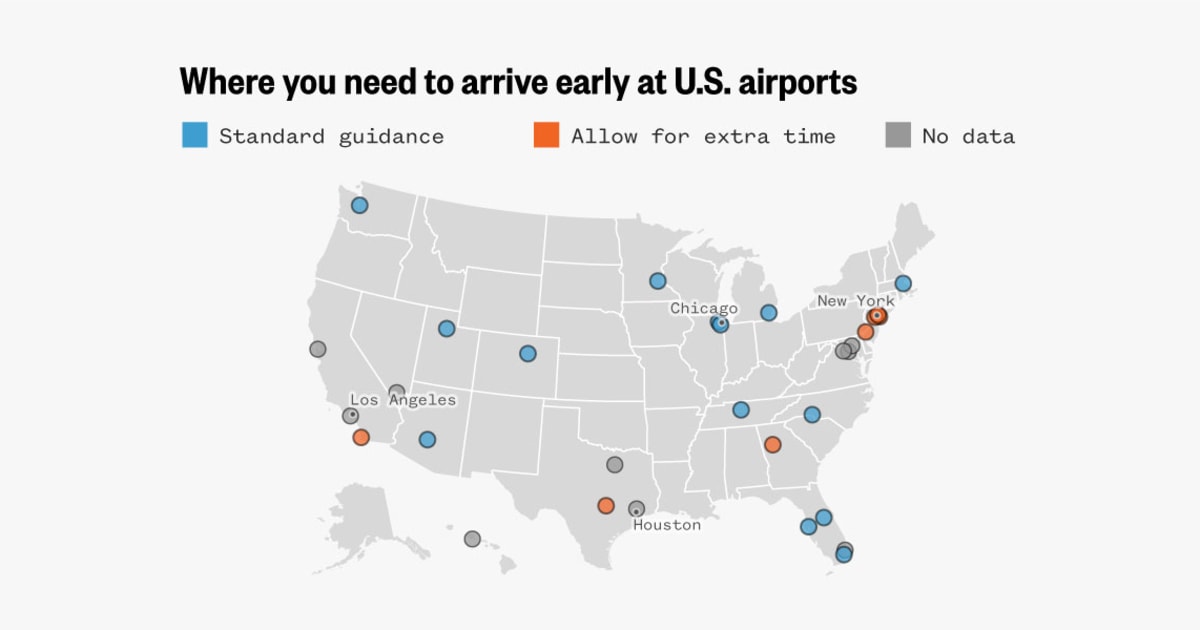
NEW YORK — Immigration attorneys are warning Haitians to avoid air travel as the U.S. Immigration and Customs Enforcement (ICE) officers arrive at airports to fill in for Transportation Security Administration (TSA) agents during the U.S. government partial shutdown.
The role shift — driven in part by unpaid TSA workers during the partial government closure — has raised alarm among families, advocates and attorneys as travelers with vulnerable immigration status may come into direct encounters with the officers whose main job of late is detention and deportation.
For many immigrants, lawyers say, that changes the detention risk level entirely because unpredictable and dangerous outcomes may arise based on an officer’s discretion. For people with temporary or unresolved immigration status in particular, such as Temporary Protected Status (TPS), the legal experts say the potential shift has heightened fear over routine travel.
“It’s very subjective,” said attorney Wide Thomas, an immigration lawyer based in Atlanta, Ga.
“I would not recommend people travel if they don’t have a real ID, or if they are subject to removal,” she explains. “Anything can happen at this point, [and] I’m really predicting that we will see more people getting detained by ICE.”
She added that the uncertainty itself may be part of a broader enforcement approach, saying that placing ICE officers in visible public-facing roles like airport security could serve to show the administration’s “control” and instill fear within immigrant communities.
ICE’s arrival at airports comes because controversy over how the Department of Homeland Security (DHS), which oversees the Transportation Security Administration (TSA) and ICE, allocates its funding led to a partial government shutdown. TSA workers have not been paid during the pause. According to an Associated Press reporting citing DHS, nearly 11% of TSA staff — more than 3,200 people — missed their shifts as a result and at least 458 have quit altogether since the shutdown began.
As airport disruptions mounted, DHS directed ICE agents, who are being paid from $75 billion allocated to it last year, were told to fill in for the TSA workers.
Wednesday, Congress was still working on a proposal that would fund most of DHS, but not one main part of ICE — the enforcement and removal operations that are core to Trump’s deportation agenda, according to the AP. The goal is to “rein in ICE,” as one senator described it. Trump has said he would not be happy with any deal.
Immigration and Customs Enforcement (ICE) agents work at the baggage check and security control x-ray area at O’Hare International Airport in Chicago, Tuesday, March 24, 2026. (AP Photo/Nam Y. Huh)
Shifting enforcement landscape
Erik Crew, an attorney with the Haitian Bridge Alliance, said this level of ICE involvement at airports requires that each individual further assess their own risk before traveling.
Shifting immigration policies under the Trump administration were already causing uncertainty in how rules are applied in practice. How those policies are enforced in real time, often without consistency, can cause great harm to families, the attorneys say.
With TPS holders, for one, advocates say the back-and-forth rules between various federal court orders and DHS directives have created confusion in immigration courts and heightened anxiety for Haitians navigating pending cases, work permits and humanitarian protections — often all linked together.
“The administration has clearly shown its intention to try and find some way or another to arrest as many people, immigrants, Haitian immigrants, as they can,” Crew said.
As this latest ICE policy is underway, attorneys say the message is clear: avoid unnecessary risks. If air travel is not essential, they recommend postponing it until conditions stabilize.
Until then, Thomas said, the system remains too unpredictable to trust.
“Anything can happen at this point,” Wide said.
Information from the Associated Press was used to supplement this report.
Like this:
Loading…