

New England Patriots
Russini’s approach to reporting raised specific questions, including whether her closeness to a source like Mike Vrabel compromised her role at the Athletic.
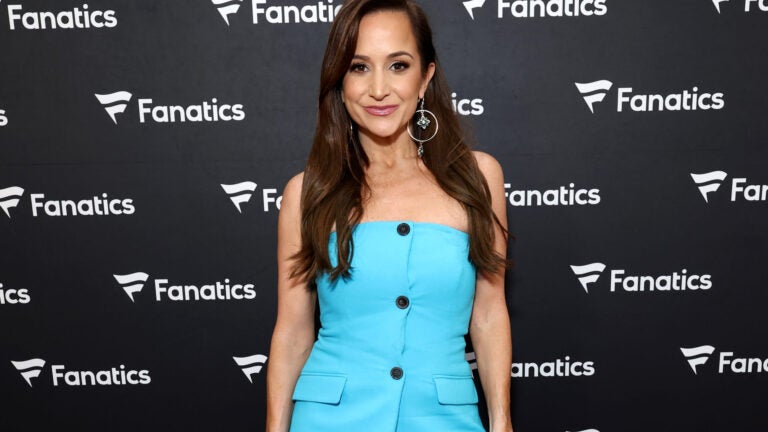
Dianna Russini attends the 2026 Fanatics Super Bowl Party at Pier 48 in San Francisco on February 7, 2026 in San Francisco, California. Photo by Cindy Ord/Getty Images for Fanatics
June 24, 2026 | 2:18 PM
21 minutes to read
Dianna Russini had been busted.
It was January, and Russini — then the star NFL reporter for The Athletic, a sports publication owned by The New York Times Co. — had been pulled over by a police officer while texting and driving with her two young sons. It was the second time in a month, she would later recall, that the police had stopped her.
On this occasion, Russini tried to fend off a ticket by telling the officer that the coach of the Buffalo Bills had been fired, and she was trying to break news.
The officer was unmoved, telling her he was a fan of a different team.
That’s when she made him an offer. Maybe she could connect him, right then and there, to his favorite team’s coach.
“Do you want to talk to the coach? You should talk to the coach,” Russini said she told the officer as she recounted the incident a couple of weeks later on “Stugotz and Company,” a radio show and podcast.
“I FaceTime the head coach,” she said, without naming him. “Head coach is in his office. He said, ‘What’s up?’ I go, ‘I just got pulled over and I just wanted you to meet my friend, Officer Joe.’”
The coach helped her get out of the ticket by telling the officer, “You should let her go, she’s a good citizen,” Russini said.
The podcast host howled with laughter. “I wish I had that kind of access,” he said.
About two months later, The New York Post published photos of Russini and New England Patriots head coach Mike Vrabel relaxing in a hot tub at an exclusive Arizona resort and hugging and interlacing their fingers on a rooftop that could be reached only through one of the hotel’s private suites. They both were married to other people.
The pictures created a frenzy of gossip — as well as examinations of Russini’s interactions with Vrabel, a major NFL figure whom she had covered extensively. The Post and TMZ published additional images that seemed to suggest that the reporter and the coach had a close personal relationship spanning years.
Suddenly Russini’s access was the story.
The tabloid drama stunned the Times Co. Russini was not just any reporter. The Athletic paid her an annual salary of close to $800,000, according to a former manager who had knowledge of her salary negotiation. This would have made her one of the highest-paid journalists at the Times Co. She had been promoted as a face of the sports publication, which the company bought in 2022 for $550 million as part of an effort to expand the Times’ reach to sports fans around the world. At the time the story broke, the Athletic was in discussions with Russini about renewing her contract, which was set to expire at the end of June.
Russini’s bosses initially backed her, saying the photos lacked “essential context.” But the Athletic began an investigation into her reporting. Rather than wait for the results of her employer’s review, Russini resigned. In a statement, she said she stood by her journalism but had “no interest in submitting to a public inquiry that has already caused far more damage than I am willing to accept.”
A rare woman in the hypermasculine world of NFL sources and scoop artists, Russini had worked her way into a fraternity of “insiders,” brand-name media figures known for their exceptional access. As a dogged reporter with an entertainer’s verve, she built her own brand and merged it with one of the most famous institutions in journalism, The New York Times Co.
It seemed to be a mutually beneficial arrangement. Until it wasn’t.
Russini operated in a sports-media landscape where traditional journalistic lines could be blurry. She might have considered calling a coach to get out of a ticket not only appropriate, but a funny story to tell on a podcast. For the Athletic, under the ownership of the Times, it was out of bounds. Danielle Rhoades Ha, a Times Co. spokesperson, described it as “unacceptable conduct,” adding that Athletic editors had been unaware of it because Russini neither sought nor received permission to appear on the podcast, as required by company guidelines.
Vrabel was not the coach whom Russini called for help getting out of the ticket, according to someone with whom she shared the details of the story.
But regardless of who the coach was, the episode hints at a deeper tension over how a sports journalist like Russini works. Her approach to reporting raised specific questions, including whether her closeness to a source like Vrabel compromised her role at the Athletic.
Whatever the nature of Russini’s relationship with Vrabel, hanging out with him poolside at a tucked-away hotel was problematic, according to journalists and media experts. “Even someone working in local news knows, if you were seen in a hot tub with a local coach, that wouldn’t be OK,” said Kelly McBride, the chair of the Newmark Center for Ethics at the Poynter Institute and a former ombudswoman at ESPN. “Stuff like that gets around fast.” As for the story about the traffic stop, McBride said asking a coach for help to avoid a ticket would have been an abuse of professional access for personal gain.
As part of its review, the Athletic is looking into “Dianna’s involvement” in a January 2025 article, “Inside Mike Vrabel’s Year Off,” Ha said. The roughly 4,400-word article was written by another reporter, Zack Rosenblatt, after Russini helped broker the coach’s cooperation, arranging breakfast for the three of them so Rosenblatt could make his pitch. (Rosenblatt did not respond to a message seeking comment. Ha said the Athletic’s review of that article does not go beyond Russini’s role.)
To report this article, Times journalists interviewed more than three dozen people in and around the industry — many of whom had worked with Russini during her two-decade career. Many spoke on the condition of anonymity because they did not want to risk their own livelihoods, or because they did not want their names connected to a story that has generated such social media intrigue, private pain and professional angst.
Russini was sent a detailed memo laying out the Times’ reporting. She declined several requests for an interview. Neither she nor Vrabel commented for this article on whether their relationship had ever been romantic. The Patriots did not make Vrabel, 50, available for an interview and did not respond to specific questions. The Athletic and the Times Co. did not make their executives available, either.
‘How Can I Beat Everybody?’
Russini, 43, was not merely a reporter. She was a personality, bursting with main-character energy. On television and on podcasts, she talked not just about football but about herself. She played up her New Jersey roots, her scrappy ambition and her experiences as a stretched-to-her-limit mother with a demanding job. It worked for her.
“I’ve actually kind of leaned into being a person when I deal with players and coaches and GMs and whomever I talk to in football as a way to connect,” she said on the Stugotz podcast, contrasting her approach with “people who can be a little tight about it.”
She portrayed herself as the opposite. In August, she went on a Washington, D.C., sports radio talk show and asked to be introduced not as an insider but as a “straight-up MILF.” Other times she shared anecdotes that drew her as a busy working mom. She told Dan Patrick, the popular sports talk host, that she had FaceTimed NFL players to try to impress her sons.
She trumpeted her skills as a reporter. On one occasion, she suggested that she had a sixth sense for news. In June 2021, after breaking the story that the Atlanta Falcons had traded wide receiver Julio Jones to the Tennessee Titans, she went on television and told a story about receiving a sign while gambling at a bachelorette party in Atlantic City.
“I’m at the roulette table on Saturday night around 11 p.m.,” she said on “Get Up,” ESPN’s weekday morning show “and I hit on black 11.” Aware that Jones wore No. 11 for Atlanta, Russini recalled telling someone else in their party: “That’s Julio. Something’s up.” She called her sources and confirmed her hunch. “I’m a witch,” Russini said.
And she thrived on the competition, describing reporting almost like a sport in itself. “You have to be absolutely ruthless,” she told an interviewer at a media conference last summer, “constantly thinking, ‘How can I beat everybody?’”
Being a woman in the business could give her an edge over her male counterparts, she told podcaster Katie Nolan in February, because players might be more willing to open up to her than to a man. But it came with challenges too, like having her intentions misunderstood. “I try not to call anybody after 8 o’clock,” she told Nolan. “I don’t want their girlfriends or wives being, like, ‘Why is this woman calling?’”
Russini’s journey to the highest echelons of media began in Norwood, New Jersey, about 20 miles outside New York City, where she grew up one of three children of a plumber and a nurse. A distinguished student-athlete, Russini ended up in Virginia, playing striker for the Division I women’s soccer team at George Mason University. “Dianna was athletic, she was willful, she was determined,” said Diane Drake, the team’s coach during Russini’s senior year — and she “never gave up.”
She started her media career in local television news, reporting on the Hudson Valley and Westchester County in New York, as well as New Jersey, Seattle and Connecticut. One of her breaks came about a year into a job covering sports at Washington’s NBC affiliate, when she scooped the national press about the Washington Commanders signing former Philadelphia Eagles star DeSean Jackson as a free agent.
ESPN hired her in 2015, and she became an anchor on SportsCenter, the network’s marquee highlights program. But Russini’s destiny lay elsewhere in the sports-industrial complex: She moved into covering NFL teams directly and breaking news, sharpening her skills as an aspiring insider.
In sports journalism, “insider” is a term for a class of reporters who scrounge for scoops big and small across the entirety of the leagues they cover. Typically both highly visible and well-paid, they rely heavily on access to agents, players, coaches and general managers.
The gig can be similar to that of reporters on political or business beats, but “insider” has in the past decade become a branding label to mark chosen reporters at sports networks and publications. (Two of the best known insiders, past and present, are Adrian Wojnarowski and Adam Schefter.) Fans pore over their articles, podcast appearances and social media posts — which often include tidbits attributed to “league sources” or other unnamed tipsters — to learn about the granular dealings that shape teams and bracket the action on the field.
Russini had good days — she helped break news in 2019 of wide receiver Antonio Brown’s messy departure from the Oakland Raiders, for instance — and bad ones. Later that year, she reported that the Jacksonville Jaguars were firing their head coach, Doug Marrone, but the team issued a statement calling her story “100% incorrect.” Marrone would remain Jacksonville’s coach for another year.
That same season, she began to cover the Titans in earnest. Vrabel, a former linebacker, was in his second season as Tennessee’s head coach. In January 2020, Russini landed a sit-down interview with him.
They seemed to have an easy rapport, with the coach mimicking himself running to check in on one of his players, and Russini laughing. “I don’t just want to be the coach who stands up there and says, ‘Don’t fumble,’” he told her. “I want to be the coach that helps them, and helps the team take care of the football or fix anything that needs to be fixed.”
Less than two months later, on March 11, the coach and the journalist were meeting again, this time in a dark Manhattan bar. In photographs published recently by The New York Post, Russini and Vrabel are seen facing each other on bar stools — his hand is on her arm; her knees nestled between his. In one photo, he leans toward her and their faces appear to be almost touching.
‘Nashville, You Were My Second Home’
Soon after that, the coronavirus sent much of the country into lockdown. Live sports went on pause. Fans and insiders alike logged on to their computers for entertainment and companionship.
That April, Russini and Vrabel appeared with about a half-dozen others via Zoom, on a game show hosted by Barstool Sports.
“Tell me something a man might do to get a woman in the mood,” the host asked.
“Kiss her,” Russini replied. “I feel like this is good advice for you guys, too.”
Vrabel looked up from his keyboard.
“I’m paying very close attention,” he said.
About three weeks later, Russini posted photographs on Instagram showing her boyfriend, Kevin Goldschmidt, proposing on bended knee. They married that September.
And then it was football season, and Russini hit the road. The Titans were among the teams in her remit, and she covered six of their games in Nashville, Tennessee, and a seventh in Indianapolis. In January 2021, she conducted her final on-camera interview with Vrabel of the season. She posted clips from the interview on Instagram.
“Nashville,” she wrote in a caption on another post, “you were my second home this season.”
She and Vrabel stayed in touch. One day, around the start of the next football season, Russini met ESPN friends for brunch in Hoboken, New Jersey. One of those friends, Nolan, later brought up the part of the hangout that she found the most memorable: when Russini took a FaceTime call from Vrabel in Nolan’s apartment lobby and turned the phone in her direction.
“I was like: ‘Hi, Mike Vrabel! It’s very nice to meet you,’” Nolan recalled in February when Russini joined her as a podcast guest.
Russini explained. “I remember we had to do, like, a preinterview thing of, like, ‘Hey, here’s some topics we’re going to do,’” she said. The situation made an impression on her friend.
“I remember you being like, ‘Oh, my God,’” she told Nolan. “You’re like, ‘What is your life?’”
(Russini routinely FaceTimed with coaches and players as part of her job, according to a former colleague.)
In September 2021, ESPN announced it had extended Russini’s contract. The network issued a news release touting her recent accomplishments, with a photo of Russini.
In the photo, Russini is perched in the front row of the stadium seats near the end zone, microphone in hand, speaking toward a television camera at the left of the frame.
Just behind her, Vrabel is standing on the field, staring toward the lens.
‘How That Would Look to the Public’
In mid-2023, Russini’s contract with ESPN was set to expire. Though she was working in the style of insiders — always on her phone, fighting for scoops — she did not have “insider” in her formal job title and made significantly less than peers like Schefter, who was reported to be earning millions a year.
With great trepidation about leaving what had been her dream job at ESPN, she accepted an offer from the Athletic. She would be known as “the senior NFL insider.”
That same summer the Times Co. announced it was closing the sports desk of the Times, a move that the company said was made to offer expanded sports coverage to subscribers. Many of the Athletic’s stories appear on the homepage of the Times’ website and in its print pages. The Athletic’s Russini effectively became the company’s top NFL reporter.
“Transactions, injuries, trades and signings will be stories I chase, along with finding out the ‘whys’ and ‘hows’ along the way,” she wrote in a piece introducing herself to Athletic readers.
She was paired with former NFL quarterback Chase Daniel for a new podcast, which Amazon Music promoted with a Times Square billboard of Russini and Daniel. She also became the writer of a weekly column filled with her insider nuggets that was closely followed by fans and people in the industry.
While Russini’s career was on the rise, Vrabel’s had a setback. The Titans fired him in early 2024 after his second straight losing season. The coach took a consultant job with the Cleveland Browns.
One of Russini’s close friends told the Times that she never observed anything that would indicate that the relationship between Russini and Vrabel was different from the friendships some male insiders have with players, coaches, agents and team executives, and display on social media.
Still, the friend said that Russini and Vrabel supported each other in their careers, and that after Vrabel was fired, Russini served as an unofficial adviser as he positioned himself for another top job. In 2025, he became head coach of the Patriots.
The Athletic’s editorial guidelines include language addressing relationships between its journalists and the people they cover. Under a section titled “Transparency,” the publication says reporters “should avoid even the appearance of a conflict of interest and reveal those sources or affiliations that may put into question our ability to be credible.”
The Sedona photos were — at a minimum — a bad look, said McBride, the journalism ethics expert. This would be true for any reporter, she said, although she noted that gender most likely has played a role in how the photos have been interpreted. “If you saw a male sports reporter in the hot tub with the coach,” she said, “you probably would just be like, ‘Oh, a couple of bros hanging out.’”
McBride said that she could not fully judge Russini’s actions without knowing how explicitly she and her editors had talked about her approach to her subjects and her sources.
If a journalist has a close platonic relationship with a source, “you bring your bosses in to navigate how that would look like to the public,” McBride said. “If they were just friends, it would have been good to say she had developed a relationship and maybe be reassigned.”
Russini did not alert editors to any conflicts of interest, according to the Times Co. spokesperson.
Russini and Vrabel “should know better,” said Robert Lipsyte, a former longtime Times sports writer and ESPN ombudsman.
“They were operating very flagrantly,” he said, adding: “The blatancy of it is shocking.”
‘The Truth Is the Truth’
Last spring, the company sent Russini to a major media and advertising conference in France, where she posed for photos with two of its best-known journalists: Michael Barbaro, founding host of its flagship podcast, “The Daily,” who is famous enough to have been parodied on “Saturday Night Live”; and Andrew Ross Sorkin, the founder of the Times’ DealBook business newsletter and conference, a co-anchor of CNBC’s “Squawk Box” and a co-creator of the Showtime series “Billions.”
As the company put her next to some of the Times’ biggest stars, Russini projected confidence even as she poked fun at herself.
“I am the American idiot here in Cannes,” she said in an interview with Glenn Cole, a sports marketer, alluding to her being confused about ordering coffee and getting an espresso. “So that is what I am representing here. That’s not something The New York Times would like me to represent. They would like me to be their star sports reporter. I can do both very well.”
In another interview, with Patrick, the talk show host, in February, Russini portrayed herself as a tough and independent journalist.
The sports talk host asked: “When is the last time you got yelled at by a coach or player?”
“Mike Vrabel,” she answered quickly before describing a misunderstanding they had a few years ago when he thought she called him fat.
She told Patrick that she was grateful for the chance to talk about getting yelled at by people she covered. Being an insider, Russini suggested, was not all about harmonious, mutually beneficial relationships. There could be tension.
“I probably spend more time on the phone arguing with people in the league, because — I’m sure you guys are aware and you know this well — everyone is so paranoid about information and they want control over it,” she said.
“And I like to dig, and sometimes I like to poke around in places where people don’t want to be poked.” She added: “But the truth is the truth.”
That podcast went up during Super Bowl week, when Vrabel’s Patriots were squaring off against the Seattle Seahawks. At a party in San Francisco, where the sports world had descended for the big game, Russini posed for selfies with Meredith Kopit Levien, the Times Co.’s CEO, at an exclusive dinner for NFL team owners.
Russini captioned an Instagram photo of the two of them: “Best date. Best CEO.”
The next month, Russini represented the Athletic at The State of the Times, an annual daylong presentation by the Times Co.’s top executives and journalists about the company’s strategies and recent successes. Appearing with three colleagues to discuss the power of video, she again name-checked a certain coach.
“I did an interview with the Patriots head coach, Mike Vrabel,” she began.
The interview, she explained, was stilted and boring — so she asked him what she called a “throwaway” question, inviting Vrabel to share a pet peeve. The Patriots coach told her how much it angered him when he spotted able-bodied interlopers parked in designated handicap parking spots.
“This person who was so robotic on every single thing we were talking about in regards to the NFL,” Russini said. “But when it came to real-life things, he just opened up.”
The video, she said, “went everywhere,” she said, because “everyone can relate to that.”
She also noted the coach’s vigilance about his pet peeve. “It’s insane!” Russini told the audience, describing her thoughts during the interview. “I’m like: ‘What’s wrong with this person? What is wrong with the Kraft family for hiring this man?’” she said, referring to the owners of the Patriots. “But, obviously he’s pretty good, right? Went to the Super Bowl this year.”
About two weeks later, she was in Arizona lounging with Vrabel in the hot tub in Sedona.
The next day, Russini and Vrabel both attended the NFL’s annual meeting in Phoenix. On the patio of the Arizona Biltmore, she ferried drinks between the bar and an informal klatch that included Vrabel and other head coaches. According to two people who were there, she periodically stopped to sit on the arm of the sofa next to where Vrabel sat.
And then, a week later on Easter Sunday, she and her family were in the car, about to leave the house, when a reporter from The New York Post knocked on the window to ask about Sedona.
‘I Stand Behind Every Story’
Russini once again found herself in a jam. This time, a well-placed phone call would not be enough to make the problem go away.
She told the Post that she had been at the hotel in Sedona on a girls’ trip, but over the next two days did not provide any photos from the trip or receipts, according to someone with knowledge of the reporting process, who spoke on condition of anonymity because they were not authorized to discuss it.
Russini and Vrabel worked together to coordinate their responses to the Post, according to someone who had conversations with each of them.
Russini eventually called her employer — but her first call was not to her bosses at the Athletic.
Instead, she reached out directly to Levien, the CEO of the Times Co.
“You’ve got to call Steven and David,” Levien said, according to Ha, the Times Co. spokesperson, referring to Steven Ginsberg, the Athletic’s executive editor, and David Perpich, publisher of the Athletic and the vice chair of the Times Co.
The CEO “had no other involvement after that,” said the spokesperson, who declined to make Levien, Perpich or Ginsberg available for interviews.
When the Athletic executives learned about the Post’s intention to publish the photos, the deadline for a response was just a few hours away. The executives were unaware that the Post had first contacted her two days earlier, according to Ha, the Times spokesperson.
The Athletic executives went into deadline mode, considering how to respond. Ginsberg was communicating with his colleagues while on vacation. A person involved said it felt difficult to imagine that there could be any truth to what the photographs seemed to be insinuating: that the Athletic’s star NFL reporter was entangled in a personal relationship with one of the most prominent people on her beat.
Ginsberg saw at least one of the photos that would soon be published. Still, it was the impulse of the Athletic executives to stand up for their employee. Ginsberg sent the Post a statement of support for Russini, which was approved by Perpich and David Rubin, the Times Co.’s chief brand and communications officer. (Ha said Rubin was not available for an interview.)
“These were public interactions in front of many people,” Ginsberg wrote in his statement to the Post. The photographs, he said, “lack essential context,” calling her “a premier journalist” whom the Athletic was proud to have on staff.
The Post published the photographs, reporting that both Russini and Vrabel said “they were there with friends who they say simply weren’t visible in the pictures.”
As commentators in the sports world questioned the Athletic’s judgment, the publication asked Mike Semel, its editorial director for standards and editorial quality, to review Russini’s work. As more information emerged, the company took note, a spokesperson said.
“More photos were included in the story than Steven was originally shown or was made aware of,” Ha said in an email. “The photos that ultimately ran raised new questions about Dianna’s conduct.”
A week after the photos were published, Russini quit her job. “I have covered the NFL with professionalism and dedication throughout my career, and I stand behind every story I have ever published,” she wrote in her resignation letter.
In a note to the staff on the day of her resignation, Ginsberg explained the company’s initial defense of Russini. “There were clear concerns, but we received a detailed explanation and it was our instinct to support and defend a colleague while we continued to review the matter,” he wrote. “As additional information emerged, new questions were raised that became part of our investigation.”
Russini’s friend said that she resigned because she saw an opportunity to reimagine her career and spend more time with her children.
Vrabel kept his job. He initially called the speculation about his relationship with Russini “laughable.” But as the news outlets and commentators on social media continued to feast on the drama, Vrabel acknowledged having “difficult conversations” with his loved ones and then held a penitent — yet vague — news conference where he described his first response as “an attempt to protect your family.”
“My previous actions don’t meet the standard that I hold myself to,” he said, without specifying what those actions were. He told reporters that he would skip the final day of the NFL draft, which is one of the most important events of the year for a head coach, to seek counseling.
After that news conference, the Post published more photos, reportedly taken six years ago in a Manhattan bar. Then other images dribbled out via TMZ, the online tabloid: a June 2021 TMZ video that showed a noticeably pregnant Russini with Vrabel on a dock at Center Hill Lake near Nashville, where they went on a boat trip; the two of them huddled at a 2022 party in Los Angeles; laughing together at a casino table in Mississippi in January 2024. (Russini’s friend said that members of Vrabel’s coaching staff were with them at the casino, but were not visible in the photo.)
On April 29, three weeks after the scandal erupted, Vrabel received a standing ovation at an event for Patriots season ticket holders.
In early May, after the Times began reporting this article, Russini responded to a reporter’s request for an interview via text message. She cited the “intense scrutiny and personal attacks” she had faced, saying, “This has had a significant impact on my life, both professionally and personally.” At the end of the message, referring to herself as a “former journalist,” Russini asked the reporter not to quote from the text.
The interaction demonstrated a different approach to journalism from the way that it is conducted in traditional newsrooms.
When the reporter told her that this article would include portions of her text message because no agreement had been made for them to engage in an off-the-record correspondence, Russini objected and then emailed Perpich, the publisher of the Athletic, as well as two senior editors at the Times to reiterate her wish that her comments not be included.
Russini has not made any public comment since April, though photographs of her giving her husband a kiss outside their home on Mother’s Day were published by the Post.
Her former employer appears to be moving on. This week, the Times Co. is once again sending top journalists to the media conference in Cannes, this time without Russini.
A reporter asked the Times Co. spokesperson if the Athletic was going to hire a new senior NFL insider. She responded, “Not something I can confirm at that level of detail at this point.”
This article originally appeared in The New York Times.


