Overview:
Deported DJ, 31-year-old Duckenson Calixte—known as DJ Lucky—talks about the mental, financial and social struggles of rebuilding his life back in Haiti. Calixte, whose career was well-built in Atlanta, Georgia, was deported nine months ago to a country he left at age 16.
LIMONADE, Haiti — Duckenson “DJ Lucky” Calixte once lived a fast-paced life in Atlanta, DJ-ing events, driving luxury cars and even moving through the city with a private chauffeur at times. These days, the 31-year-old finds himself navigating crowded tap-taps in traffic jams and the daily constraints of life in the north of Haiti — after being deported nine months ago.
“Machin nan pa avanse menm non,” Calixte muttered on a ride in early February, stuck in traffic in Cap-Haïtien. Meaning in English, ‘the car isn’t moving at all.’
His accent marked him as someone who spent years away or is not from northern Haiti.
Originally from Croix-des-Bouquets near the Port-au-Prince, Calixte lived in the United States for 15 years after leaving Haiti at 16. He was deported in June 2025 following a domestic dispute that led to his arrest and subsequent detention by U.S. Immigration and Customs Enforcement (ICE).
He cannot return to his hometown, now largely controlled by armed groups, including the 400 Mawozo gang. Instead, he lives in Limonade—about 33 miles south of Cap-Haïtien, the capital city of the Northern Department—trying to rebuild in a country that feels unfamiliar.
Calixte moved to Atlanta after the January 2010 earthquake, seeking asylum with other family members. Known as a “go-getter,” Calixte worked hard to adapt to American life, eventually becoming one of Atlanta’s top Haitian American DJs under the name DJ Lucky. He also hosted Rapday, a music show, on Radio Tambou for seven years.
He is married and has four children with his wife in the U.S.
Calixte said that in December 2024, an individual called the police, who arrested him because he was having an argument with his wife. The DJ was released from jail soon after, but ICE later detained him.
“I had some problems with my papers, that’s why ICE showed up,” Calixte said. He declined to say what kind of issues he had with his immigration papers at the time.
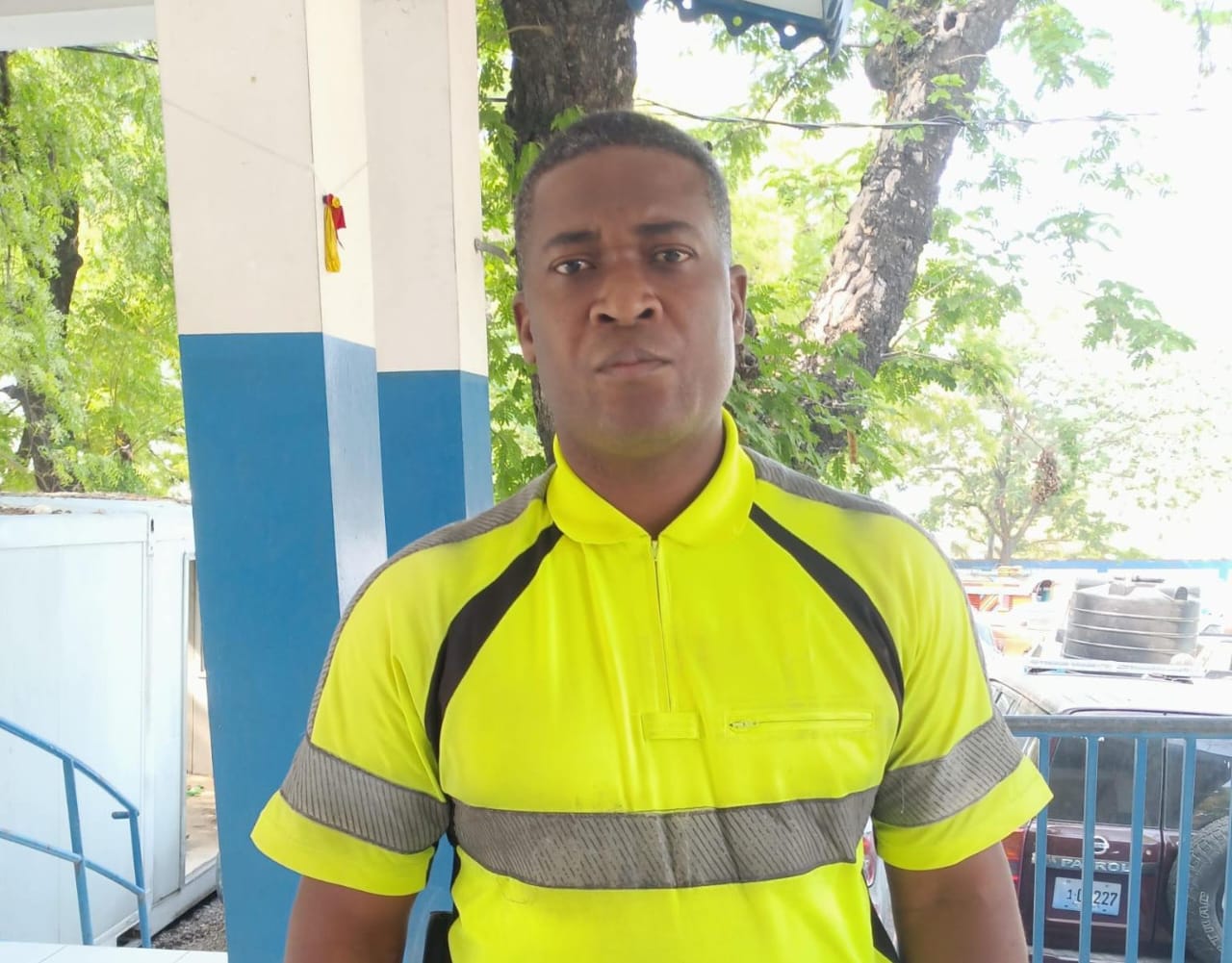
Duckenson ‘DJ Lucky’ Calixte standing in downtown Cap-Haïtien in early February 2026. Photo by Onz Chéry/ The Haitian Times.
The Haitian DJ spent months in detention centers across the U.S. before being deported, describing tensions and violence among detainees. He said he experienced gang violence at an ICE center in California, claiming that Hispanic gang members targeted Black immigrants.
He explained that at that detention center, Black detainees have to stick together to survive. “I was with some friends from Jamaica, Africa, like from Nigeria and Congo,” DJ Lucky said.
“Sometimes you could just be walking around and they think you’re a gang member… I’m Haitian, you already know, they’re thinking I’m a Zoe and everything,” he said. “We had to be united to survive.”
Starting over in country he barely recognizes
For many deportees like Calixte, returning to Haiti after years abroad — especially those who left as teenagers or earlier — means starting over socially, professionally and culturally.
“The transition is more than stressful. Mentally, it’s taking a lot out of me.”
Duckenson ‘DJ Lucky’ Calixte
He does not cook because he never learned to use charcoal stoves. He relies financially on relatives in the U.S. and has postponed personal relationships while struggling to find stable work.
“If you don’t accept changes, you’re not ready to live,” Calixte said. “I had to let go of the luxurious life I had in the U.S. This is reality now.”
His experience reflects a broader pattern. Since President Donald Trump returned to office in January 2025, deportations have intensified as part of a wider effort to reduce the number of immigrants in the U.S. At least 550 Haitians have been returned within the past year.
Upon arrival, deportees typically receive minimal assistance — often just a meal and a small stipend — with no structured reintegration support. Many struggle to find housing, employment or psychological support, particularly as gang violence prevents them from returning to their original communities.
Deportees raised or long settled abroad often find the transition especially jarring. Many have to settle in parts of the country other than their original home, face language barriers, lack local networks and are unfamiliar with Haiti’s daily socio-economic challenges.
Now living with relatives, Calixte is slowly trying to restart his DJ career. He has secured a few gigs in northern cities, including Limonade and Fort-Liberté, but lacks the connections that once fueled his success in Atlanta.
Attempts to return to radio have also proven difficult. One station in Cap-Haïtien asked him to pay 10,000 gourdes, about $76, per hour for airtime — a cost he cannot afford.
“It’s a missed opportunity. The way he was performing here [in the U.S.] he could’ve been big,” said Tanis Tamar, a South Florida-based entrepreneur who has known Calixte for years. “He’s still young, I can’t say he lost his chance but it’s very difficult for him now.”
Family separation and uncertainty
Beyond financial hardship, Calixte says the emotional toll of deportation is difficult as well — particularly being separated from his family.
“Haiti is not somewhere I’m trying to be so I’m not bringing my children,” he said. “It’s not safe at all.”
As he continues to adjust, Calixte describes his situation as a forced reset.
“The transition is more than stressful,” he said. “Mentally, it’s taking a lot out of me.”
Like this:
Loading…