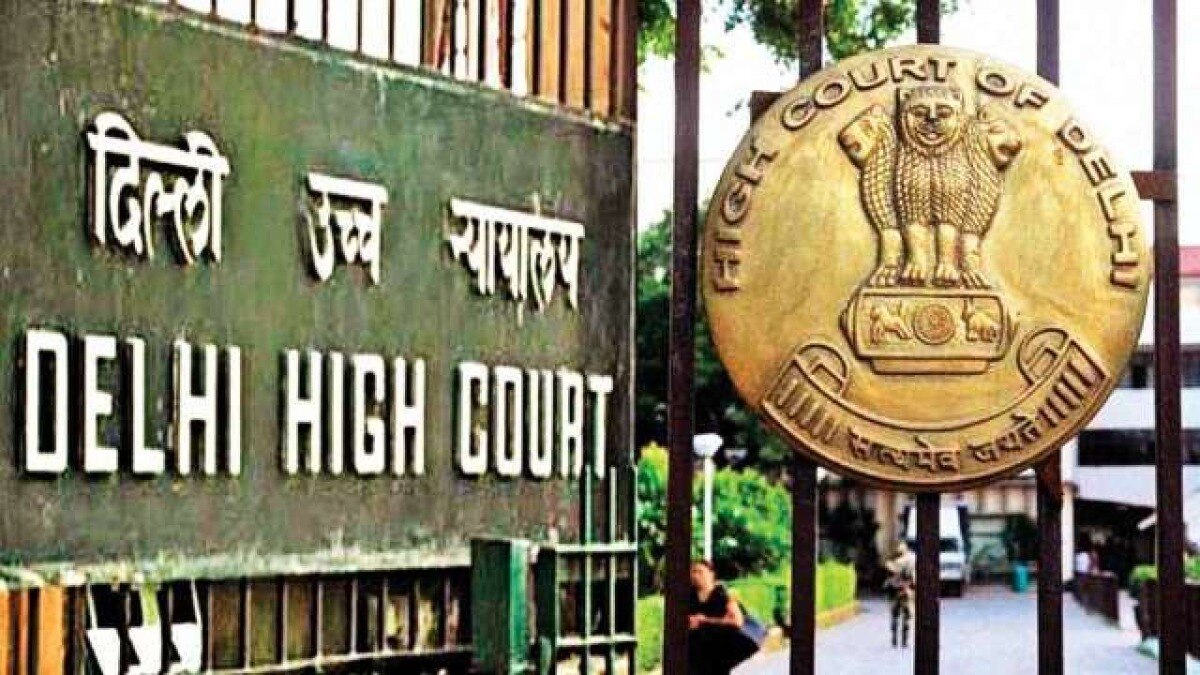
The Delhi High Court has allowed the Government of Canada to pursue a civil recovery suit in India against Indian-origin former Ontario government official Sanjay Madan and others, rejecting preliminary objections aimed at blocking the proceedings. In a significant ruling with potential implications for cross-border asset recovery and international fraud investigations, the court held that Canada is entitled to approach Indian courts to trace and recover funds allegedly siphoned from public programmes in Canada and transferred to bank accounts in India.
Justice Vikas Mahajan dismissed an application filed by Madan under Order VII Rules 10 and 11 of the Civil Procedure Code (CPC) seeking return or rejection of the plaint. The court concluded that the application lacked merit and allowed the Canadian government’s suit to proceed on merits.
The case stems from a major fraud investigation in Canada involving Madan, a former employee of Ontario’s Ministry of Education. According to the suit, Madan pleaded guilty before the Ontario Superior Court of Justice in April 2023 to charges arising from a scheme that allegedly defrauded the Government of Ontario of millions of dollars. He admitted abusing his official position and participating in fraudulent activities and kickback arrangements between 2011 and 2020.
The Canadian government alleges that the fraud operated through two major schemes. One involved Ontario’s “Support for Families Program,” introduced during the COVID-19 pandemic to assist parents with at-home learning expenses. Investigators claim that more than 78,000 fraudulent applications were submitted, leading to disbursements exceeding 10.8 million Canadian dollars.
The second scheme, described as the “Fee for Service Consultants” fraud, allegedly ran from at least 2011 to 2020 and involved kickbacks linked to government IT consulting contracts. Canadian authorities say Madan and his associates received unlawful commissions while steering contracts to vendors.
According to the suit, Madan and co-accused Vidhan Singh admitted that proceeds from the schemes were transferred to India and used to acquire assets. Investigations traced substantial sums to accounts held by Madan and his wife across several Indian banks. Canadian authorities claim that at least CAD 33.3 million remains unrecovered and is located in India.
One of the central issues before the Delhi High Court was whether it had territorial jurisdiction to entertain the suit. The court noted that the plaintiff had specifically alleged that fraud proceeds were transferred into bank accounts maintained in Delhi and that reliefs had been sought against several banks and financial institutions operating within its jurisdiction. It held that these allegations constituted a part of the cause of action and were sufficient to confer jurisdiction on the court.
The court also dealt with Madan’s argument that Canada should pursue recovery proceedings exclusively in Canadian courts. Rejecting the contention, Justice Mahajan observed that Canada is not a “reciprocating territory” under Section 44A of the Civil Procedure Code. As a result, a Canadian decree cannot be directly executed in India, making it necessary for Canadian authorities to approach Indian courts to recover assets allegedly located here.
The High Court further rejected the plea that India was an inconvenient forum, holding that the doctrine of forum non conveniens does not apply to ordinary civil suits governed by the CPC in the manner suggested by the defendants.
With the objections dismissed, the Canadian government’s suit seeking recovery of allegedly misappropriated funds, rendition of accounts from Indian banks, and related reliefs will now proceed before the Delhi High Court. The case is expected to be closely watched as it raises important questions about international fraud, asset tracing, and the recovery of alleged crime proceeds across jurisdictions.
– Ends
Published By:
Nitish Singh
Published On:
Sep 7, 2026 02:46 IST