Source: Officeholidays.com
South Africa is home to notable cultural festivals and ceremonies. One of its biggest and most famous is the Zulu Reed Dance. The Reed Dance Festival is an ancient tradition of the Swazis in Eswatini, and the Zulu nation, known as Umkhosi womhlanga, the official Zulu name for the ceremony. It is an annual event held in early September at the Enyokeni Royal Palace in Nongoma, KwaZulu-Natal, South Africa.
Umhlanga Reed Dance, on the other hand, is also a closely related festival celebrated around late August in Eswatini by the Swazi people and hosted by King Mswati III and the Queen Mother (Indlovukazi), at the Ludzidzini Royal Residence in Lobamba, Kingdom of Eswatini.
Both festivals refer to the same fundamental cultural tradition. They hold the same ritual, core values and timing. The only differences are the location and the host. The festival’s name is derived from the riverbed reeds.
The Umhlanga Reed Dance Festival is a time-honored tradition that has existed for generations. It is held in honor of the Zulu people’s ancestors and is also a way to give thanks for the bountiful harvest. One of its most important aspects is the reed dance itself.
In the past, young Zulu men would go into the mountains to find reeds. They would then use these reeds to make weapons and shields. The young women would also go into the mountains to gather reeds, but would weave them into baskets and mats.
This culture-influenced festival aims to pay respect to women and prepare young girls for womanhood. It is a celebration of virginity and fertility and an avenue for young Zulu women to show respect for their elders. Thousands of young women travel from all over South Africa to participate in the Reed Dance every year. For many of them, it is a once-in-a-lifetime experience.
Source: Eswatini Tourism Authority
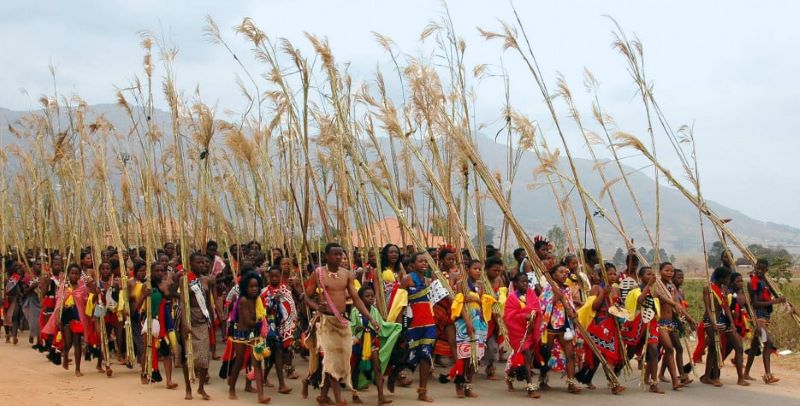
Another critical aspect of the festival is the virginity test. It is a ritual performed on all the young women attending the festival. A group of older women inspects each girl’s virginity before she is allowed to participate in the reed dance. Upon passing the virginity test, their senior princess leads thousands of Zulu girls, carrying the reeds, singing, and dancing. They appear bare-breasted in traditional accessories defined by their beadwork, which dramatically emphasizes traditional beauty.
As a sign of honor and respect, they present their reeds to the Queen Mother, an important figure in the Zulu community. It is also an opportunity for them to learn about their culture and traditions.
For the past month, social media, South Africa and the Eswatini home sites have been filled with anticipatory posts and comments about the famous Umhlanga Reed Dance 2026. Since the official festival dates were announced, the internet has been all about the event, with trends and hashtags like #umhlanga, #reeddance, #umhlangaeswatini, and the like. It is a very popular festival with lots of Umhlanga reed dance photos and information scattered across the internet.
The Reed Dance festival is a four-to seven-day event and one of the biggest cultural festivals in both South Africa and Eswatini, characterized by art, dance, music and cuisine. It brings communities and families together to celebrate their heritage. The date is often announced beforehand so that families can prepare. The 2026 Umhlanga Reed Dance dates have been officially announced. The Festival is set to start on August 25th and run through August 31st. Monday, August 31, is day 7, the main ceremony day, and the dancing will be attended by His Majesty King Mswati III, signalling a public holiday in Eswatini.
Source: Umhlanga Reed Dance Eswatini | Facebook
Families prepare traditional dishes such as umngqusho (a cornmeal dish) and beef stew, and everyone enjoys music and dancing well into the night, and make the famous Umhlanga reed dance videos. Young people also get a chance to meet potential partners.
While the lessons and ceremonies are steeped in Zulu tradition and culture, this mass gathering of young people is also an opportunity to discuss contemporary social issues that affect them.
In recent years, the Reed Dance has become more popular with tourists. While some believe this commercialization detracts from the event’s cultural significance, others argue that it helps preserve Zulu traditions by providing an income for those who participate and allows visitors from all over the world to experience South African culture in all its glory.
Those looking for something different and off the beaten path during their travels. should take advantage of a visit to South Africa for this festival.
Victoria Ezechukwu-Nwagwu is an Associate Editor at FunTimes Magazine with a strong background in media, strategic communications, and editorial leadership. She brings a thoughtful, detail-driven approach to storytelling, content development, and collaboration, ensuring high editorial standards.
She plays a key role in shaping impactful narratives and driving creative innovation across the publication.