

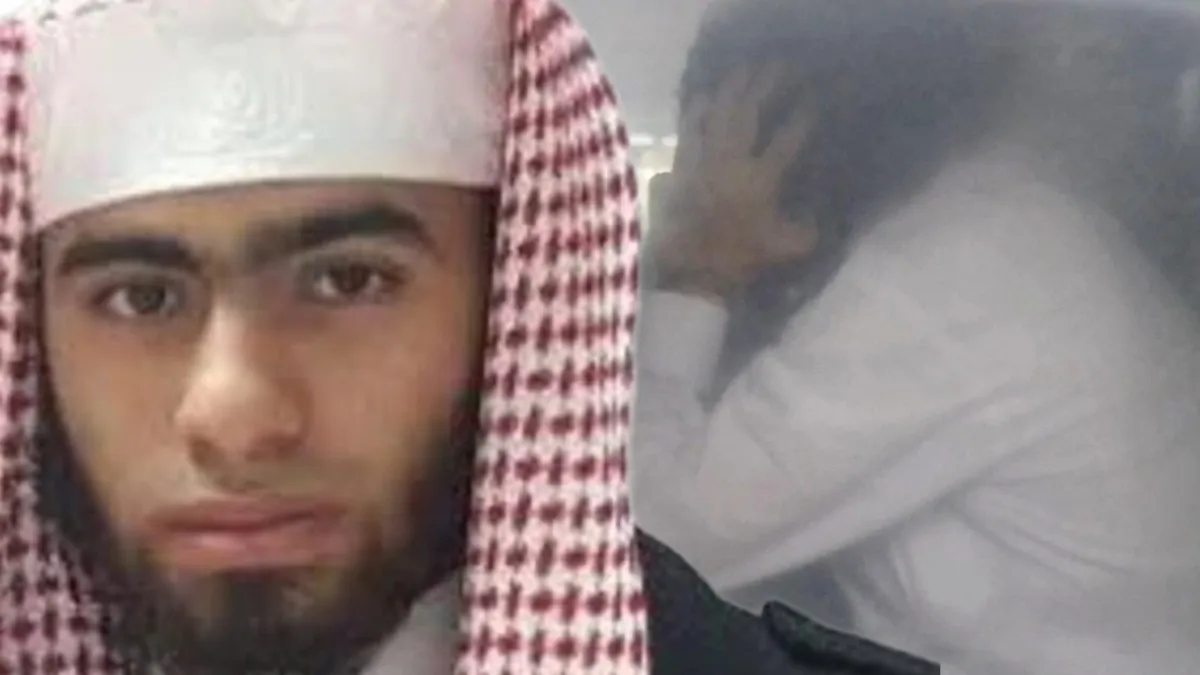
A convicted Islamic State terrorist with links to the alleged Bondi Beach massacre gunman is set to walk free from prison on Sunday, despite authorities having the power to seek an extension of his detention.
Self-proclaimed Australian ISIS commander Isaac El Matari is approaching the end of his five-year prison sentence, with the Australian Federal Police now reportedly seeking court-imposed restrictions on his movements and activities.
According to The Australian, the Department of Home Affairs has not applied for a continued detention order that could have kept El Matari behind bars for up to another five years.
Sign up to The Nightly’s newsletters.
Get the first look at the digital newspaper, curated daily stories and breaking headlines delivered to your inbox.
By continuing you agree to our Terms and Privacy Policy.
The AFP has reportedly launched Federal Court proceedings seeking an interim control order, which could impose restrictions on the convicted terrorist for up to 12 months.
Isaac El Matari, of Greenacre. Credit: Supplied
El Matari has spent the past five years at Macquarie Correctional Centre, a maximum-security prison about 50km south of Dubbo in regional NSW.
El Matari was sentenced in 2021 after being convicted of multiple terrorism offences linked to his ambitions to establish an Islamic State stronghold in the Blue Mountains.
He had also discussed plans to attack Sydney’s St Mary’s Cathedral and the US embassy, as well as travelling to Afghanistan to fight alongside ISIS militants.
El Matari had previously been imprisoned in Lebanon after attempting to join Islamic State, according to ABC reporting from sentencing.
The convicted terrorist was arrested in 2019 during a counter-terrorism investigation that also brought alleged Bondi gunman Naveed Akram to the attention of intelligence authorities.
The Nightly previously reported that Akram had appeared in a 2019 street-preaching video associated with the Al Madina Dawah Centre in Bankstown, which had links to controversial preacher Wissam Haddad.
Haddad denied having any personal, organisational or instructional connection to Akram, while the centre also rejected claims of an association with the accused gunman.
Director-General of Security of Australia, Mike Burgess. NewsWire / Martin Ollman Credit: Martin Ollman NewsWire/NCA NewsWire
Akram, who is accused of carrying out the deadly attack on a Hanukkah celebration at Bondi Beach, was linked to a western Sydney extremist network associated with controversial Islamic preacher Wissam Haddad.
The ABC reported Akram had been investigated by ASIO in 2019 because of his associations with members of an Islamic State-linked network, including El Matari.
Further documents uncovered by ABC Investigations in May showed Akram remained on the radar of ASIO and police in 2022, with intelligence authorities continuing to manage him as a residual security risk.
Investigators later uncovered evidence connecting Akram and El Matari through another convicted Islamic State supporter, Youssef Uweinat.
NSW Police representatives say their world has changed since last year’s deadly Bondi attack. (Dan Himbrechts/AAP PHOTOS) Credit: AAP
El Matari was arrested alongside Radwan Dakkak, who was subsequently jailed for terrorism-related offences and subjected to a control order following his release.
Dakkak was arrested again just two weeks after leaving prison for breaching the restrictions imposed on him.
Those restrictions included daily police reporting, limits on communications and internet access, and prohibitions on associating with certain individuals, including El Matari.
During El Matari’s sentencing in October 2021, Justice Peter Garling found his prospects of carrying out the attacks he had discussed were extremely limited.
The judge noted El Matari had not acquired weapons, recruited followers or developed detailed plans capable of being carried out.
In 2022, the Law Enforcement Conduct Commission also found NSW Police had unlawfully conducted a covert search involving El Matari by misusing counter-terrorism powers.
The Nightly has contacted the Department of Home Affairs and Australian Federal Police for comment.
