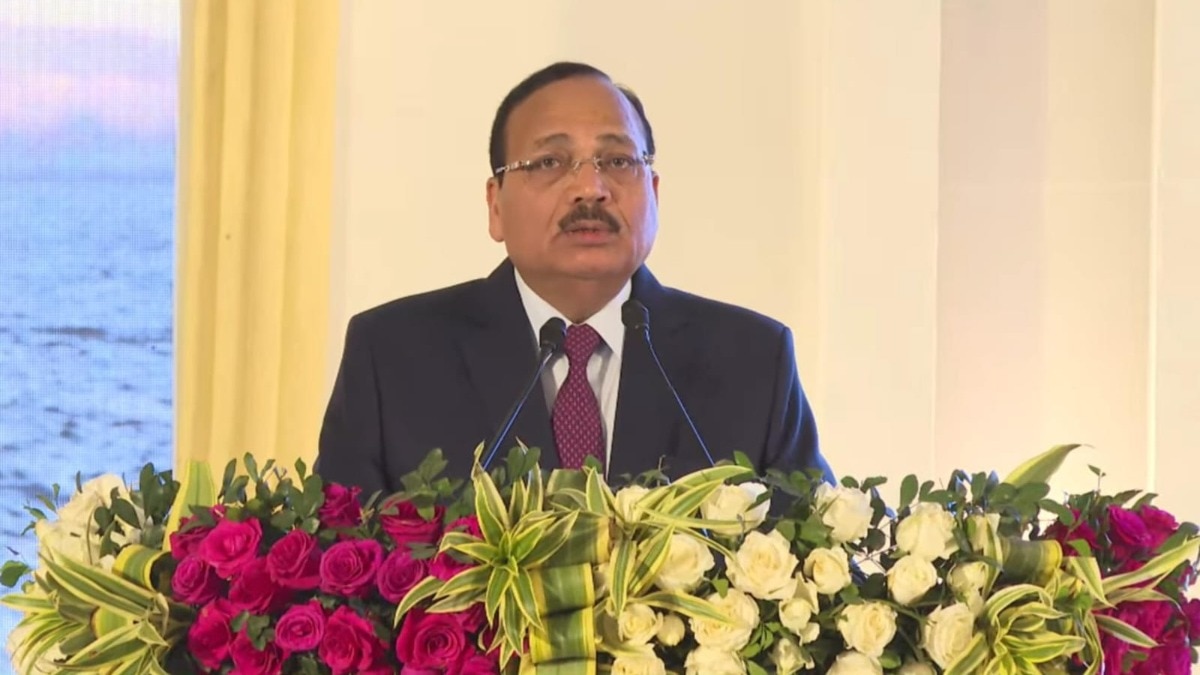
Chief Justice of India Surya Kant on Saturday stressed the need to strengthen judicial infrastructure and appoint more judicial officers in district courts to ensure timely delivery of justice. He said courts were under pressure from a rising number of cases and that more courtrooms, faster recruitment and better facilities were essential.
Speaking after inaugurating a multilevel parking facility at the district courts complex, Kant urged the Punjab and Haryana governments to take the necessary decisions to update and develop infrastructure at sub-divisional and district courts. Punjab Governor Gulab Chand Kataria and Supreme Court judges Justice AG Masih and Justice Sheel Nagu were present at the event.
Kant said the number of bars at the sub-divisional level in Punjab and Haryana was gradually increasing, which meant the demand for judicial officers was also rising. “You may have noticed that even with annual recruitment, we are unable to fill all the posts. One major reason for that is, if we appoint judicial officers, do we have the judicial infrastructure available for them? If there are no courtrooms, what will be the use of appointing a judicial officer?” he asked.
He also pointed to the sharp rise in fresh cases in recent years. “Let me give you the example of the Supreme Court. In 2024, nearly 75,000 cases were filed there. In 2025, that number rose to around 80,000-83,000. This year, we feel that the number will cross one lakh. Keeping this in view, I requested the central government, which increased it (sanctioned strength of Supreme Court judges) from 34 to 38,” he said.
The CJI said there was a narrative about a backlog of cases in the country, but added that the issue needed to be understood properly. He said he did not accept the claim that pending cases amounted to one crore. According to him, a case is counted as soon as it is filed, but it cannot be decided the same day because of procedural requirements and the need to follow natural justice. He said notices have to be issued, pleadings completed, issues framed in civil suits, and both sides given a chance to present evidence before a decision is made. “As far as the procedural requirement is concerned, I do not count that case in arrears. There may be pendency, but pendency is for a good reason because the procedure provided in the law is being followed in that case,” he said.
Even so, Kant said the courts were overburdened and needed more officers in the district judiciary along with robust infrastructure to deliver justice within a timeline. Later, speaking to reporters, he said artificial intelligence in the judiciary would be introduced through regulation. “You can visit the Supreme Court’s website, where I have uploaded the AI regulations. You will understand how we are using AI, and how we will expand its use further. But in a regulatory manner,” he said. He also said the Indian judiciary was a leader in the use of technology and made optimum use of technological advances compared with judicial systems in other countries.
In sum, Kant’s message was that timely justice will depend on stronger court infrastructure, more judicial appointments, quicker recruitment and carefully regulated use of technology, while managing the growing volume of cases in courts.
– Ends
Published By:
India Today Web Desk
Published On:
Jul 18, 2026 19:06 IST