Education
The president, Christina H. Paxson, led the campus for over a decade, but in recent years faced protests, political pressure, and a shooting that killed two students.
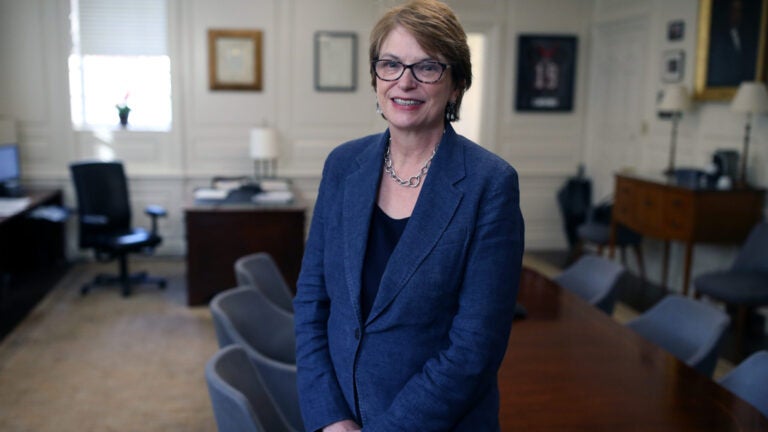
Brown University President Christina H. Paxson will step down from her position at the end of the upcoming academic year in 2027, university leaders announced Monday. Jonathan Wiggs/Globe Staff
August 3, 2026 | 4:32 PM
2 minutes to read
Brown University’s president said Monday that she would step down at the end of the coming academic year, after steering Brown through fraught negotiations with the Trump administration and the agony of a campus shooting that left two students dead.
The president, Christina H. Paxson, has been in her post longer than any other current leader of an Ivy League university. She became president in 2012.
In an open letter Monday, she described her resignation as “the right decision for me and my family” and noted that she had previously extended her tenure to manage the university’s clash with the federal government.
The university extinguished some of that fight last summer, when it agreed to a settlement that included Brown’s $50 million commitment to workforce development programs in Rhode Island. Brown forged the agreement after the Trump administration moved to block $510 million in research funds, which was part of a broader campaign to punish elite universities for perceived antisemitism and inaction over protests against the war in the Gaza Strip.
Although the Brown agreement explicitly preserved the university’s authority over academic matters and restored the research money, its terms also aligned the school with the administration’s approaches to transgender athletes and “merit-based” admissions policies.
Paxson faced substantial campus criticism over the settlement, which some regarded as an act of capitulation to an administration abusing its power. But later in the year, she forcefully rejected a Trump administration proposal for a compact with colleges and universities that floated tying research funding to ideological alignment.
At the time, Paxson said she was worried that the compact “would restrict academic freedom and undermine the autonomy” of Brown.
(Hours before Paxson’s announcement Monday, the administration effectively abandoned talk of a compact and encouraged universities to detail on their websites how they are responding to a litany of complaints about higher education.)
Brown’s year of turbulence turned to tragedy in December, after a former Brown student opened fire on campus, killing two and injuring nine others. As Paxson tried to lead the university through the aftermath, her leadership came under scrutiny, especially over the school’s approach to securing its campus in Providence, Rhode Island, where visitors have long had easy access.
Brian T. Moynihan, the Bank of America CEO who is the university’s chancellor, said Paxson had led Brown through its challenges with a “balance of commitment to academic excellence, operational excellence and a collaborative philosophy.”
Moynihan signaled that the cycle of strategic planning had played a role in the timing of Paxson’s exit. He added that there would be a national search for the next president.
This article originally appeared in The New York Times.
Sign up for the Today newsletter
Get everything you need to know to start your day, delivered right to your inbox every morning.