

Local News
The “indefinite” strike could have gone until the two sides reached a contract agreement.
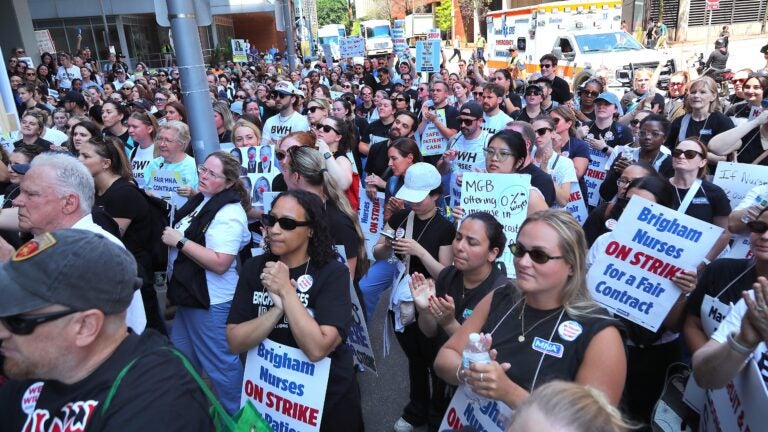
Brigham and Women’s Hospital nurses pressed pause on their upcoming strike to give union members a chance to vote on the hospital’s “last, best and final offer,” the union announced Saturday evening.
The hospital made the offer at the 27th bargaining session following about 24 hours of negotiations on Thursday and Saturday, according to the hospital.
The announcement came just days before the union planned to stage its second strike on Wednesday. The “indefinite” strike could have gone until the two sides reached a contract agreement, according to the Massachusetts Nurses Association.
While the postponement marks progress between the two sides after months of back-and-forth, the possibility of a strike still looms.
Joe Markman, a spokesperson for the MNA, wrote to Boston.com that the vote is “being scheduled.”
“Right now, [Brigham nurses] are engaged in a democratic union process, talking with one another, reviewing MGB’s offer, evaluating if the final offer sufficiently addresses their core concerns,” Markman wrote in a statement. “We have postponed the strike to allow that process to unfold.”
Brigham and Women’s hospital wrote in a statement that it is “thankful” the union pulled its strike notice.
“The hospital believes its final proposal reflects the value our nurses bring to patient care while balancing our responsibility to patients, our workforce, and the long-term strength of the hospital,” according to the statement.
The hospital’s latest offer for nurses
The hospitals wrote in a statement that their offer focused on wages and health insurance — two priorities for the union.
The offered contract, which would be in effect until Sept. 30, 2028, added two annual 2.5 percent increases in wage ceiling for the most tenured nurses.
However, the union has previously pushed for across-the-board wage increases to account for inflation and affordability.
“Nurses have spent countless hours negotiating and making compromises to find a path forward,” the union wrote in a statement Saturday. “Yet MGB continues to refuse to provide cost of living wage increases, a strategy we believe is intended to break our union, putting patients and the community at risk.”
The hospital wrote in its statement that nursing pay at Brigham and Women’s is “highly competitive and market-leading.”
The nurses’ July strike
The planned strike would have been the union’s second such effort in the past three months. Around 4,000 Brigham nurses staged a one-day strike on July 8. The hospital then locked the nurses out for an additional four days, citing contracts with temporary nurses.
In the months following the strike, the union accused Mass General Brigham of failing to negotiate in good faith.
According to a news release from the union, the hospital gave the option to remove across-the-board wage increases and discuss other priorities, or drop outstanding issues and discuss the wage increase.
The union wrote that it rejected this “false choice,” and it offered to meet with the hospital to discuss flexibility. However, the hospital rejected that offer, the union wrote.
On Aug. 11, a federal mediator allegedly told the union that the hospital “does not want to continue meeting with nurses” due to a “practical impasse,” according to a union release.
A second strike?
The nurses authorized the indefinite strike on Sept. 24 with 93 person of nurses voting in support. The union scheduled the strike for Oct. 14.
On Oct. 5, the union filed an unfair labor practice charge against Mass General Brigham — the fourth charge the union has brought against the hospital. The union alleges the hospital changed nurses’ job descriptions and duties without first bargaining over the changes, according to the release.
The bargaining committee and hospital management agreed to meet last week before the strike to avoid a “healthcare crisis” in the commonwealth, said Kelly Morgan, a nurse and chair of the bargaining committee.
Massachusetts’ entire Congressional delegation called on the hospital to remain in negotiations in a statement last Wednesday.
“The nurses at Brigham and Women’s Hospital have demonstrated their willingness to continue negotiating with Mass General Brigham leadership,” according to the statement. “A strike has the potential for serious impacts on our communities, patients, and healthcare workers, which we know no nurse or patient wishes to experience.”
The union ultimately decided to postpone the strike Saturday evening due to the “complexity of the agreement” and the impact a strike would have, according to a statement from the union.
However, the postponement does not rule out the possibility of a future strike. If the union does not vote to ratify the contract, the union would need to once again notify the hospital of the strike within the legally required 10 days.
“Through [a] deliberative process – centered on what is best for the patients, community, their professional practice and economic needs – the BWH nurse will determine the best course of action moving forward,” Markman wrote.

Sign up for the Today newsletter
Get everything you need to know to start your day, delivered right to your inbox every morning.
