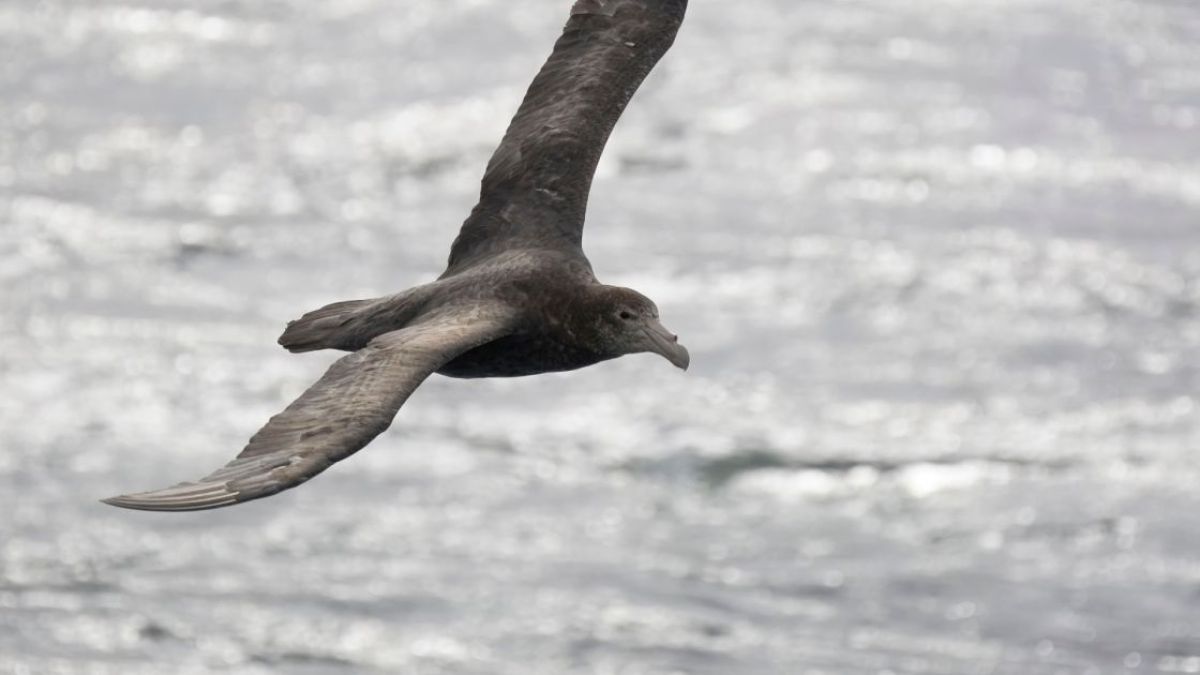
Image via PIRSA
South Australian authorities are awaiting confirmatory testing after a giant petrel found at Hardwicke Bay on the Yorke Peninsula returned a suspect result for H5 bird flu.
The migratory seabird was reported to the Emergency Animal Disease Hotline before being collected and sampled by the Department of Primary Industries and Regions (PIRSA). The initial testing detected a suspected case of H5 bird flu, with samples now sent to the CSIRO’s Australian Centre for Disease Preparedness in Geelong for confirmation.
If confirmed, it would be South Australia’s second confirmed case of H5 bird flu.
Importantly, authorities say the virus has not been detected in commercial poultry flocks, captive birds or any other birds in South Australia, and it has not become established anywhere in Australia.
Since the beginning of 2026, more than 900 bird samples have been tested across South Australia as part of an extensive surveillance program.
The State and Federal Governments have invested a combined $8.1 million into PIRSA to strengthen emergency response capabilities, surveillance, diagnostics and workforce preparedness ahead of the virus’s arrival via migratory birds. An additional $3.5 million has also been provided to the Department for Environment and Water to support wildlife preparedness and response activities, while federal funding has helped protect threatened native species at Cleland Wildlife Park, Adelaide Zoo and Monarto Safari Park.
Primary Industries and Regional Development Minister Clare Scriven said the latest suspect detection highlighted the importance of ongoing surveillance.
“It is disappointing that South Australia has a suspect case, however it was always a possibility through the pathway H5 bird flu has to our shores via wild migratory birds.
“The surveillance we are undertaking is critical to get a broader understanding of where these birds are being seen, and I thank the public for reporting sick or dead birds to us.”
PIRSA Chief Veterinary Officer Dr Skye Fruean said the detection appears to be isolated.
“This new suspect case at Hardwicke Bay is considered isolated as there were no other impacted birds in the same area. This is encouraging as there are still no signs yet of spread of H5 bird flu into native wildlife.”
If you see sick or dead birds or other wildlife, do not touch them. Avoid contact. Record what you see. Report it to the Emergency Animal Disease Hotline on 1800 675 888 from anywhere in Australia.
For more information visit birdflu.gov.au. For more information on bird flu preparedness in SA, visit pir.sa.gov.au/birdflu.
Signs of bird flu can include multiple sick or dead birds in one location, weakness or an inability to stand or fly, unusual behaviour, swelling or discolouration, and respiratory distress.