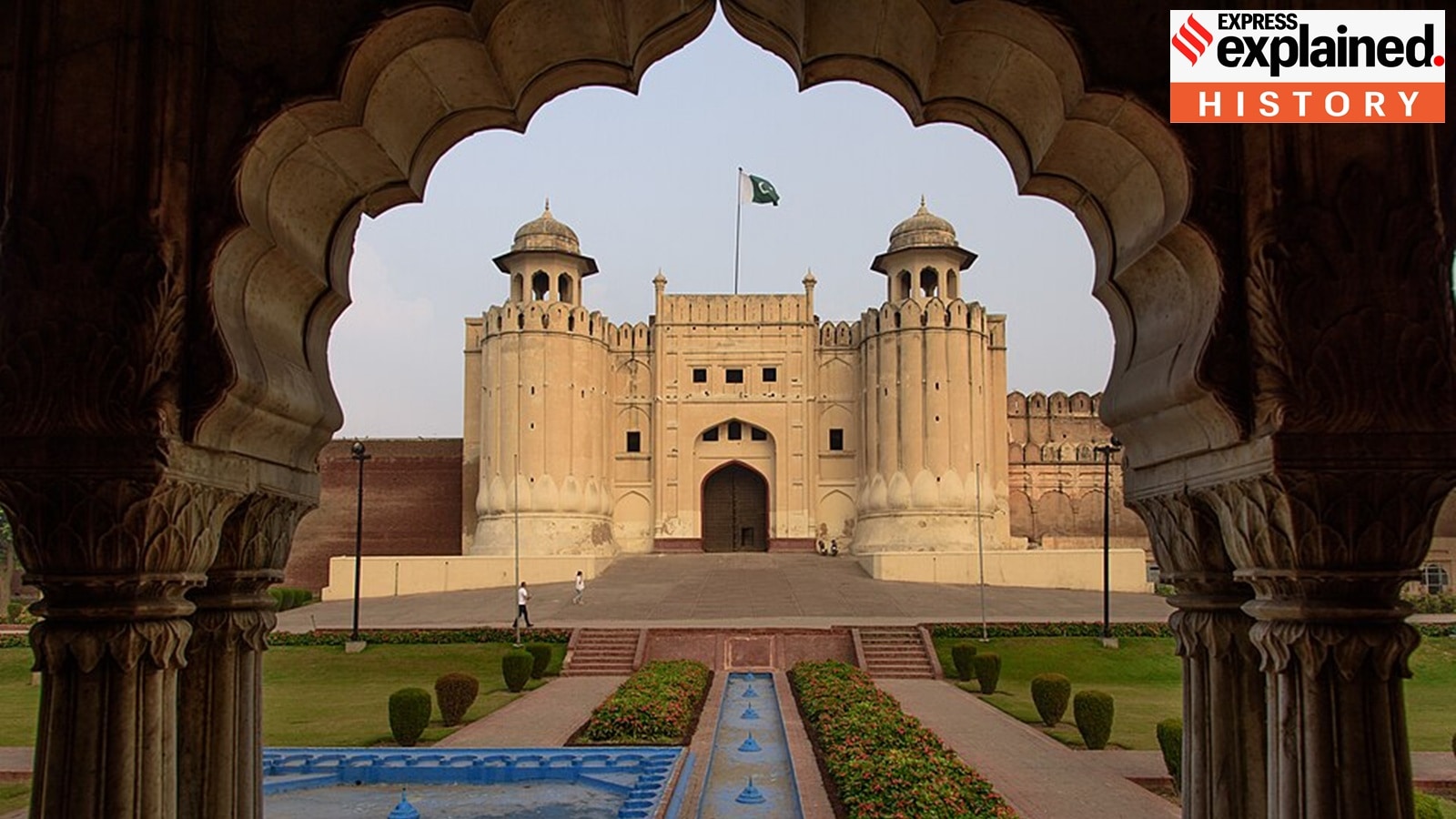
Lahore, much like New Delhi, is a palimpsest prepared over centuries, with several histories peeking over the shoulders of several presents. Recently, it has been in the news for turning back a comparatively recent page of its long past — reverting to some pre-Partition Hindu and British names of its streets and localities.
In India, many seem surprised by this: isn’t Pakistan a country where minorities are denied their rights? Why is an Islamic country embracing Hindu names? Why is the change happening now?
The answer to these questions can be found in the labyrinths of Lahore’s rich history, and the nuances about a complex society easy to miss in simplistic narratives. After all, so many in India ne Lahore ni vekhya.
What is the current name change project in Lahore?
The names coming back include Queen’s Road, Jail Road, Davies Road, Lawrence Road, Empress Road, Krishan Nagar, Santnagar, Dharampura, Brandreth Road, Ram Gali, Tempbell Street, Laxmi Chowk, Jain Mandir Road, Kumharpura, Mohan Lal Bazaar, Sundar Das Road, Bhagwan Pura, Shanti Nagar and Outfall Road.
Jain Mandir road, in fact, was renamed after the Babri Masjid when the Mughal-era mosque was demolished in Ayodhya in 1992. The Lahore temple had been torn down in retaliation, but has been restored.
The latest initiative is part of a 50-billion Pakistani rupee project called Lahore Authority for Heritage Revival, or LAHR, initiated by the Maryam Nawaz government of Punjab. LAHR’s patron is Maryam’s father and former Pakistan Prime Minister Nawaz Sharif. The initiative aims to restore Lahore to its old glory, and conservation of history and heritage is one part of the process.
According to Punjab’s Directorate General of Public Relations, the projects under LAHR include the rehabilitation of “historic gates such as Delhi Gate, Taxali Gate, Mochi Gate and Shah Alam Gate, alongside extensive façade restoration and streetscape improvement projects…”
Story continues below this ad
In addition, Mughal monuments, and “historic commercial centres such as Anarkali Bazaar, Neela Gumbad, Paan Gali and Bakhshi Market are also being revitalised to preserve the city’s traditional mercantile culture.”
Is there no opposition to the name changes?
The politics of name changes has never been very strong in Pakistan. In the years after Partition, even when some names were changed officially, people still used the old names colloquially. The official page of the District of Lahore says that the city was founded by Luv, the son of Lord Rama.
Yaqoob Khan Bangash, historian who teaches at Institute of Business Administration, Karachi, told The Indian Express, “Even when names were changed officially, many street signs still carried the old names. There are many government hospitals, like Sir Ganga Ram Hospital, which have retained Hindu names. In fact, there is a Nehru Park in Lahore, whose name has been changed, and I once asked people from three generations what they refer to it as. All three said they call it Nehru Park.”
Bangash puts it down to the fact that Lahore did not see “ideological migration” during the Partition. “The elite Muslims from Bihar, Madhya Pradesh, Uttar Pradesh, etc., went to Karachi and other cities. The migration in Punjab was not ideological, it was forced. The migrants in Lahore were mainly working class. It did not get a new elite who would want to reshape the city. Lahore’s existing elite were proud of their city, wanted to retain its multicultural and multi-religious past, and did not accept the monolithic identity the Partition brought. So even when names were changed at the government level, there wasn’t much enthusiasm for it within the locals.”
Story continues below this ad
The fact that refugees in Lahore blended in more easily than in other major cities both sides of the border has been written about elsewhere too. Ian Talbot, history professor at the University of Southampton, has written in a 2007 paper, “Tensions between refugees and locals often occurred either in situations of fear of a refugee takeover, as in Karachi, or of acute competition for resources.” In Lahore, the refugees were skilled craftsmen or traders, who “either filled niches in the labour market left by departing Hindus, or started new industries,” Talbot writes. He adds that many refugees had pre-Partition ‘birader’ (community) ties with Lahore. Thus, the new Muslim population did not feel the need to erase the Hindu past.
Bangash said that in addition, Lahore was always a hub of education and culture, and this has played a role in the pride the city takes in its heritage.
If all of this is true for Lahore, would the reverting to Hindu and British names see protests in other parts of the country? Khuwaja Shafique Ahmed, a public policy researcher who hails from Sindh and lives in Karachi, said Sindh too has hospitals and buildings that have retained their names, giving the example of Rai Bahadur Udhavdas Tarachand Hospital in Shikarpur.
The Rai Bahadur Udhavdas Tarachand Hospital in Shikarpur, Sindh, Pakistan. (Photo: Shafique Ahmed)
“The politics of renaming is rooted in a tussle between two religions, and Pakistan, an Islamic state, doesn’t really have that. Plus, the common people realise that Islamisation of everything has resulted in extremism. They want to reclaim their history and identity,” Ahmed said.
Why the change now?
Story continues below this ad
What is driving the Maryam Nawaz government to spearhead this drive? Pakistan has recently attracted positive international attention. Punjab wants to attract more tourism and investment, and the move is part of an effort to project an inclusive, vibrant image.
Bangash said, “The PMLN (the Sharifs’ party), is not very ideologically driven. They are more a business-oriented party. And the fact remains that Pakistan reacts to what India does. When India was projecting a secular image, Pakistan was more determinedly Islamic. Now that India is taking a communal turn, Pakistan is becoming a more inclusive democracy.”