

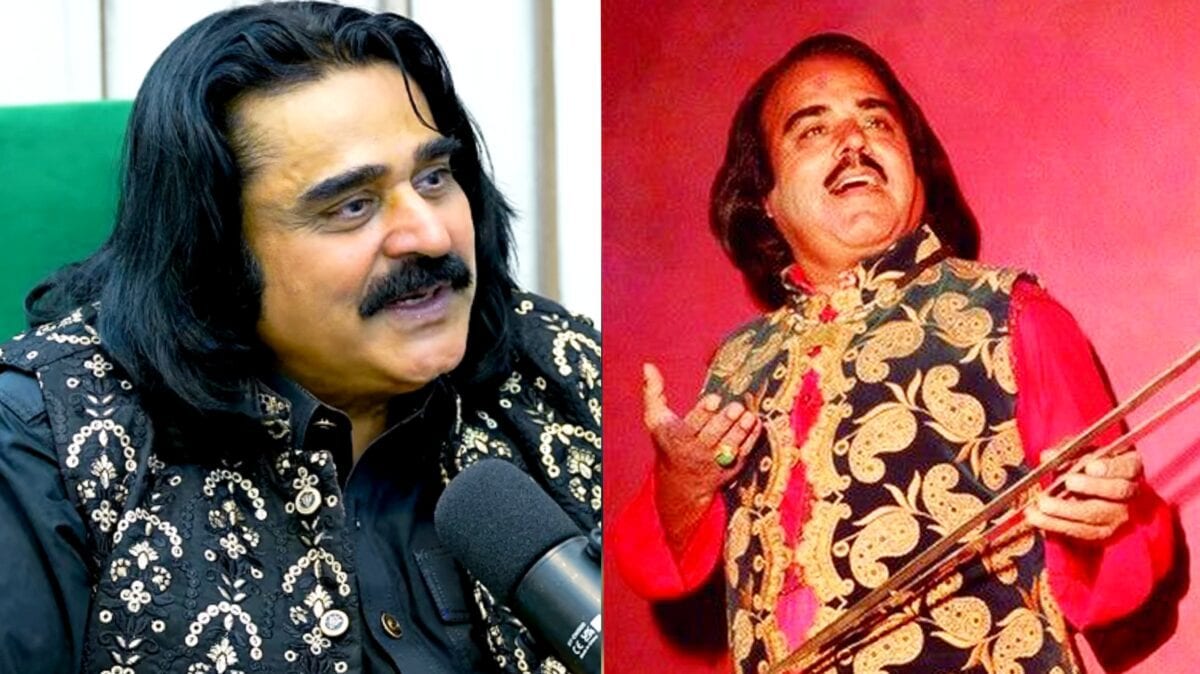
Arif Lohar is a famous Punjabi folk singer who hails from Punjab, Pakistan. He is also admired on the Indian side of Punjab because of his iconic “Jugni,” which went viral in India in 2006. He usually sings with his native musical instrument, which resembles kitchen tongs. His folk music reflects the culture of Pakistani Punjab. Arif Lohar has also gained recognition in the modern Punjabi music scene after his collaboration with Deep Jandu and Roach Killa for the popular Punjabi song “Aa Tenu Mouj Karawa.”
Arif Lohar recently gave an interview on the YouTube podcast Lunch with Lillas. In the show, he talked about his father’s success, his educated family background, and continuing his father’s legacy.
Talking about his father’s success, Arif Lohar said, “Some things are born naturally; folk style is one of them. It emerged effortlessly on its own from the Punjabi soil. My father was born in a small village, Achh. He was named Alam Lohar, who had an innate passion for singing and became a star through reading Saif-ul-Malook in his school. He first became popular among children, then he kept singing at various events and became a phenomenon. Some people come into this world to leave an identity or a legacy behind them; my father was one of them, and it is a gift for me to be his son.”
He further added, “It is an honour for me that I am his son..I feel proud to be associated with my father. More than that, I feel proud to be a son of Pakistan and of my identity as a Pakistani.”
Arif Lohar also revealed that he belongs to a family of doctors. He said, “My family is full of doctors. My nieces are doctors, my brothers are doctors, and one of my brothers is an engineer. They are all settled in London. They left Pakistan years ago and settled in the UK when my father was alive. They are all doing well and are happy. My case is different; I have always been a lover of my father. I had deep affection for him. If you love something, you go after it. Likewise, I loved my father and wanted to be around him. I used to feel incomplete without him. Even today, I live in his memories, but I feel happy when people associate me with him and say I am Alam Lohar’s son. I remember one of his messages: do not break anyone’s heart intentionally.”
