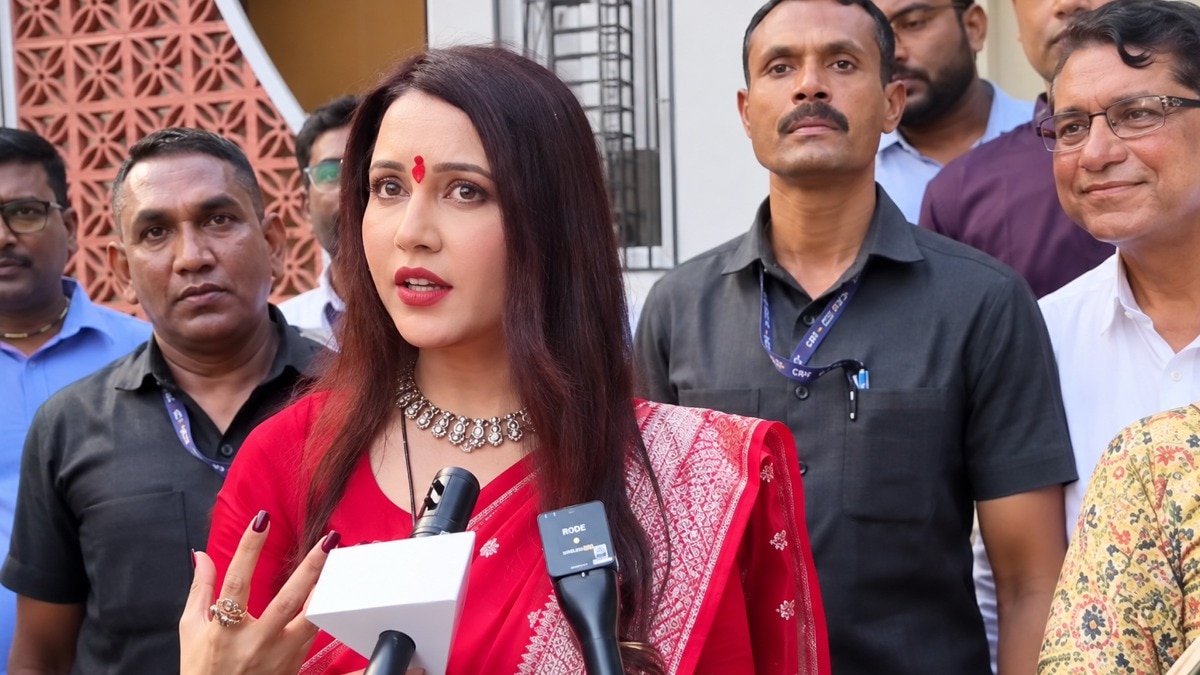
Amruta Fadnavis, social worker and Maharashtra Chief Minister Devendra Fadnavis’s wife, has said a minister’s wife is the “most trolled”, claiming she has been given the same “title”, as she weighed in on the ongoing row over Muslim participation in Garba events and the ‘love jihad’ debate.
Speaking to reporters after a Dahi Handi event in Nagpur, Amruta Fadnavis said Hindu festivals should adopt an inclusive approach, arguing that people of different faiths should be allowed to participate as long as they attend peacefully and do not cause any disruption. Her comments came amid a controversy over calls to restrict Muslim participation in Garba and Dandiya events during Navratri.
The Vishva Hindu Parishad (VHP) issued guidelines to Garba and Dandiya organisers, including identity verification of participants, while Maharashtra minister and BJP leader Nitesh Rane backed the demand. Rane alleged that incidents of ‘love jihad’ increase during such festivals.
Amruta Fadnavis had also spoken on the issue in Chandrapur a day earlier, saying she saw nothing wrong with a Muslim person attending a Garba event and enjoying the celebrations peacefully.
‘MOST TROLLED MINISTER’S WIFE’
Speaking about the criticism she has faced over her views on inclusivity in Garba, Amruta Fadnavis said, “The minister’s wife is the most trolled. I have been given this title.”
She said Hinduism has different traditions and colours and argued that people from different communities should be allowed to participate in Hindu festivals if they attend with faith and do not create any trouble.
“Christianity is the most widely followed religion in the world. People of all religions participate in its festivals. Christmas and New Year are also celebrated by everyone. The same should happen in Hinduism,” she said.
She cited Dahi Handi, Navratri and Garba as festivals that should be open to those who wish to participate respectfully. “If a person wants to come with devotion, irrespective of their caste, and does not create any problem, comes with their family and with faith, they should be allowed to come,” she said.
‘LAWS SHOULD BE MADE STRICTER’ ON LOVE JIHAD
On the ‘love jihad’ debate, Amruta Fadnavis said some people may have taken their position on restricting participation because of concerns over such cases, but added that a long-term approach was needed.
“That position may have been taken by some people for certain reasons, such as ‘love jihad’. But we need to think about this in the long term,” she said, adding that laws should be made stricter to prevent such cases.
Amruta Fadnavis also asked whether girls were being adequately taught about Hindu religious texts and traditions.
“Do our daughters know about the Vedas, Puranas and Mahabharata? Do they have faith in their religion? Are they proud of their religion?” she asked. “If that happens, such cases will reduce and gradually disappear,” she said.
Her comments came after Rane backed the VHP’s call for restrictions and supported identity checks at Garba events. Rane has also argued that people who do not believe in idol worship should not participate in Hindu religious events.
‘WHY ONLY WOMEN SHOULD DANCE?’
Amruta Fadnavis also questioned gender roles at Dahi Handi and Garba celebrations, saying men and women should have equal opportunities to participate.
She pointed out that at some Dahi Handi events, both men and women were being involved in forming human pyramids, which she described as creating a balance.
“But in some places, men form human pyramids, while women are made to dance. That too is done in different ways. There should be equality between men and women,” she said.
“If you go to a pub, you dance. Here, a human pyramid is being formed, so everyone should form a human pyramid. If you want to play Garba, everyone should play Garba. But why should only women dance? Why do you make women dance?” she said.
FESTIVALS MUST FOLLOW PUBLIC-EVENT RULES
Amruta Fadnavis also stressed that religious freedom should be balanced with rules governing public spaces. She said people have the freedom to follow their faith and practise their religion, but public celebrations must comply with prescribed rules and should not inconvenience others.
On loud DJs at public events, she said she was not advocating a complete ban, but maintained that sound systems should operate within the limits and regulations laid down for such occasions.
The controversy comes ahead of Navratri, which begins on October 11, with the question of who should be allowed to participate in Garba and Dandiya events becoming a political issue in Maharashtra.
– Ends
Published By:
Priyanka Kumari
Published On:
Sep 10, 2026 17:12 IST