Saks is bankrupt. Neiman’s is gone. The neighborhood has never been better. Funny how that works.
It’s 12:30 p.m. on Sunday, and the whole city is in a panic—correction, should be in a panic. A major blizzard is barreling up the coast. I’ve gotten three alerts from Eversource telling me that they know it’s gonna be bad and they’re ready to deploy. Even my mom in Philadelphia calls—they’re already getting snow. After 26 years of me living in Boston, she still wants to confirm I’m okay.
Instead of hunkering down, I head to Cactus Club Café, the Back Bay’s newest hot spot. It’s the Canadian chain’s first foray into the U.S. market, and the website promises an “upbeat and stylish” experience “fueled by energetic music, magnetic people, and spaces that feel as good as they look.” The sizzle reels suggest it’s exclusively a hot-lady hangout.
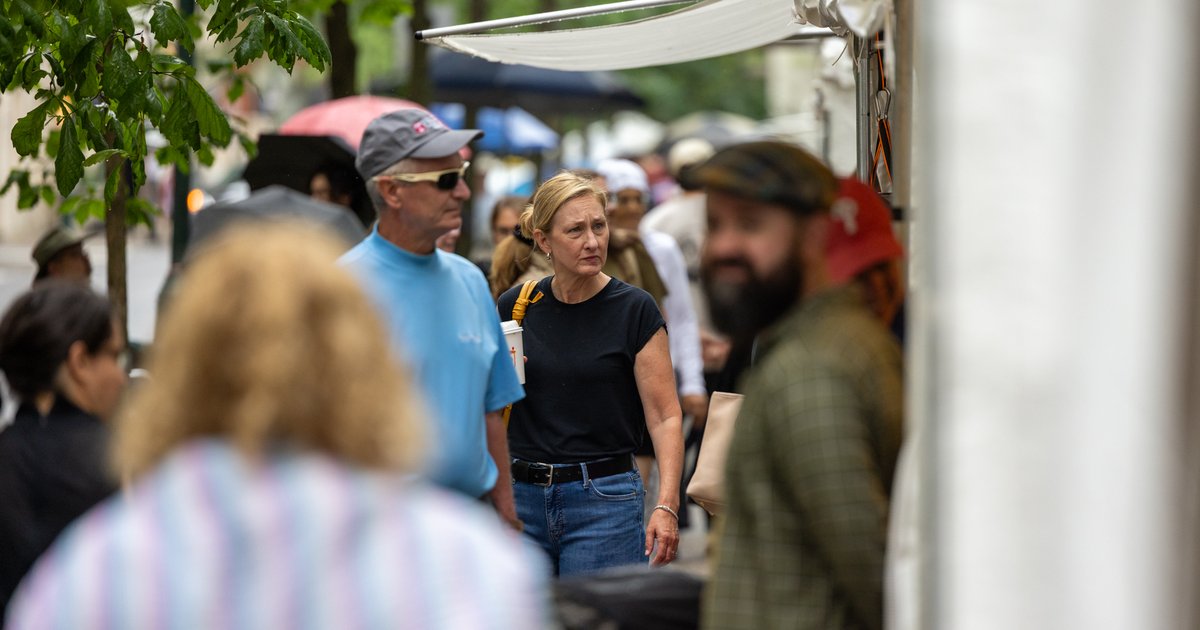
I catch the Green Line to Arlington, and of course it’s packed. Everyone’s in their twenties and thirties, and the impending blizzard isn’t on their agenda. Why should it be? They’ve got the T. A group of college students crowds the door. A dad wedges his Yukon-size stroller with infant into one corner. It’s all youth culture on display, phones in hands, canvas tote bags a-swinging. They exit in dribs and drabs at Hynes, and Copley, and with me at Arlington—all heading for the Back Bay.
Except by now—and you’ve probably read it somewhere—the Back Bay is supposed to be dying. Saks filed for bankruptcy. Neiman Marcus shuttered in Copley Place. Construction has slowed while developers point fingers at City Hall. Remote work keeps draining the office towers that anchor the neighborhood’s commercial base. The Boston Globe has questioned whether the Back Bay can survive without a business improvement district. And local merchants have blamed bike lanes for falling foot traffic. Meanwhile, the Seaport—Boston’s shiny new thing—has spent years quietly positioning itself as the neighborhood that will make the Back Bay obsolete. It’s a tidy narrative. It’s also, as best I can tell, almost entirely wrong—as a random Sunday is about to prove. If this is supposedly death, it looks pretty much like life. So I dig deeper: Is the Back Bay really okay?
A 500 Boylston rendering. / Courtesy Cactus Club Cafe
Above ground on Boylston Street under heavy skies, my friend and I pass developer Ronald Druker’s luminous new limestone-clad 350 Boylston Street. Designed by classy firm Robert A.M. Stern Architects (of Harvard Business School campus notoriety), its 221,000 square feet will soon be occupied by upper-echelon retail and businesses—like Bain & Company, which just relocated its offices. (Druker can’t divulge who his other new tenants will be, but his silence feels expensive.) Meanwhile, Hermès glows from across the street, peddling $1,575 cashmere-and-silk shawls to those who can get past the proverbial velvet rope.
Walking up Boylston, we pick our way through the trash under the perpetually dodgy and scaffolded 384–390 block, former home of the Tannery and Globe Bar & Café (closed in 2019)—a reminder of dirty old Boston. This dire little section is owned by Sam Hassan, who was permanently banned in 2021 by then-AG Maura Healey from operating a retail business in Massachusetts following a discrimination lawsuit settlement. But we shouldn’t tar all of the Back Bay with one landlord’s brush.
Once we cross Berkeley Street, things are looking up again. Ahead, TikTokers are lined up to nab Blank Street’s shaken vanilla bean matcha. Next door, Café Landwer serves the best hummus in Boston. (My opinion, but I’m right.) A few blocks down, Dani’s Queer Bar is packed with brunchers awash in purple.
Meanwhile, two-year-old Trader Joe’s (the second in the Back Bay) is a complete madhouse. Sundays are always pandemonium at this 11,500-square-foot store, but mix in a blizzard forecast, and shoppers from the South End to Marlborough Street are converging to stock up on essentials like Joe-Joe’s and chili-lime rolled corn tortilla chips. The scene has a certain end-times energy, but make it bougie.
We continue to the Cactus Club, which occupies the street-level space in 500 Boylston, a postmodern pile designed by the late rich-boy plagiarist (in a good way?) Philip Johnson. Major tenants include law firm Arnold & Porter, Vor Bio, and Finepoint Capital, typical of the office mix in this area—posh law firms, biotech, and wealth managers. And soon, the sum total of Wayfair will consolidate here. The property is owned by Oxford Properties, a Canadian global real estate investor, developer, and manager, which may or may not explain Canada-based Cactus Club’s appearance in Boston.
As we approach, I’m wondering: Can a Canadian chain really fill 325 seats in the Back Bay on a Sunday in February? But when I peer into the main dining room, I can see with my own eyes that it’s full. I mean, yes, actually full. Every seat taken. The clientele approximates the sizzle reel, as much as Boston can approximate a sizzle reel. We enjoy our poke bowls in the “all-season patio,” and when my companion complains she’s chilly, I reach for the Matouk blankets hanging off the back of each chair. She wraps herself up and coos, then splits a chocolate-peanut-butter crunch bar dessert with me and hogs the ice cream. It’s all very cozy-day-nightclub. An hour later, we’re full, and so is the patio.
Property owner Mike Jammen asks if I’m writing an April Fool’s Day story—the idea of the Back Bay dying being so preposterous.
As for the health of Newbury Street, I call up Mike Jammen, principal of UrbanMeritage, who owns a dozen properties on the Back Bay’s main shopping drag, a portfolio valued at about $300 million (the second-largest on the street). Jammen works closely with Matthew Curtin, executive managing director of Newmark, to tempt unusual, international retailers to create the anti-mall. They’re shooting for diverse retail experiences to entice suburban and international shoppers and reward them for their good taste in visiting the Back Bay. Curtin reports that “vacancy is at an all-time low, rents are at an all-time high.” He adds that tenant sales among some 600 stores on the street are up 20 percent over one year. Considering all this, Jammen asks if I’m writing an April Fool’s Day story—the idea of the Back Bay dying being so preposterous.
These stats are no accident, but rather, the result of thoughtful retail curation. Jammen cites several new tenants, including Diptyque, Italian chocolatier Venchi, and Poetry, a women’s fashion brand from England. Add retailers like Sweden’s Byredo and Italy’s Santa Maria Novella—the world’s oldest perfumerie, which opened a Newbury shop in 2024, outfitted in green marble and dark cabinetry, now proffering scents as high as $87 an ounce—and it’s hard to imagine how this could be classified as dead.
Jammen says he has a list of retailers waiting for space as many as 40 deep. Curtin adds that the retail vacancy rate on Newbury is around one percent: “It’s slim pickings, and there’s no end in sight.” He says many clients are renewing leases early to secure their long-term presence in the Back Bay. He also gives me hard numbers: Foot traffic on Newbury is up 40 percent since 2023.
But aren’t malls dying? The lion’s share of the Back Bay’s retail muscle—more than one million square feet—is at the Pru and Copley Place, so maybe that’s where we should direct our mourning. But Curtin says that since 2023, Pru foot traffic is up 36 percent and Copley Place up 29 percent. True, the Pru’s Saks outpost may be on thin ice, but that’s a national bankruptcy, the result of an aspirational retail chain struggling to find its groove in the new economy, the same shift that landed Dick’s Sporting Goods in the former Lord & Taylor spot.
That trend is also behind the closure of Neiman Marcus in Copley Place (owned by Saks’ parent company). But Copley’s owner/operator Simon was ready for that. They’re bringing in Miami-based “culinary marketplace” Casa Tua Cucina and Estiatorio Milos, capitalizing on the Greek seafood trend that’s fueling the success of places like Greco and Krasi. Fendi and Tourneau are expanding; Loewe recently joined the fancy brand roster. Simon’s remodel, set to include additional retail, dining, and wellness concepts, is slated for completion in 2028.
Sure, okay, but what about new buildings? Some developers blame Mayor Wu’s reorganized Planning Department for the lack of construction cranes over Boston. Well, lemme tell you, as someone who’s reported on this beat for nearly two decades, I can safely say that real estate developer whining is the worst kind of whining. I get it: They want to make money. They think more housing supply will fix the affordability crisis. In general, they’re resistant to constraints. If there’s less new development, they’ll blame the city, the public process, the zoning—rather than rising interest rates, tariff-inflated building materials, and the spectacularly high cost of living, which is blowing up labor pricing.
Not all developers bellyache. Consider Steve Samuels, the developer whose firm single-handedly resuscitated the moribund commercial hub of the Fenway over the past two decades (filling stations and tire shops when I first got here in 1999). Samuels has a gift for working with the city and neighborhood constituents. He’s the epitome of the patient, attentive listener. And he’s reaped rewards for playing nice.
Samuels recently completed Lyrik Back Bay at the head of Boylston, going to great engineering lengths to mend the urban fabric cleft by the construction of I-90 more than 70 years ago. Offering more than 480,000 square feet, Lyrik nabbed CarGurus, the Lego Group, CitizenM, and Rivian, along with nationally lauded chains Avra Estiatorio and Chicha San Chen. One more note about how listening can pay off: One source told me the story of a woman who said she loved walking to the bridge on Mass. Ave. opposite the Hynes T stop to watch the sunset over I-90; Samuels thought it was such a great idea that he built a viewing platform there.
Meanwhile, the Hynes Convention Center is getting a $100 million upgrade. And the Harvard Club of Boston got final approval to redevelop its properties on the end of Newbury Street—including a surface parking lot—into two buildings that will include 133 residential units. Not bad for a dying neighborhood.
The ‘Quin Club’s exterior. / Photo by Jenna Peffley
But aren’t the rich leaving Boston in droves? Nope. The millionaires’ tax has made Massachusetts a tougher sell for some—and the anger is real. But in the Back Bay specifically, the evidence points the other way. Ever since the dank marsh was filled in, the Back Bay has been home to several exclusive, and rather stuffy, private clubs. In 2021, that scene transformed with the opening of the ’Quin House at 217 Comm. Ave. Membership doesn’t come cheap—and yet the ’Quin still has a massive waiting list. On any given day, its Café Q is the place for deal-making, while the Reading Room, with its carved ceiling and two grand fireplaces, draws all kinds of power players to this Back Bay address.
Likewise, Back Bay residents are staying put. Eighty-seven percent of the Back Bay’s residential housing stock is occupied. Of those 10,000 occupied units, 35 percent are owner-occupied, according to a 2025 neighborhood report from the City of Boston. Twenty percent of residents are foreign-born, which gives the neighborhood its international flavor. They’re also highly educated. Of the Back Bay’s 18,000 adult residents, 74 percent have a BA or higher. And they’re financially well off, the median household income being roughly $128,700. One thing that residents really value is being able to use their feet to get around. About 35 percent walk to work; half of them don’t even own a car. They’re smart that way, saving thousands a year for more shopping, dining out, and whacking a golf ball at Swingers.
Central to the Back Bay’s success as a place to live is the extremely active Neighborhood Association of the Back Bay (NABB). I pop into their headquarters in the Vendome on Comm. Ave. to meet with Chairman Serge Savard, an unassuming gentleman, who’s originally from Quebec. In his French-Canadian accent, Savard explains that NABB developed its survival tactics back in the ’60s and ’70s when there was lots of talk about razing those Victorian brownstones, building towers, and jamming in more highways (see: the now-inconceivable Inner Belt). Now NABB boasts some 1,500 members and has a committee for everything from keeping the streets clean to monitoring the health of the tree canopy and the signature magnolia trees that make the place an Instagrammer destination each spring.
Savard considers NABB a problem-solving group that’s thinking 500 steps ahead of everyone else. By way of example, he tells me that when the water table in the Back Bay began dropping 40 years ago, exposing the wood pilings on which all of the majestic buildings depend to dry rot, NABB initiated the formation of the Boston Groundwater Trust, a citywide water-table monitoring nonprofit. Savard mentions that NABB volunteers have a precise color-matched paint for U.S. mailboxes, and will respond with a brush and paint can every time there’s a report of graffiti. NABB is politically strong and active; it plays nice with business and involves itself in every aspect of the city to ensure that Boston remains livable for most.
Okay, but then…crime. In fact, American cities are safer than they’ve ever been, and the Back Bay’s numbers bear that out. Violent crimes remained minimal, at 2 percent of all Back Bay crimes in 2025, according to an an analysis of Boston Police data. Aggravated assaults, auto thefts, and robberies are still low for an urban center, but warrant attention. The bigger issue by far is property crime—shoplifting and car break-ins in the area. Meg Mainzer-Cohen, president of the Back Bay Association, says the business community is working with Boston Police to reverse the trend.
The question worth asking isn’t whether the Back Bay is struggling—it’s why the negative narrative persists.
The question worth asking isn’t whether the Back Bay is struggling—it’s why the negative narrative persists. One answer is competition from the Seaport, which was supposed to be Boston’s glittering future. Instead, it’s a cautionary tale of multiple urban planning failures: too big, too anonymous, seriously underserved by public transportation, too luxury-focused. One source suggested that several of the Seaport’s destination restaurants, installed to tempt its mostly absent investor-owners, are struggling to find consistent footing. Knocking the Seaport as a planning catastrophe has even become a popular meme.
The bigger, more insidious trend: the anti-city narrative that’s been playing on repeat as long as I’ve been on planet Earth. You know the one. Cities are crime-ridden. Dangerous. Overpriced. Dead. Remote work is killing downtowns. No one wants to live in urban hellscapes anymore. Everyone’s escaping to the suburbs, or Palm Beach, or wherever people who wear Tuckernuck are fleeing to. Some folks prefer their pants on fire. I like mine loose and comfy and at room temperature.
And let’s talk about Boston’s red herring: bike lanes. I got an earful about this. Real rage, fists clenched, voices quaking with righteous anger. I heard that bike lanes are killing businesses! They’re causing gridlock! The Back Bay is suffering because of Wu’s war on cars!
Except—and here’s the funny part—no one has any data to back this up, so the opposite might just as well be true. We know that business and foot traffic are better than they’ve ever been, and this boom coincides with the expansion of Bluebikes and bike lanes. I’m not saying that’s causation. But why ignore the possible correlation? Bluebikes are wildly popular—4.7 million rides a year in Boston. That’s 4.7 million fewer car trips clogging our streets.
I mean, God bless her heart, but when Mainzer-Cohen tried to convince me that bike infrastructure has made Boylston a nightmare for pedestrians (which I can’t see, being an avid walker myself), I countered with the gazillions of times I’ve been pushed into trees, sandwich boards, selfie takers, small dogs in booties, and gaggles of slow-moving teens while trying to shop on Newbury Street. Because there, the sidewalks really are egregiously undersized for the crowds. And no one seems to care because, in truth, they’re convinced all shoppers come by car.
Ironically, the one thing that nearly destroyed the Back Bay was car infrastructure. The interstate literally cleaved the neighborhood in two—damage that’s taking billions of dollars and decades to undo. A second highway, Storrow Drive, severed the neighborhood’s connection to its greatest asset—the Esplanade—and in spots, reduced that stunning public benefit to a narrow strip of sidewalk. On- and off-ramps destroyed the character of some quiet residential streets and still make rush hour hellish. At Charlesgate, giant concrete piers violated the city’s most beautiful park to support a Storrow overpass, destroying a key piece of the Emerald Necklace, creating a fetid swamp where the unhoused and drug users congregate, while decreasing the property values of some of Boston’s most majestic residences.
Given all that, it’s incredible that the Back Bay survived at all. In fact, NABB was founded specifically to preserve what was left of the Victorian neighborhood after highways and on-ramps sliced and diced it up, and to fend off future threats.
The Back Bay now benefits from infrastructure built ages ago—multiple subway and bus lines, lovely tree-lined avenues for strolling, plus New England’s largest parking garage boasting more than 3,000 spaces under the Pru. Bike lanes and an improving T have only added to that. More people can get to Newbury on a busy day and linger—no meter to feed, no $47 parking tab—than anywhere else in the city, including the Seaport. That means more foot traffic, more money spent. The Back Bay also sits at the physical nexus of the region’s hospitals, universities, and labs, while remaining both residential and commercial. That’s a hard combination to replicate.
And yet, the thing people want to fight about is bike lanes.
One final thought: Bike lanes symbolize new policies geared to support those who have less—less money, less horsepower, less status. Every bike lane reminds us that the street is a shared asset, just like the city itself. Ceding a few feet of roadway to something other than cars is the clearest indication that urban priorities can shift to keep Boston vital and relevant.
But back to that pre-blizzard Sunday. The Back Bay is abuzz with shoppers, eaters, and sippers undeterred by the weather. They’re coming from all over the city and the world to experience something uniquely Boston. Everything—including those pesky bike lanes—adds to the special sauce that has made the Back Bay their destination. The death narrative says the city is slipping away. This Sunday says otherwise.
This article was first published in the print edition of the May 2026 issue, with the headline,“Actually, the Back Bay is Fine.”