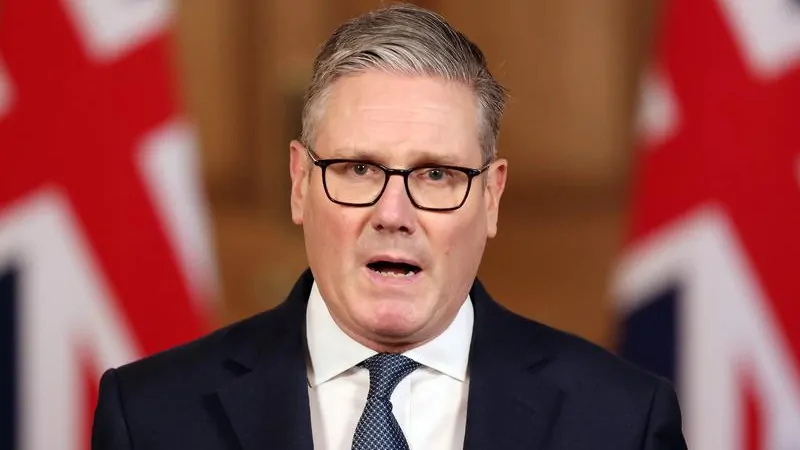
Treasurer Jim Chalmers is doing it again.
On Tuesday morning, the day of what looks like the most consequential Budget of his career, Dr Chalmers played a trick he likes to use to make the government sound more disciplined.
“The Budget will be about $45 billion stronger than it was in the mid-year update in December, and that’s because we found more than the usual amount of savings, $64 billion in savings,” he said on the ABC’s AM program.
Sign up to The Nightly’s newsletters.
Get the first look at the digital newspaper, curated daily stories and breaking headlines delivered to your inbox.
By continuing you agree to our Terms and Privacy Policy.
By $64 billion in savings, Dr Chalmers is referring to spending cuts, which are considered virtuous for a government running deficits for the foreseeable future.
The figure is bogus. We know because last Friday Finance Minister Katy Gallagher promised “$64 billion in reprioritisations and savings”.
The distinction is crucial. Reprioritisation is political speak for taking money from one area and allocating it to another. It saves not a cent.
Where the money is going won’t be known until Dr Chalmers reads the Budget speech at 7.30pm. Of the $64 billion, which is a cumulative figure over four years, the government has already disclosed that $35 billion will come from spending cuts to the National Disability Insurance Scheme.
That is a good start for the out-of-control welfare program. But it may be hard to trust the government’s Budget projections when it engages in blatant deception about something so important to the national balance sheet.
The $64 billion figure wasn’t Dr Chalmer’s only fib Tuesday morning.
“There will be smaller deficits in every year of the forward estimates and that means less debt as well,” he also told AM.
Listening, some people might have thought: “Great! Debt is going down. That means less money the government has to pay to mostly foreign creditors.”
By using the term “less debt”, what Dr Chalmers actually meant was: government debt is still heading towards $1 trillion, but not as fast as forecast in December.
That’s because, even though the economy is running too hot, there is no plan to bring the Budget into balance and end the expansion of national debt.
Another reason the treasurer is able to tout a less-worse Budget outlook is thanks to Donald Trump. America’s war with Iran has sent crude oil prices from $US60 a barrel to about $US100, delivering a tax windfall for the federal government from exports of coal and natural gas, which tends to rise and fall with oil.
Economist Chris Richardson, one of the nation’s leading Budget analysts, told The Nightly he reckons the war will generate about $20 billion in extra revenue for the government next financial year, and $30 billion over the four years covered by the Budget forecasts.
Dr Chalmers has promised to use these “revenue upgrades” to reduce the deficit. On Mr Richardson’s figures, about two-thirds of the Budget improvement claimed by Dr Chalmers is due to the Middle East war.
“This Budget will be our most responsible yet, but also our most ambitious at the same time,” he said this morning. “It will be focused on resilience and reform, and an important part of that is continuing to repair the Budget at a time of extreme global economic uncertainty.”
Putting aside Dr Chalmers’ proclivity for alliteration, self praise and superlatives, does he deserve credit for a bad less bad than it would otherwise be?
Westpac Bank’s economists say the deficit will start at $24 billion this year and deteriorate every year until 2030, after which its forecasts end.
Like many other experts, they warn federal government spending is contributing to an inflation break-out, which is why interest rates are going up.
There will be good policy funded tonight. The NDIS needs reforming. Both sides of politics regard national Defence as an important. Infrastructure spending should lead to more housing. Changes that can make business more efficient will be good for everyone.
But if the government can’t, or won’t, do any better than spend $159 billion more than it receives over five years (Westpac’s forecast) during a once-in-a-decade revenue bonanza, then Dr Chalmers’ “most responsible” Budget yet has set the bar low.