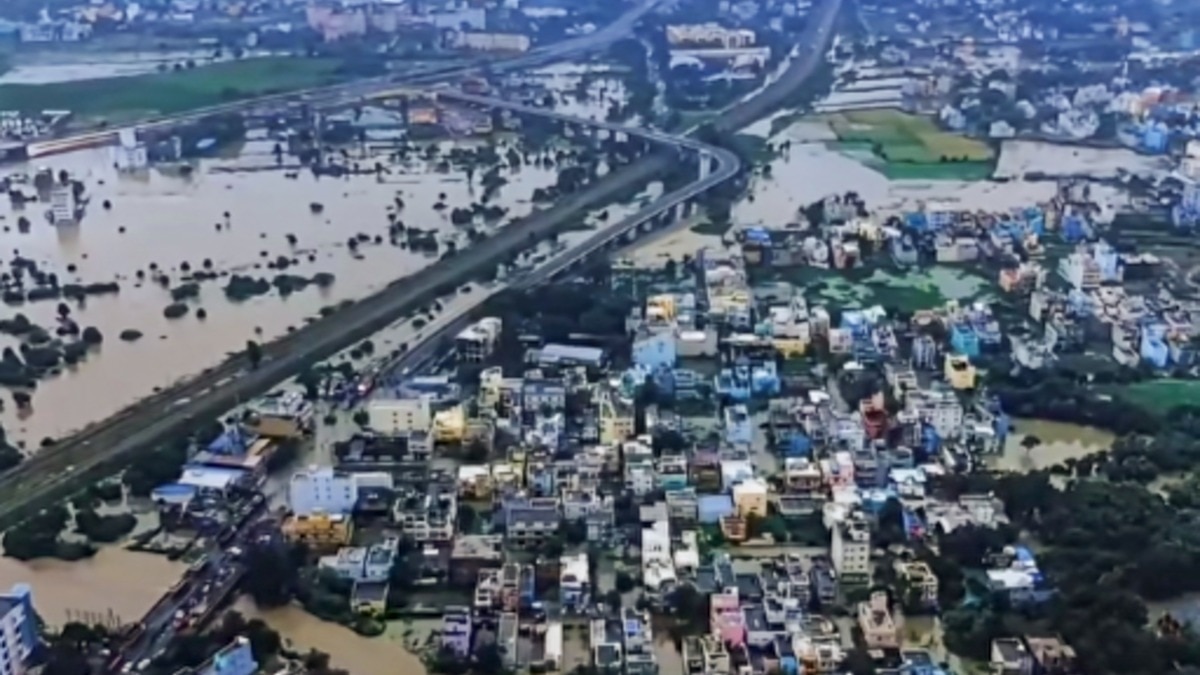
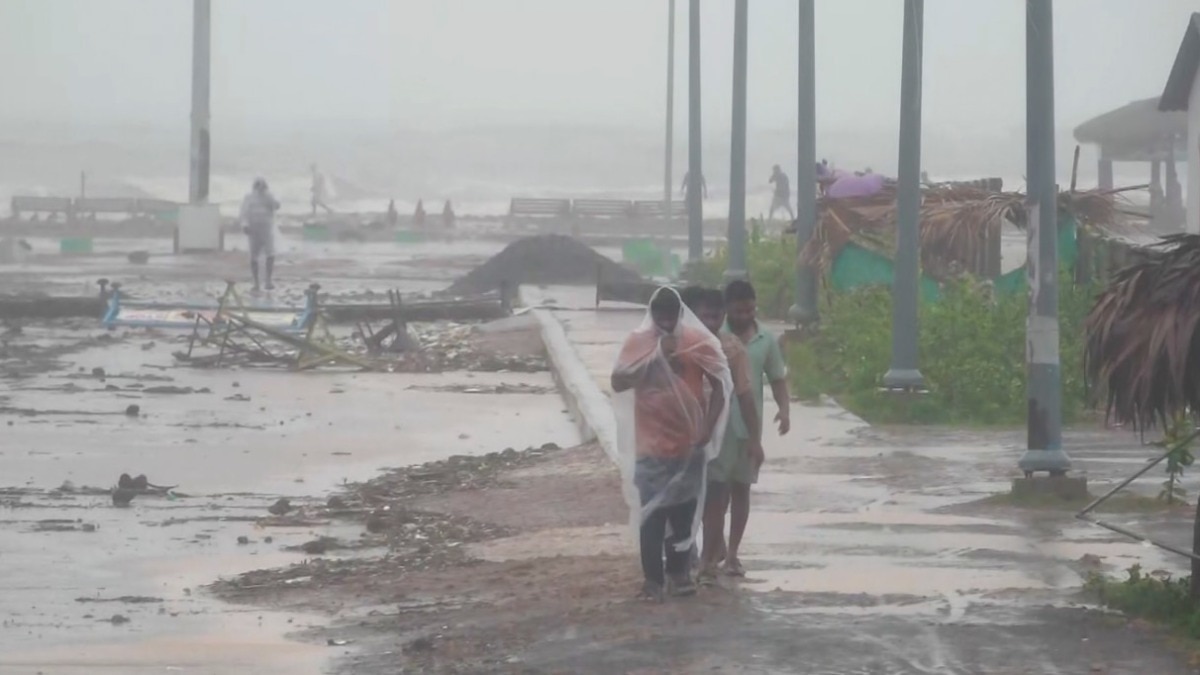
A tropical cyclone is a rapidly rotating storm that begins over a tropical ocean and can vary in speed, size, and intensity. They are also called hurricanes or typhoons, depending on the region. File (Representational image)
| Photo Credit: Nirmal Harindran
Cyclone ‘Murasu’ has intensified into a Severe Cyclonic Storm over the West Central and Southwest Bay of Bengal on November 2, 2026.
The IMD, or India Meteorological Department, says that the system may continue to move northwestwards and cross the south Andhra Pradesh coast, near Ongole, as a Severe Cyclonic Storm, with wind speeds expected to be between 100 to 110 kmph, gusting 120 kmph.
Cyclone Murasu comes days after Cyclone Arnab hit the coast of Andhra Pradesh
The Cyclonic Storm “Murasu” [Pronunciation: Murasu]” over Westcentral & adjoining Southwest Bay of Bengal moved nearly northwestwards with speed of 20 kmph during past 06 hours, intensified into severe cyclonic storm and lay centered at 0230 hours IST of today, the 02nd November, 2026 over the same region near Latitude 13.6°N and Longitude 82.5°E, about 260 km east-northeast of Chennai (Tamil Nadu), 290 km east-southeast of Nellore (Andhra Pradesh), 320 km south-southeast of Machilipatnam (Andhra Pradesh), 310 km east-southeast of Kavali (Andhra Pradesh), 330 km southeast of Ongole (Andhra Pradesh) and 470 km south of Vishakhapatnam (Andhra Pradesh).
It is very likely to continue to move northwestwards and cross south Andhra Pradesh coast as a Severe Cyclonic Storm with wind speed of 100 to 110 kmph gusting 120 kmph between Nellore and Narsapur close to Ongole during midnight (2330 Hrs IST) of 2nd to early hours (0400 Hrs IST) of 3rd November, 2026.
— India Meteorological Department (@Indiametdept) November 2, 2026
Chennai and Tiruvallur District Collectors have announced that schools and colleges in the districts will be closed on Monday (November 2, 2026) due to heavy rains. An orange alert was announced in six Telangana districts and a yellow alert in five districts in Telangana for Monday.
Cyclone Murasu live updates
What are tropical cyclones?
A tropical cyclone is a rapidly rotating storm that begins over a tropical ocean and can vary in speed, size, and intensity. They are also called hurricanes or typhoons, depending on the region.
Tropical cyclones are the second-most dangerous natural hazards, after earthquakes, according to the World Meteorological Organisation.
How are cyclones named?
The WMO elaborates that the process of determining names for tropical cyclones is conducted by the relevant tropical cyclone regional body at its annual or biennial session.
There are five tropical cyclone regional bodies, which are:
- WMO Typhoon Committee
- WMO Panel on Tropical Cyclones
- Regional Association I Tropical Cyclone Committee
- Regional Association IV Hurricane Committee
- Regional Association V Tropical Cyclone Committee
These bodies establish pre-designated lists of names, the procedures for which can vary, with some regions using alphabetical order and others using the alphabetical order of country names. No tropical cyclone is named after an individual.
Factors that are considered while selecting a new name:
- Short in character length for ease of use in communication.
- Easy to pronounce
- Appropriate significance in different languages
- Uniqueness- same names cannot be used in other regions.
The WMO adds that the Regional Specialised Meteorological Centre (RSMC) New Delhi Tropical Cyclone Centre is responsible for naming the tropical cyclones that have formed over the Bay of Bengal and the Arabian Sea when they have reached the relevant intensity.
Cyclones that form in the Northern Indian Ocean are named in a cyclical fashion by thirteen countries — Bangladesh, India, Iran, Maldives, Myanmar, Oman, Pakistan, Qatar, Saudi Arabia, Sri Lanka, Thailand, United Arab Emirates, and Yemen.
How are tropical cyclones classified?
The classification of a tropical cyclone depends on its maximum sustained wind speed. They are designated as follows:
1. Tropical depression is when the maximum sustained windspeed is less than 63 km/hour.
2.Tropical storm is when the maximum sustained wind speed is more than 63 km/hour. It is then also given a name.
3. Hurricane, typhoon, tropical cyclone, very severe cyclonic storm, depending on the basin, when the maximum sustained wind speed exceeds 116 km/hour.
Names of next ten cyclones after Cyclone Murasu
Name of cycloneCountry which gave the nameCyclone AkvanIran Cyclone KaaniMaldivesCyclone NgamannMyanmarCyclone Sail OmanCyclone Sahab PakistanCyclone LuluQatarCyclone GhazeerSaudi ArabiaCyclone Gigum Sri Lanka Cyclone Thianyot ThailandCyclone AfoorUnited Arab Emirates
*All information has been taken by the World Meteorological Organisation’s website
Published – October 26, 2026 12:59 pm IST