Overview:
El Salvador has deployed a new contingent of special forces to Haiti to support the search and rescue for four Salvadoran soldiers missing since a gang ambush in Croix-des-Bouquets on Oct. 18, according to the United Nations-backed Gang Suppression Force (GSF). The deployment follows President Nayib Bukele’s warning that Haitian gangs would face a stronger response if the soldiers are not returned alive and unharmed.
PORT-AU-PRINCE — El Salvador has deployed a new contingent of special forces to Haiti to support the search and rescue for four Salvadoran soldiers who went missing after a gang ambush in Croix-des-Bouquets on Oct. 18, expanding its contribution to the international security mission as the operation continues.
The Gang Suppression Force (GSF) confirmed the contingent’s arrival on Oct. 22 to support ongoing search and security operations in the Plaine du Cul-de-Sac. The deployment followed Salvadoran President Nayib Bukele’s announcement of a military operation to recover the missing men and his warning that Haitian gangs would face a stronger response if the soldiers were not returned alive and unharmed.
The contingent included 100 special forces soldiers, with another 100 expected to arrive later that day, according to the Associated Press. The GSF has not publicly detailed the new contingent’s precise role or how its personnel will participate in the operation.
The deployment marks a shift in the reported profile of El Salvador’s contribution to the mission, which Bukele has previously described as focused on aviation support, medical evacuations and technical assistance rather than direct combat against gangs.
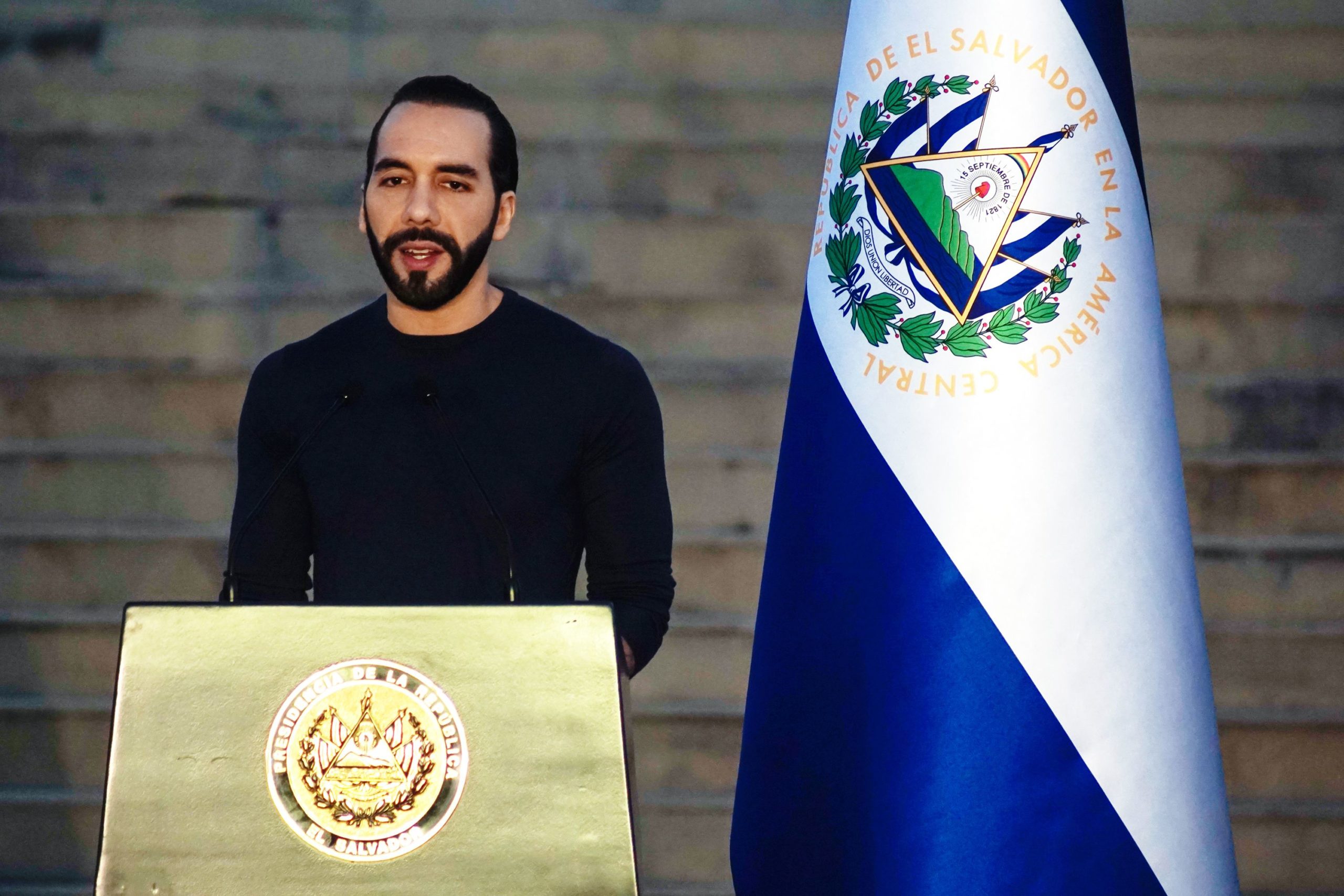
“Don’t take our words as an empty threat. We have already dealt with the gangs in El Salvador, and we can deal with you too,” Bukele wrote on X. “Return our four compatriots alive and unharmed, and everything will return to the way it was before the kidnapping.”
Search continues after Oct. 18 ambush
The four Salvadoran soldiers have been missing since Oct. 18, when armed men attacked an armored vehicle carrying GSF personnel in Santo, a neighborhood in Croix-des-Bouquets northeast of Port-au-Prince. The attackers fired on the vehicle and used explosives, setting it ablaze.
“This attack demonstrates how gangs continue to adapt their tactics and undermine security efforts, further threatening Haiti’s already fragile political transition.”
María Fernanda Arocha, ACLED analyst
Authorities said the soldiers escaped the burning vehicle, but contact with them was subsequently lost. Their whereabouts and condition remain unknown.
The ambush occurred in an area where the Chen Mechan and 400 Mawozo gangs operate. Neither group has publicly claimed responsibility for the attack or confirmed whether it is holding the missing soldiers.
Videos circulating on social media show gang leaders threatening to resist security operations. Wilson “Lanmò San Jou,” associated with 400 Mawozo, and Christ-Roi “Krisla” Chery, linked to armed groups in the Port-au-Prince area, warned that Salvadoran troops could face resistance if they entered gang-controlled areas on foot rather than relying on drones and helicopters.
The GSF said in its Oct. 22 announcement that it was continuing operations in coordination with the Haitian National Police (PNH) and other operational partners. It urged residents of Santo and surrounding communities to avoid areas where security operations were underway.
Residents of Clercine and Marin, neighborhoods in the wider Croix-des-Bouquets area, told The Haitian Times that they could still hear gunfire Wednesday evening. Some residents had begun fleeing earlier that day.
Attack raises concerns among security analysts
María Fernanda Arocha, ACLED’s analyst for Mexico, Central America and the Caribbean, told The Haitian Times by email that the attack marked a new development in the confrontation between armed gangs and international security forces.
“Haiti’s gangs have escalated their violence as they are increasingly willing and able to confront international forces directly,” Arocha said. “This attack demonstrates how gangs continue to adapt their tactics and undermine security efforts, further threatening Haiti’s already fragile political transition.”
Bukele said the missing soldiers were abducted while returning from buying food at a supermarket and were not participating in an operation against gangs when they disappeared. He described them as aviation technicians assigned to support medical evacuations and save lives.
“Our mission consists only of pilots and technical personnel whose primary task is to carry out medical evacuations and save lives, not to wage war,” Bukele said, calling for the soldiers’ safe return.
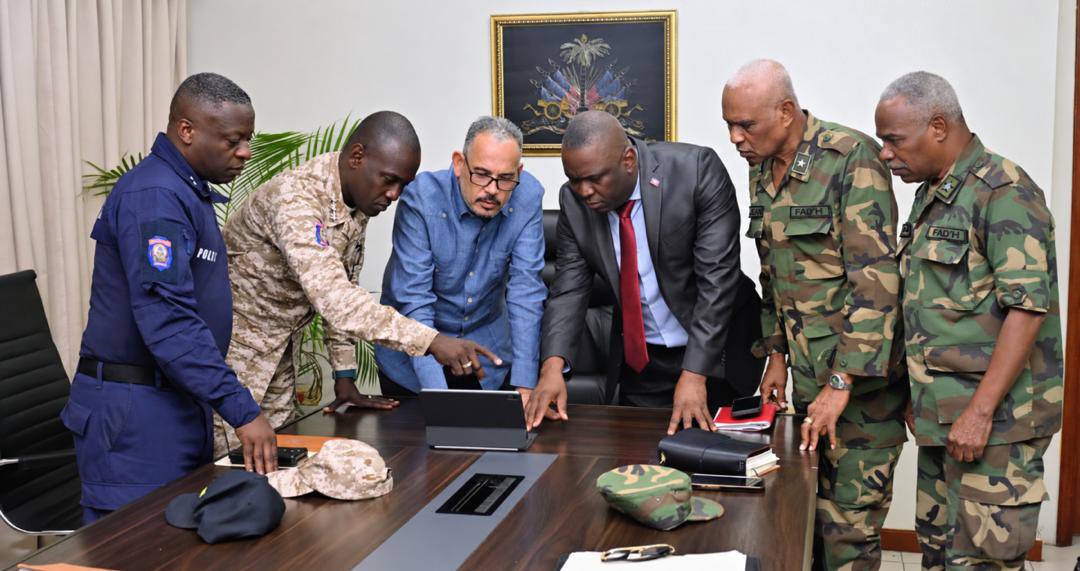
Haiti’s government has also declared the soldiers’ release a priority, saying it is coordinating with the GSF and mobilizing resources to secure their return.
The international force is commanded by Mongolian Maj. Gen. Erdenebat Batsuuri, who oversees field operations. The arrival of the Salvadoran special forces adds personnel to the ongoing search, but the GSF has not yet publicly outlined how it will integrate the new contingent into its operations.
The four soldiers remain missing as Haitian police and the international force continue their search in an area where armed groups retain a strong presence.