
You are driving home at night when a car approaches from the opposite direction. Its headlights are so bright that, for a few seconds, all you can see is a wall of white light.
You cannot make out the divider, the edge of the road, or the cyclist who might be riding just ahead.
You slow down, wait for the car to pass, and hope there is nothing in your path.
Or perhaps you have been stuck in traffic when a vehicle suddenly appears behind you, flashing red and blue lights and honking as though everyone must move aside.
If either of these situations sounds familiar, you know how frightening those few seconds can be.
In August 2025, a Bengaluru commuter raised concerns on social media about an SUV fitted with flashing red and blue LED lights. The post caught the attention of the police.
According to Bangalore Mirror, Jigani Police traced the vehicle and its occupant, removed the illegal lights and initiated legal action. The vehicle owner was also penalised.
It was one example of a problem familiar to motorists across India.
But what many drivers may not know is that there are already laws governing the lights vehicles can use. And in October 2025, the Supreme Court issued fresh directions to ensure those rules are taken seriously.
The case behind that order began with a doctor’s concern about the lives being lost on India’s roads.
Why a doctor took India’s road safety problem to court
Dr S. Rajaseekaran, an orthopaedic surgeon, had spent years seeing the consequences of road crashes.
Injuries, lives lost, and families left dealing with the aftermath of accidents made him deeply concerned about road safety in India.
In 2012, he approached the Supreme Court with a petition titled S. Rajaseekaran versus Union of India.
His concern went far beyond headlights. He wanted the agencies responsible for safer roads, driver licensing, enforcement, emergency treatment and compensation to work together instead of functioning separately.
For him, road accidents had become a national emergency that demanded coordinated action.
The petition continued through years of hearings.
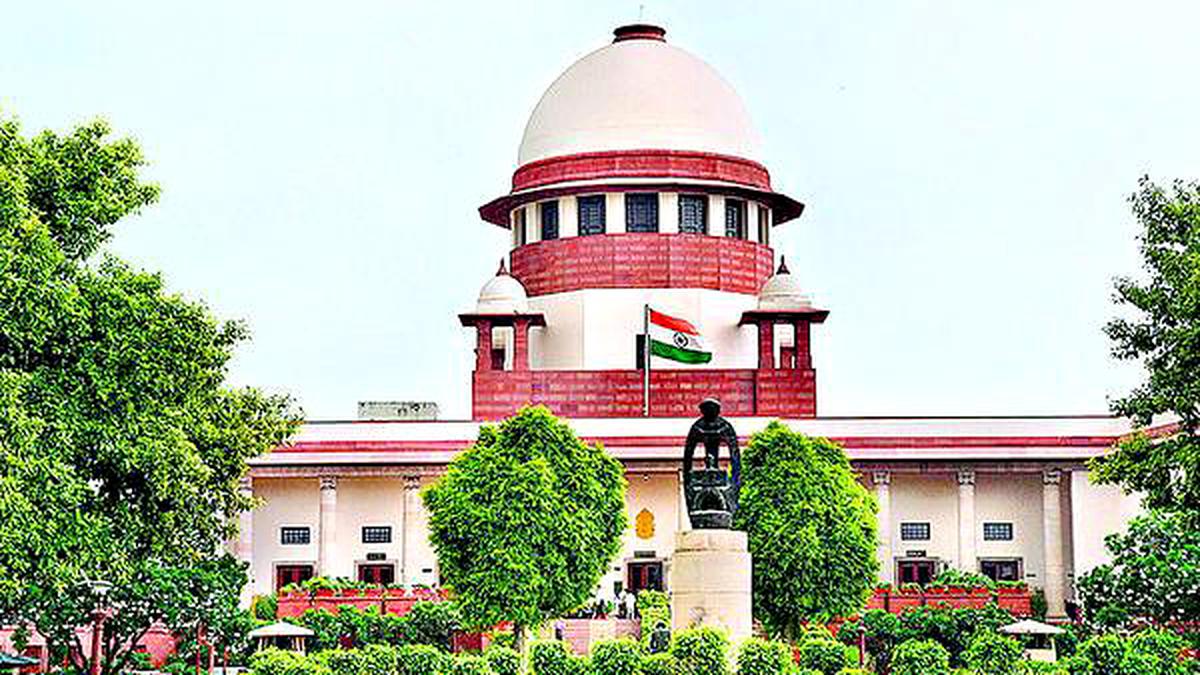
Then, on 7 October 2025, a bench of Justices J.B. Pardiwala and K.V. Viswanathan issued a series of directions addressing everyday dangers on Indian roads.
These included unsafe pedestrian crossings, motorists riding without helmets, wrong-lane driving and dangerous overtaking.
And among the problems the court addressed was something millions of drivers encounter after sunset: blinding headlights.
Orthopaedic surgeon Dr S. Rajaseekaran approached the Supreme Court in 2012, seeking stronger coordination and accountability to make India’s roads safer. Photograph: (The Hindu)
What the Supreme Court said about blinding headlights
Think about what happens when an unusually bright headlight shines directly into your eyes.
Even if you are looking straight at the road, the glare can make it difficult to judge what is ahead. For a pedestrian, it may become harder to see an approaching vehicle or navigate the road safely.
The Supreme Court recognised this danger.
In its 7 October 2025 order, the court noted that high-intensity headlights, including those fitted on two-wheelers, can temporarily disorient oncoming drivers and pedestrians.
It directed the Ministry of Road Transport and Highways, state transport departments and traffic police to establish and enforce permissible limits for headlight brightness and beam angles.
In simpler terms, authorities must ensure that headlights are bright enough to help drivers see the road, without directing excessive light into someone else’s eyes.
The court also called for these checks to be included in Pollution Under Control (PUC) testing and vehicle fitness certification, alongside targeted enforcement drives against non-compliant or modified headlights.
But headlights were only part of the concern.
The bench also directed strict enforcement of the ban on unauthorised red-blue flashing lights and illegal siren-like hooters.
This includes action against vehicles using such equipment, as well as enforcement against its unauthorised sale.
The court directed nationwide awareness campaigns so that motorists understand why these lights are dangerous.
But why did the Supreme Court need to intervene when rules about vehicle lighting already existed?
India already had headlight rules. So why is this still happening?
The rules may sound complicated, but the idea behind them is fairly simple.
Every vehicle needs lights that help its driver see clearly without putting other people in danger.
Under the Central Motor Vehicles Rules, 1989, Rule 105 deals with vehicle lamps, while Rule 106 requires headlight beams to meet prescribed safety standards.
Section 52 of the Motor Vehicles Act also places restrictions on alterations that change a vehicle from the specifications approved by its manufacturer.
Then there are the coloured lights that some vehicles use to demand attention on the road.
Rule 108 restricts the use of multicoloured red, blue and white warning lights to vehicles specifically designated for emergency and disaster-management duties.
Even authorised emergency vehicles cannot use their flashing lights and sirens whenever they wish. Under the Motor Vehicles (Driving) Regulations, 2017, these warning devices are meant to be used when responding to an emergency call or alarm.
So a private vehicle cannot simply install flashing emergency-style lights and expect other drivers to clear the road.
And a driver cannot assume that any brighter bulb will be suitable for their vehicle.
To understand why, it helps to look at how headlights actually work.
How replacing one bulb can make the road dangerous for someone else
Imagine buying a powerful LED bulb to replace the original halogen bulb in your car.
The idea seems reasonable. You want to see more clearly when driving at night.
But headlights are designed to work as a complete system.
The bulb, reflector or projector, and the angle at which the light falls are all important.
A headlight housing designed for a particular halogen bulb may not direct light properly when a different type of LED or HID bulb is fitted inside it.
Instead of concentrating light on the road, an unsuitable replacement can send some of it upwards, towards the eyes of approaching motorists.
Even a properly designed headlight can cause glare if it is aimed incorrectly.
Research by the Insurance Institute for Highway Safety (IIHS) has found that effective headlights need to balance visibility for the driver with glare control for oncoming traffic.
That is why brighter does not automatically mean safer.
And it is also why the law does not treat every LED headlight as illegal.
A factory-fitted LED system that complies with the applicable standards is permitted. An aftermarket replacement is not automatically an offence either, but it must meet the relevant safety requirements and vehicle alteration rules.
The important question is whether the lighting system is compliant and safe for everyone sharing the road.
In October 2025, the Supreme Court directed authorities to regulate headlight brightness and beam angles to reduce glare on Indian roads. Photograph: (AI-Generated collage)
Can you be fined for bright headlights or flashing lights?
For drivers, this is where the Supreme Court’s directions become particularly relevant.
Authorities have been asked to conduct targeted checks and take action against headlights that do not comply with the prescribed standards.
But that does not mean every bright-looking headlight automatically attracts the same fine.
Under Section 177 of the Motor Vehicles Act, when a violation has no separately prescribed penalty, the fine can extend to Rs 500 for a first offence and Rs 1,500 for a subsequent offence.
Other violations may attract different penalties depending on the applicable legal provision.
Unauthorised emergency-style flashing lights and illegal hooters can also invite enforcement action, including seizures and penalties.
The court scheduled the case for a compliance review seven months after its October 2025 order. That was a date for reviewing progress, rather than a blanket seven-month deadline for states to introduce new headlight rules.
Whether these directions make a difference on the road depends on how effectively authorities implement them.
For vehicle owners, however, there is already a useful takeaway.
Before changing your headlights, check that the replacement is compatible with your vehicle and meets the applicable standards. If the light seems unusually high or scattered, have its alignment checked.
And if you encounter a private vehicle using unauthorised red-blue flashing lights or illegal hooters, the law provides grounds for enforcement action.
Unauthorised red-blue flashing lights and siren-mimicking hooters are banned, with the court directing authorities to crack down on their use. Photograph: (TNIE)
A few seconds of glare should never put someone’s life at risk
India recorded 1,72,890 road crash deaths in 2023, according to the Ministry of Road Transport and Highways.
That included 35,221 pedestrians, people who were simply trying to walk or cross a road.
There are many reasons why road accidents happen, and the available national data does not establish how many of these deaths were caused by headlight glare.
But preventing unnecessary glare is one part of making roads safer.
For the driver approaching an unfamiliar bend, the person cycling home after work, or the pedestrian trying to cross a poorly lit road, being able to see clearly matters.
Thirteen years after Dr Rajaseekaran first approached the Supreme Court, there are now explicit judicial directions addressing dazzling headlights and unauthorised flashing lights.
The next challenge is ensuring those directions are followed.
Because when you are driving home at night, you should be able to trust that the headlights coming towards you will help another driver see the road, without taking away your ability to see it too.