


Getting between Dubai, Sharjah and Abu Dhabi could become significantly easier with a major new road project now approved for Dubai.
The Dubai Fourth Corridor road project will create an approximately 80-kilometre strategic route connecting Al Shanouf Road in Sharjah with Al Faya Road in Abu Dhabi through Dubai. The project is being developed in two phases and is designed to improve traffic flow, strengthen links between the emirates and support future growth.
For motorists, one of the biggest attractions is the potential reduction in journey times. The first phase is expected to cut a 35-minute journey to around 14 minutes, while the second phase is expected to reduce another journey from 50 minutes to 24 minutes.
What is the Dubai Fourth Corridor?
The Dubai Fourth Corridor is a new strategic road connection designed to strengthen Dubai’s links with both Sharjah and Abu Dhabi.
Once completed, the corridor will stretch around 80km and become the fourth major strategic road axis connecting the UAE’s emirates, following Sheikh Zayed Road/Al Ittihad Road, Sheikh Mohammed bin Zayed Road and Emirates Road.
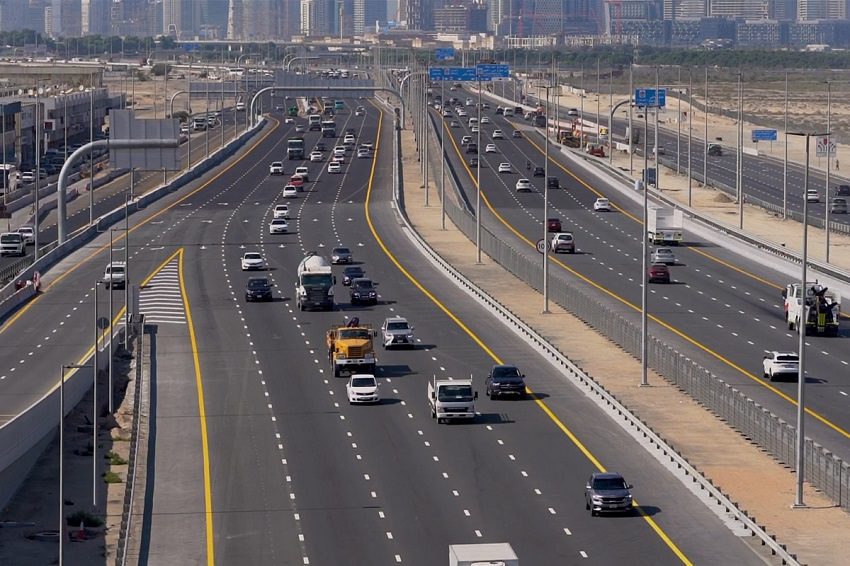
The route will have 12 lanes across both directions and capacity for up to 24,000 vehicles per hour. It will also include 72 bridges, 17 tunnels and 45 stormwater drainage culverts, making it one of the major additions to Dubai’s road infrastructure.
How will the new road connect Dubai, Sharjah and Abu Dhabi?
The project will be delivered in two main phases.
Phase 1: Sharjah to Dubai-Al Ain Road
The first phase will cover approximately 30km, running from Al Shanouf Road in Sharjah to Dubai-Al Ain Road.
This section is expected to reduce journey times by around 60 per cent, from 35 minutes to approximately 14 minutes. It will serve around 600,000 people and include 55 lane-kilometres of at-grade roads, 2.5km of tunnels and 21km of bridges and ramps.
The project will also widen Dubai-Al Ain Road from three to four lanes in each direction between Emirates Road and Lehbab Road, alongside upgrades to four major intersections.
Phase 2: Dubai to Abu Dhabi
The second phase will extend for approximately 50km from Dubai-Al Ain Road to Al Faya Road in Abu Dhabi.
This section is expected to reduce journey times by 52 per cent, from around 50 minutes to 24 minutes, and will serve approximately 3.1 million people.
It will include around 190 lane-kilometres of at-grade roads, 3.5km of tunnels and 157km of bridges and ramps.
Why could this road make a difference to traffic?
One of the main objectives is to provide another route for traffic moving between the emirates.
Dubai’s existing highways carry large volumes of daily commuter and commercial traffic. The new corridor is intended to strengthen the wider road network and provide an alternative route, particularly for through traffic and heavy vehicles.
According to Dubai’s Roads and Transport Authority, the project will help divert through traffic, including trucks, away from urban areas. This could reduce pressure on existing corridors while improving traffic movement and road safety.
For people travelling between Sharjah and Dubai or Dubai and Abu Dhabi, the additional connection could also create more route options as the surrounding areas continue to develop.
The road will connect major Dubai destinations
The Dubai Fourth Corridor is not simply designed as a commuter road.
The route will connect with several major locations and infrastructure projects, including Al Maktoum International Airport, Al Marmoom Desert Conservation Reserve, Al Wohoosh Desert Conservation Reserve and the Etihad Rail route. It will also pass through residential and developing areas.
That makes the project particularly relevant to Dubai’s future expansion, as new residential communities, logistics areas and major infrastructure projects continue to develop outside the traditional central areas of the city.
A major boost for logistics and commercial transport
The road is also expected to play an important role in Dubai’s logistics network.
By creating stronger links between Dubai, Sharjah and Abu Dhabi and connecting with Etihad Rail and Al Maktoum International Airport, the corridor will help integrate road and other transport infrastructure.
The authorities say the project is intended to support logistics and commercial transport while strengthening Dubai’s position as a major economic and transport hub.
For businesses, faster and more direct movement of goods could be particularly important as Dubai’s industrial, logistics and airport-related developments expand.
When will the Dubai Fourth Corridor open?
The project will be implemented in two phases because of its scale.
The first phase, between Al Shanouf Road and Dubai-Al Ain Road, has an estimated cost of around Dhs3.5 billion.
Specific completion dates for the overall 80km corridor have not been detailed in the official announcement. Motorists will therefore need to wait for further construction and opening updates before the new route becomes available.
What it means for motorists
For everyday drivers, the most important change could simply be having another major route between the northern and southern parts of the UAE.
The combination of a 12-lane corridor, new bridges, tunnels, upgraded intersections and improved connections to existing highways is designed to handle substantial traffic volumes.
The project also comes as Dubai continues to expand its transport infrastructure alongside population growth and development in newer areas.
For anyone regularly travelling between Dubai, Sharjah and Abu Dhabi, the Fourth Corridor is therefore a road project worth watching. Once completed, it is expected to provide faster connections, additional capacity and stronger links between some of the UAE’s most important cities and economic centres.
Do follow UAE Stories on Instagram.
You Might Also Like: Jaww Spot Abu Dhabi: A New Take on Emirati Dining
