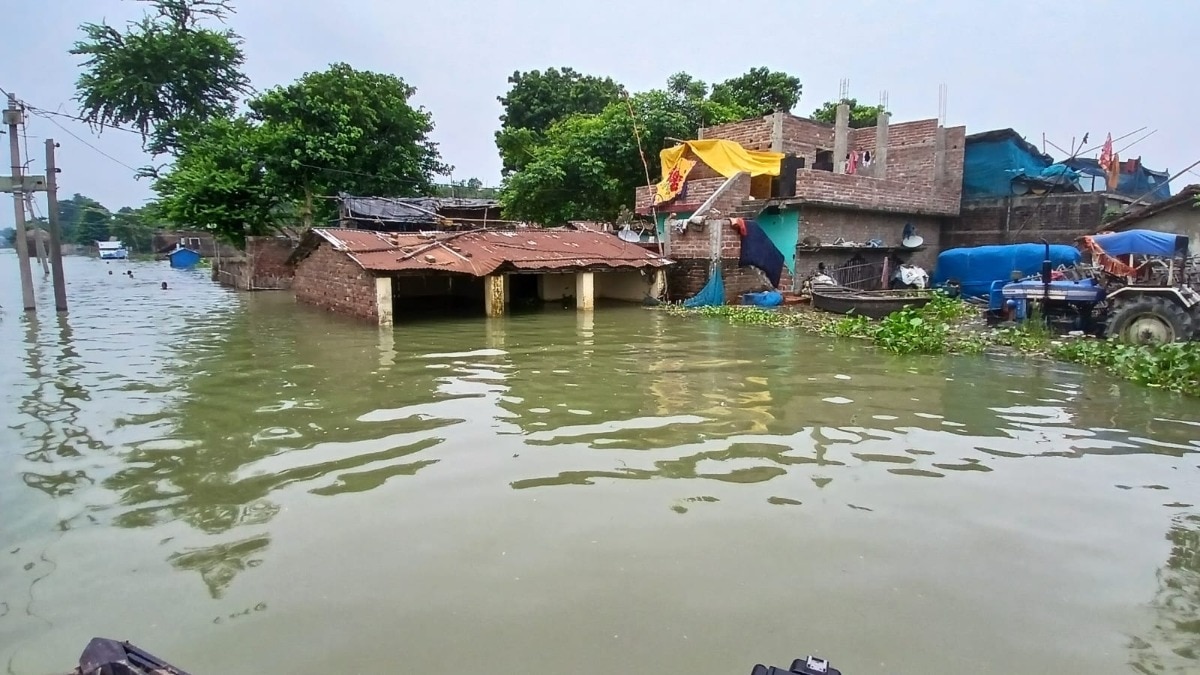
For a farmer, rain is supposed to be good news.
But when a season’s rain arrives in a few intense spells, followed by long periods of wet soil, it can become a threat. Fields can remain submerged, roots struggle for oxygen, nutrients are washed away and crops can lodge or die.
For agriculture, the problem isn’t simply too little rain anymore.
It can also be too much rain, arriving too quickly.
As extreme rainfall and flooding put greater pressure on farms, some farmers and researchers are looking at an old resource: India’s crop diversity.
Across the country, generations of farmers have conserved rice, millets, pulses, tubers and other local varieties adapted to particular soils, landscapes and climatic conditions. Some have traits that allow them to withstand conditions that can damage more commonly grown crops.
From rice varieties that can survive prolonged flooding to crops traditionally grown in waterlogged landscapes, these indigenous varieties offer an important question for a climate-stressed future:
Could some of the crops that evolved with India’s difficult landscapes help farmers adapt to them again?
5 indigenous rice varieties that can take the rain
1. Kajejaya Rice — Karnataka
In coastal Karnataka, farmers have historically cultivated indigenous red rice varieties in landscapes that can remain flooded for days.
ICAR records Kajejaya, an indigenous rice variety cultivated in parts of Dakshina Kannada and Udupi, among varieties that can withstand flooding lasting up to a week, although prolonged flooding can still affect yields.
Photograph: (indian express)
Its value lies not in being completely unaffected by flooding, but in its ability to survive conditions that can severely damage other crops.
For a farmer facing an unpredictable monsoon, that resilience can matter as much as maximum yield.
2. Rajbhog Rice — Maharashtra
In Maharashtra, tribal farmer Rahibai Soma Popere has spent decades conserving indigenous seeds.
The Better India previously reported that she conserved and multiplied 48 indigenous varieties across 17 crops, including paddy, millets, pulses and oilseeds.
Among them was Rajbhog, a traditional rice variety reported to withstand high rainfall.
For farmers, maintaining such diversity can provide a form of agricultural insurance. When weather, soil or pest conditions change, having several varieties gives them more options than relying on a single crop.
3. Deepwater Rice — Eastern India
In flood-prone parts of eastern India, some traditional rice varieties have adapted to landscapes where water levels can rise substantially during the monsoon.
Unlike conventional rice varieties that may drown when submerged, deepwater rice can respond to rising water by elongating its stem, allowing its leaves to remain above the water surface.
ICAR’s National Rice Research Institute notes that different types of flooding require different characteristics. Rapid elongation can help rice cope with deepwater conditions, while other traits are more useful for flash flooding.
4. Hangseswari & Saraswati Rice — Odisha
In Odisha, researchers have taken the idea of flood-resilient rice a step further.
The Indian Institute of Water Management developed a farming system that combines deepwater rice, fish, aquatic crops and post-flood vegetable cultivation.
During flooding, farmers grow waterlogging-tolerant deepwater rice varieties such as Hangseswari and Saraswati. Fish are reared in water-harvesting structures, while vegetables and other crops are cultivated after the water recedes.
ICAR reports that the system was adopted by around 150 farmers in Puri district, generating reported earnings of Rs 80,000–Rs 90,000 per hectare in an ecosystem previously considered unproductive.
Here, the crop isn’t simply surviving the flood.
The entire farm is being designed around it.
5. Kuttanad’s Traditional Rice Farming — Kerala
Few places illustrate the relationship between crops and water better than Kuttanad in Kerala.
Much of the region’s agriculture takes place below sea level. Its low-lying paddy fields face waterlogging, flooding, soil acidity and climatic variations.
The region has developed specialised agricultural practices suited to this unusual landscape and has been recognised as a Globally Important Agricultural Heritage System.
Kuttanad shows that resilience doesn’t always mean keeping water away from farms.
Sometimes, it means learning how to farm with water.
Why can some crops survive what others can’t?
So what makes one crop better suited to a difficult environment than another?
For crops exposed to flooding or waterlogging, researchers look at several characteristics.
Submergence tolerance
Some rice varieties can survive complete submergence for periods that would severely damage other varieties.
Deepwater adaptation
Certain rice varieties respond to rising water by rapidly elongating their stems, allowing leaves to remain above the water surface.
Plant architecture
Plant height, stem strength and leaf characteristics can influence how a crop responds to waterlogging and lodging.
Local adaptation
A variety cultivated for generations in a particular landscape may carry traits suited to that area’s soil, rainfall and growing conditions.
But resilience isn’t always about a single genetic trait.
Sometimes, diversity itself is the advantage.
What farmers have known for generations
Long before climate resilience became a scientific term, farmers were selecting seeds based on what worked on their land.
They observed which crops:
That knowledge remains particularly important as rainfall becomes less predictable.