This Silicon Valley Engineer Believed Every Child Deserves a Dignified Classroom — So His Initiative Rebuilt 150+ Rural Schools in India
In 2003, a small group of Indian engineers in Silicon Valley did what many homesick immigrants do on weekends — they formed a band, staged a drama troupe, and put on shows to raise a little money and feel a little less far from home.
“We used to raise money through the shows, and we practiced hard every weekend to be able to contribute,” recalls Vadiraja Bhatt, one of the founders. But underneath the fun was something heavier. “We also had this question — what are we doing for our country?”
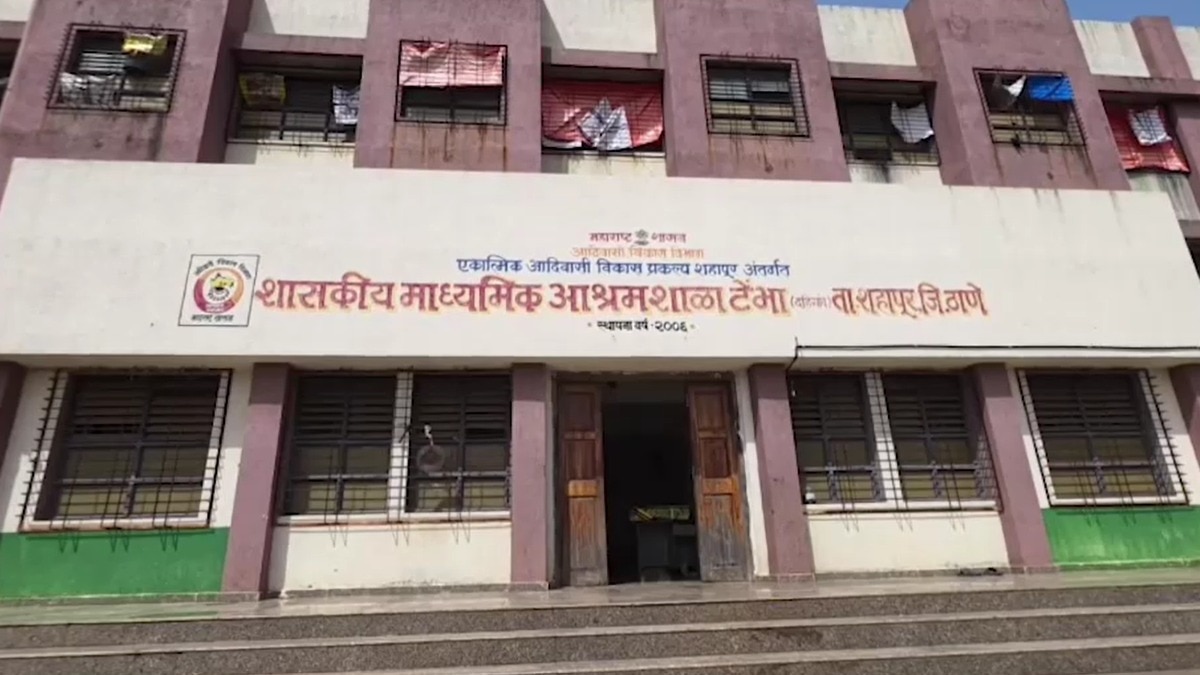
That question found its answer after a phone call from a headmaster in coastal Karnataka. Monsoon rains had caused part of his school building in Karkala to collapse.
“There was rain, and then the whole thing happened — the school fell off,” Bhatt remembers. With no classrooms left standing, children were sitting outside on benches just to keep attending school. “That really made me want to reach out and do my bit,” he says.
OSAAT’S Chairman B V Jagadeesh, who was there at the start too, remembers the same period.
Nearly 25 years ago, he and a few others came across a rural middle and high school “in an extremely dilapidated condition,” with unsafe classrooms and no basic environment for learning. Rebuilding it became the template for everything that followed. “Seeing the transformation and the happiness and renewed confidence among the students was profoundly inspiring,” he says.
A collapsed school building in Karkala became the turning point that inspired OSAAT’s mission to rebuild rural schools.
Many in Bhatt’s circle had been educated almost entirely for free by, in his words, “the most committed, talented and creative government school teachers” India had to offer. Seeing how little had reached the next generation of rural children was impossible to look away from.
That personal debt to government education runs through OSAAT’s leadership. Jagadeesh, traces his own commitment back to his own classroom. “I studied in government schools in Bagalur village from grades one through seven, so I know firsthand how important a school can be in shaping a child’s confidence, aspirations and future,” he says.
Bhatt and his team’s first response was modest — a $3,000 fundraiser built around a single music performance.
It became the seed of One School At A Time (OSAAT), a volunteer-run non-profit that has since rebuilt more than 150 government schools across 11 Indian states — without ever charging a family or paying a single volunteer.
“It was like an oasis in the desert”
Nowhere is OSAAT’s impact more visible than at Melavanki School, where Iranna Kadakol has been headmaster since 2010. When he started, the school had two rooms, one teacher, and 19 students.
After floods destroyed Melavanki School, OSAAT rebuilt classrooms and added toilets, desks, library books and sports equipment.
The only other school in the area was a privately-run institute with state-of-the-art facilities and over 200 students enrolled. “We began for close to nothing but our vision was clear. Provide free, fair and quality education to all,” says Kadakol.
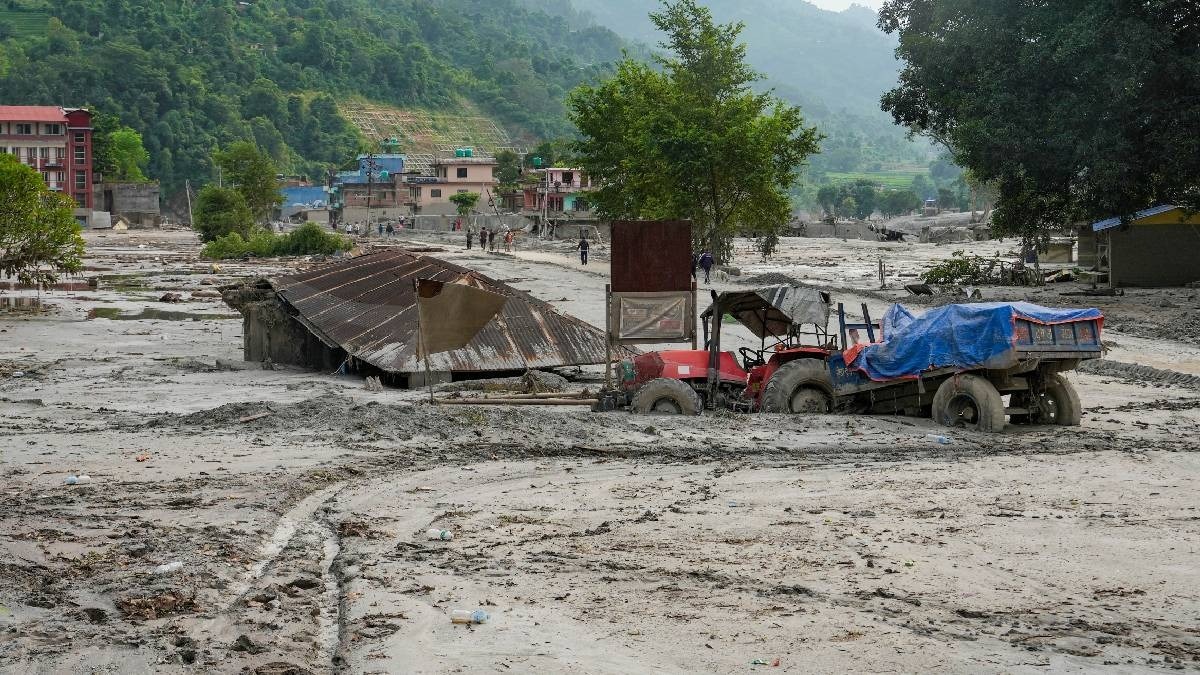
By 2019, it had grown to six rooms and around 500 students — then the floods hit. “The floods came, and the whole school became scrap,” Kadakol recalls. The school shut for nearly six weeks. Desperate, he searched online. “I searched for OSAAT and found them. They responded soon after the flood,” he says. “At that time, OSAAT was like an oasis in the desert.”
OSAAT sprung to action, rebuilt eight rooms, added separate toilets for boys and girls, desks, green boards, library books, and sports equipment — and later returned to add four more classrooms as enrollment kept climbing.
For a Class 9 student at Melavanki, the change is felt in something as simple as sitting through a lesson without distraction.
“I feel happy every time I sit in my classroom and listen to the teacher speak. I look forward to it,” she says. “Earlier the roof would leak and we would sometimes hold our books over our heads, but now we can peacefully focus on our lessons.”
Today, Melavanki has 16 rooms and 1,045 students, up from 500 before the floods. It’s now recognized as a district model school with the highest enrollment among rural schools in the region, teaching children from LKG through Class 8.
Melavanki School grew from two classrooms and 19 students into a district model school with 1,045 students.
Families travel from as far as 4 kilometers away. Some children walk; some parents have arranged private vehicles just to get their kids there.
And the impact hasn’t stopped at academics — “Melavanki students have gone on to win at the national level in athletics, long jump, and taekwondo, and the school now holds an annual speech competition,” the headmaster emphasises.
Dignity comes before smart classrooms
What sets OSAAT apart from typical school-infrastructure charities is the order in which it solves problems. “You first bring dignity to learning,” Bhatt says. “And then with the digital, you improve the quality.”
A child taught in a crumbling, leaking room absorbs a lesson before the first bell even rings: that they don’t matter as much.
Bhatt often points to a NITI Aayog observation — that people behave with more pride and discipline in an orderly metro station than a chaotic bus stand. Bad infrastructure, he argues, sends the same quiet signal.
It’s why OSAAT is skeptical of donors who show up with laptops and smart boards for schools with no plan to maintain them. “We kind of hope to throw the dart and hope it falls in the bull’s eye,” Bhatt says of that approach.
Building against the odds in Meghalaya
But OSAAT’s first project in the Northeast tested this model in tougher terrain. In Meghalaya’s East Khasi Hills — in a state ranked last nationally on the Ministry of Education’s 2024–25 Performance Grading Index — a government primary school had just three rooms for children from nursery through Class 5.
In Meghalaya’s East Khasi Hills, OSAAT built a four-classroom, earthquake-resistant school building to serve growing enrollment.
Headmaster Armitis Kamstok, who has taught there for 31 years, describes the daily struggle: “It becomes very challenging even for the teachers — how do you handle the multi-grade class all alone in a shattered building?”
Working with local partner Smart Village Movement and building to earthquake-resistant seismic zone 5 standards, OSAAT completed a four-classroom building in November 2024. Enrollment has since climbed from 90 to 125 students.
What began with a $3,000 fundraiser has grown into OSAAT, which has rebuilt more than 150 government schools across 11 states.
“Since we got this building, everybody is talking about it,” Kamstok says. “Parents started sending their children to school.”
Outgrowing its own walls in Tamil Nadu
The same pattern shows up at Vellingadu Higher Secondary School, where headmaster Socrates Kulasekaran S has spent three years at the helm after 24 years in government education.
OSAAT built four additional classrooms here specifically for grades 11 and 12, using glass windows and construction specifications that go beyond standard Public Works Department norms.
The school’s growth has outpaced its own walls — “enrollment rose from 911 students in 2023 to 922 in 2024 and 965 in 2025, with this year expected to cross 1,000,” the headmaster says.
Asked what the school would look like without those four classrooms, Kulasekaran doesn’t hesitate: “managing today’s enrollment would be extremely difficult without new infrastructure. It is because of the additional classrooms that children have better access to education.”
Four new classrooms at Vellingadu Higher Secondary School helped accommodate its rapidly growing student population in Tamil Nadu.
OSAAT’s involvement didn’t end with construction, either. The organization visits every three to four months to check in — and on one recent visit, after students had defaced walls during a school break, the team came back specifically to repair the damage rather than waiting for the next scheduled build.
Saying “no” more often than “yes”
Much of OSAAT’s rigour comes from Balakrishna, a senior volunteer who joined in 2017 after three decades in IT. When he arrived, OSAAT ran on goodwill alone — “all volunteers are involved in every activity,” with no fixed roles.
OSAAT screens school applications closely, approving only one or two out of every 10 applicants based on set criteria.
He built out separate functions for operations, funding, engineering, and on-the-ground “school champions,” along with a strict evaluation process for every school that applies.
That process rejects far more schools than it accepts — OSAAT approves only one or two out of every ten applicants, screening for enrollment strength, teacher commitment, and real community involvement. “Zero compromise on established criteria,” Balakrishna says — a referral from someone OSAAT knows carries no more weight than an anonymous application.
OSAAT also works exclusively with government schools, never private ones. “Free education is fair education,” Bhatt says simply.
Betting on “critical mass”
Dr. C.S. Kedar, a retired IAS officer on OSAAT’s board, describes the organization’s long game in terms borrowed from physics: a “critical mass” of visibly excellent government schools, he believes, will eventually push parents to demand the same from their local representatives elsewhere. “If it is less than critical size, the reaction doesn’t start,” he says.
From a small Silicon Valley fundraiser to 150-plus rebuilt schools, OSAAT continues its mission one government school at a time
It’s a patient bet — that one good building can convince a child and their parents that they were always entitled to dignified education.
Two decades and 150-plus schools later, from a collapsed roof in Karkala to a rebuilt block in the hills of Meghalaya and Tamil Nadu, the engineers who once raised $3,000 playing music in Silicon Valley are still betting on it, one school at a time.
With more than 150 schools rebuilt and OSAAT’s digital education programmes now reaching over 200,000 children a day, its chairman sees still more ground to cover. “Our aspiration is to reach one million students by 2030,” Jagadeesh says. “It’s an ambitious goal, but we believe it is achievable.”
For readers who want to support or connect with the organisation, reach OSAAT at [email protected].