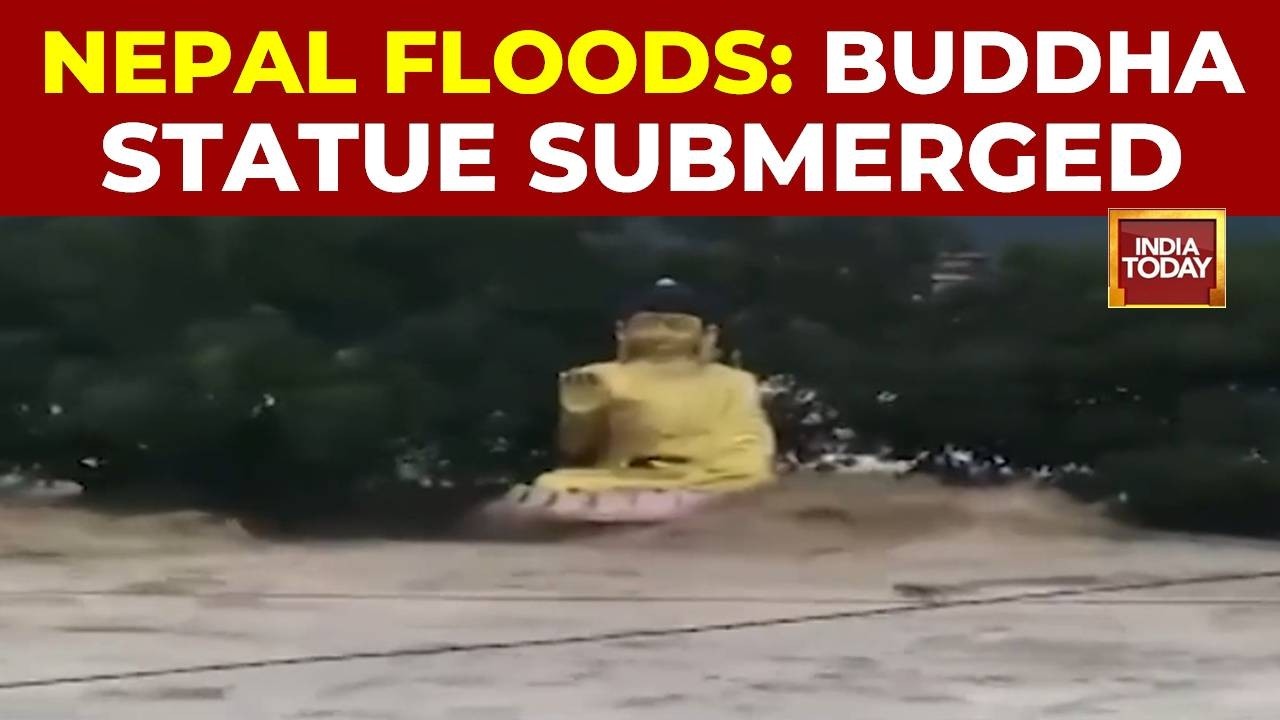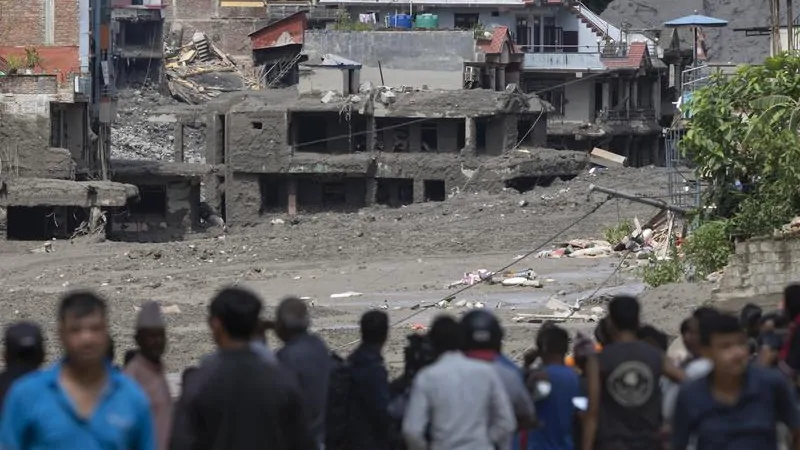
Grave fears are growing for dozens of Australians reportedly among hundreds of foreign tourists missing after catastrophic flash floods tore through Nepal and neighbouring Tibet, killing at least 157 people.
Nepalese tourism officials have reported 34 Australians among 341 foreign nationals missing as desperate search and rescue operations continue across the devastated region.
Prime Minister Anthony Albanese confirmed Australian officials were urgently trying to establish the welfare of Australians caught up in the disaster.
Sign up to The Nightly’s newsletters.
Get the first look at the digital newspaper, curated daily stories and breaking headlines delivered to your inbox.
By continuing you agree to our Terms and Privacy Policy.
“We extend our deepest sympathies to those affected by the significant flooding in Nepal and Tibet, China,” Mr Albanese said.
“Australians in the affected area should follow the advice of local authorities.
“We are aware of a number of Australians in the area and Australian officials are urgently working to confirm their welfare. We are liaising with local authorities as well as tour operators.
“We stand ready to provide consular assistance.”
Flash flood causes widespread destruction in northern Nepal Credit: Unknown/X
Foreign Minister Penny Wong described the scenes emerging from the region as “devastating”.
“The loss of life and destruction caused by flash flooding in Nepal and China is devastating. Our thoughts are with the loved ones of those killed or missing and all affected by this disaster,” Senator Wong said.
“@DFAT officials are urgently working to confirm the welfare of Australians in the area.”
At least 95 people have been confirmed dead in Nepal, according to the prime minister’s office, while Chinese state broadcaster CCTV reported another three people were killed in a mudslide in Tibet’s Gyirong County near the border.
The death toll is feared to rise as authorities scramble to reach areas cut off by destroyed roads and widespread debris.
Many missing were on pilgrimage to a sacred site
Nepali police said late on Wednesday that 157 bodies had been recovered so far.
Officials in Nepal said 403 people, including 341 foreigners, were reported missing.
Sunil Sharma, a tourism board spokesman, said 133 were from India on pilgrimage to Mount Kailash in Tibet, a sacred site for Hindus.
Also missing were 47 from the United States, 34 from Australia, 33 from the United Kingdom and 24 from Canada, he said.
At least 62 missing Nepali citizens were among hundreds of locals trekking in the Gosaikunda Lake area in Rasuwa, coinciding with the local festival of Janai Purnima on Friday, Sharma added.
Nepal police spokesman Abi Narayan Kafle told the Associated Press at least 28 police officials were missing.
Local media reported 65 people were being treated in hospitals in the area and in the capital Kathmandu.
South Korea separately said that eight of its citizens working on a hydropower plant were missing.
China’s state broadcaster said three people were killed and 265 missing in Gyirong.
It said the toll was still being verified and rescue efforts were ongoing.
The disaster struck Nepal’s Rasuwa region, north of Kathmandu, after what climate experts believe was an avalanche of ice and rock from a glacier.
The resulting torrent tore through communities, roads and hydropower infrastructure.
A massive flash flood swept through Nepal and Tibel’s border region. Credit: AAP
Drone footage from the devastated region showed roads ripped apart and buildings buried, while images from hard-hit Nuwakot showed vehicles swallowed by mud and debris hanging from trees and powerlines.
Search operations on both sides of the Nepal-China border have so far rescued 88 people, according to the Nepalese army.
“We have asked both India and China to help us with the rescue efforts,” Nepali government spokesperson Sasmit Pokharel said.
Officials have warned people to stay away from the Bhotekoshi, Trishuli and Narayani rivers as the emergency continues.
Countries express alarm over missing citizens
Australia is among several countries scrambling to account for citizens believed to have been travelling through the disaster zone.
South Korean officials said citizens working on a hydropower project in Nepal were among those reported missing, while Malaysia’s foreign ministry said travel agencies had lost contact with 11 Malaysians believed to be in Rasuwa.
Chinese authorities have launched large-scale search and rescue operations in the Tibetan border region, while Indian Prime Minister Narendra Modi has offered Nepal assistance.
“India is prepared to provide Nepal with all possible types of humanitarian assistance. Our teams are closely coordinating on rescue and relief efforts,” Mr Modi said.
Australia, Britain, the European Union, Finland, France, Norway and Switzerland also issued a joint statement expressing solidarity with those affected.
“We encourage all those in affected areas to follow the guidance of local authorities and official safety advisories as the situation continues to evolve.”
An elderly woman is rescued following the flash flooding in the Nuwakot district of Nepal. Credit: NARENDRA SHRESTHA/EPA
The same region saw flash floods last year
The disaster comes just a year after similar flash flooding struck the region when a glacial lake in Tibet overflowed amid high temperatures, killing nine people and damaging critical infrastructure.
Experts from the Kathmandu-based International Centre for Integrated Mountain Development believe Wednesday’s disaster was triggered when an ice and rock avalanche blocked a river before unleashing a sudden surge of water downstream.
“The Lhende Khola has flooded twice in 14 months, this time triggered by an ice rock avalanche from a glacier on the Nepal side that blocked the river and released a sudden surge downstream,” disaster risk reduction specialist Saswata Sanyal said.
He warned of the growing importance of early-warning systems in “a warming Himalaya.”
Australians requiring emergency consular assistance can contact DFAT’s 24-hour Consular Emergency Centre on 1300 555 135 from Australia or +61 2 6261 3305 from overseas.