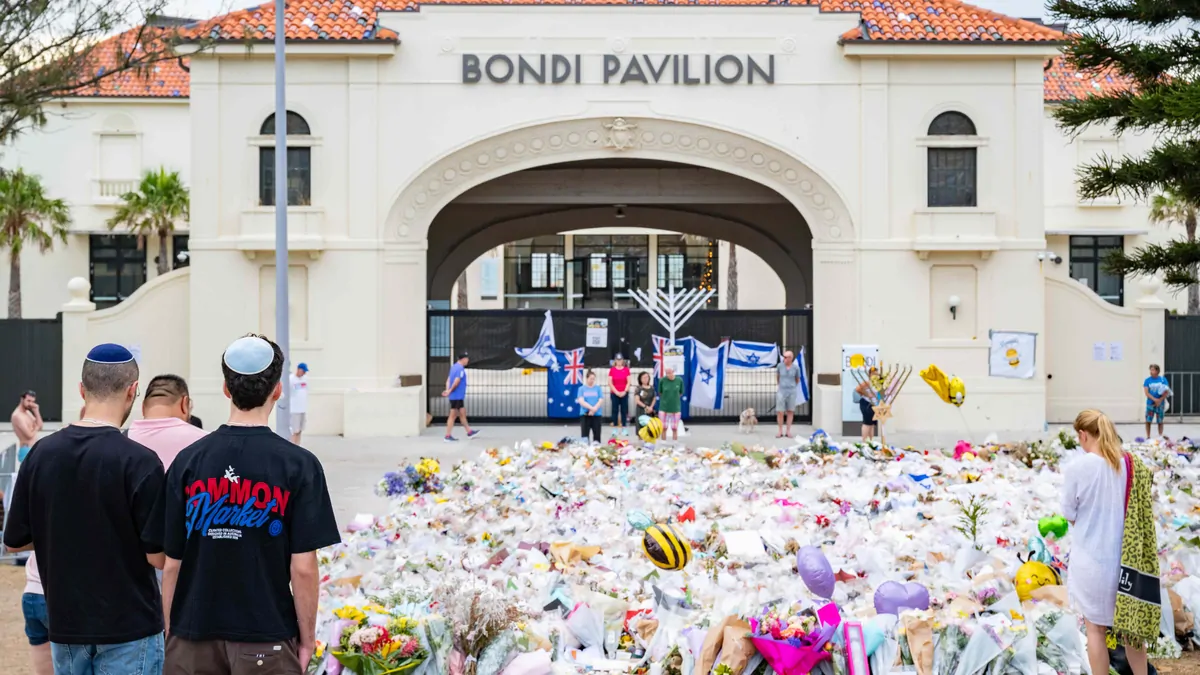
It is now more than eight months since 15 innocent people were slaughtered at a Jewish celebration at Bondi Beach.
It remains difficult to find words powerful enough to describe the horror of that day.
Those caught up in the tragedy are still living with their demons.
Sign up to The Nightly’s newsletters.
Get the first look at the digital newspaper, curated daily stories and breaking headlines delivered to your inbox.
By continuing you agree to our Terms and Privacy Policy.
Reminders of the everyday impacts of the anti-Semitism which the Jewish community had been experiencing and had warned about even before Bondi have been clear at the Royal Commission on Antisemitism and Social Cohesion established in the aftermath of the massacre.
Witnesses have given evidence of how anti-Jewish hatred had became normalised. Of how they no longer recognised the country they once knew, that it was no longer the safe haven many had believed it was.
Such as in the evidence of Australian National University student Liat, who said she would hide her Jewish identity on campus. “Every single day when I would make the walk into uni, I would have to pick: am I Jewish Liat today, or am I regular Lia?” she said.
It was revealed that the Lowy family — the founders of the Westfield shopping centre group — had been the subject of some 15,000 anti-Jewish abusive messages on social media over the previous year.
Labor’s former attorney-general Mark Dreyfus detailed the repeated anti-Semitism he had experienced.
They were but snapshots of what was uncovered as the commission continued its work.
The deep-seated problem which the nation faces was tellingly exposed when royal commissioner Virginia Bell said there had been an “undiluted level of hatred and bigotry” directed at members of the Jewish community who gave evidence to the probe.
On Wednesday the royal commission held its final day of public hearings.
Commission senior counsel assisting, Richard Lancaster, said many submissions had provided moving accounts indicating the nature and prevalence of anti-Semitism.
“It is a powerful confirmation that anti-Semitism is a stain on the whole community,” he said.
A number of voices have backed extending the royal commission, including NSW Premier Chris Minns, Federal Parliament’s most senior Jewish MP Julian Leeser, and a group of eminent national security leaders, including former governor-general David Hurley.
The security leaders said the inquiry had not found “the sources, origins and growth of Islamist extremism in Australia”.
On Wednesday Ms Bell said she would push her final report back by four days to December 18, to avoid becoming a “distraction” from commemorations of the December 14 attack.
She did not announce any further extension but acknowledged some Jewish Australians may find it “frustrating” that the commission had not publicly probed what led to the Bondi attack.
Mr Lancaster said the public record was not a complete picture. Some hearings had been conducted in closed sessions to avoid prejudicing criminal proceedings or compromising law enforcement agencies.
To help heal the nation’s fractured bonds the commission needs not only to provide a picture of what has taken place, but it needs to explain why, how, and who is responsible.
If that means further time is needed then Ms Bell should ask for it. And it should be granted.