

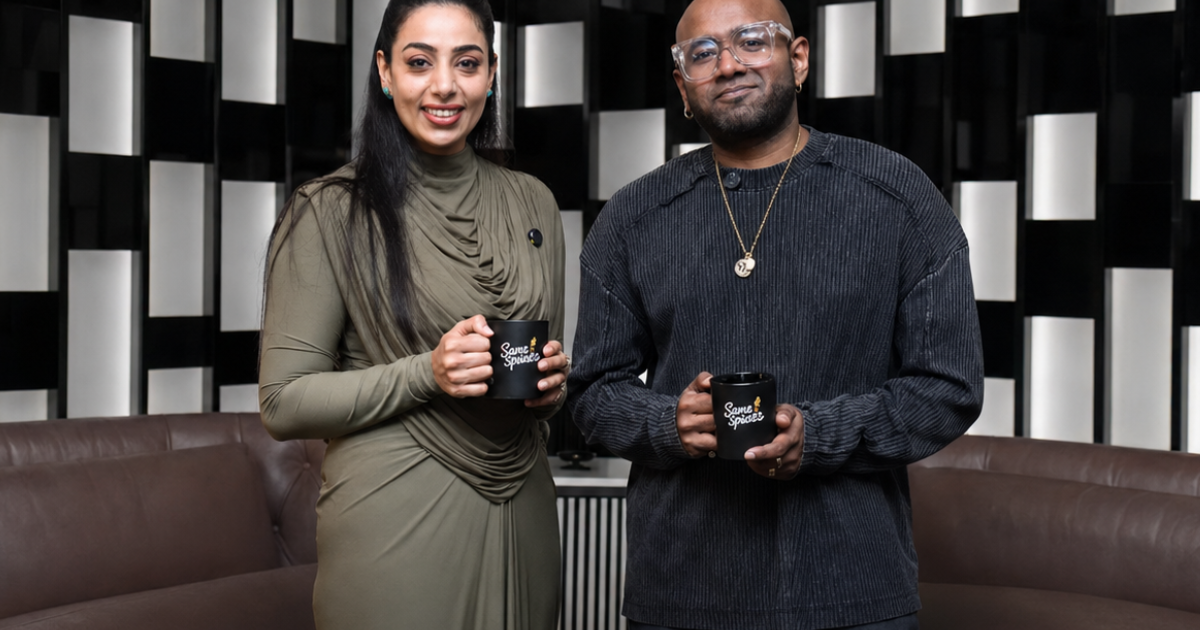
Dr Sana Sajan is a Dubai-based dentist, entrepreneur, philanthropist, artist and mother of three whose public work spans healthcare and worker education. Her past professional experience includes healthcare marketing, and her welfare work supported free language, computer and workplace-skills classes for workers.
She also fronts Sana Speaks, an interview platform promoted on YouTube and Instagram at Sana Speaks. Dubai audiences know a host whose career already crosses business, community work and culture. Her latest exchange places Bollywood playback star Benny Dayal in the hot seat for a rapid tour of four songs embedded in South Asian pop memory. The result is studio tea, career lore and one unexpectedly cinematic audition story.
Dr Sana Sajan Opens the Vault on Four Bollywood Anthems
The setup is wickedly simple: name a famous track and let Benny Dayal unlock its backstory. “Badtameez Dil” earns the first reveal, and Dayal says he sensed enormous potential from his earliest listen. The brief asked him to have fun, a compact instruction perfectly suited to the song’s playful charge. That instinct proved sharp after the Pritam composition became a signature number from Yeh Jawaani Hai Deewani. Suddenly, a familiar party staple gains a fresh layer of studio mythology.
“Pappu Can’t Dance” then serves the biggest plot twist of the exchange. Dayal says eleven or twelve singers attempted it prior to the selection of his voice. His winning tactic was gloriously extra because he acted out the entire song during his performance. That detail recasts the vocal as full-body storytelling, not a routine booth assignment. A track associated primarily with A.R. Rahman’s ensemble sound now carries a scrappy audition saga worthy of its own movie.
Michael Jackson Swagger Meets a Surprise Ranveer Singh Rap
The “Bang Bang” story shifts the spotlight from competition to musical instinct. Dayal recalls being told that the title track followed a Michael Jackson approach. He had listened to Jackson throughout his childhood, so the composers already understood that the assignment matched his strengths. Their choice focused on intention as much as range, according to his account. Dayal adds that many listeners regard “Bang Bang” as the number that elevated his career to another league.
Then “Aadat Se Majboor” pulls Ranveer Singh into the booth and the gossip meter spikes. Dayal describes a crazy session alongside composers Salim and Sulaiman Merchant. He says he recorded Singh performing the brief rap heard in the track. That nugget turns a tiny vocal passage into the interview’s cheekiest production surprise. Dayal even recreates its “smooth” and “silky” character, offering a miniature performance instead of a dry recollection.
Dr Sana Sajan Taps Dubai’s Unmatched Bollywood Pulse
Dubai readers have an especially juicy reason to care because Dayal’s connection to the UAE predates his Bollywood career. He was born and raised in Abu Dhabi, studied at Abu Dhabi Indian School and developed performance experience at school talent events. His Gulf upbringing also included access to Indian music and an early fascination for A.R. Rahman. These details turn the exchange into a cultural homecoming of sorts, even as the chat focuses on Mumbai studios. A Dubai platform is spotlighting an artist whose path began in the Emirates and later filled dance floors far outside them.
The four-song lineup also maps the cross-border soundtrack that Dubai’s South Asian communities know by heart. “Pappu Can’t Dance” belongs to Jaane Tu… Ya Jaane Na, while “Aadat Se Majboor” belongs to Ladies vs Ricky Bahl. “Badtameez Dil” belongs to Yeh Jawaani Hai Deewani, and “Bang Bang” pairs Dayal and Neeti Mohan on its film’s title track. That range spans A.R. Rahman, Pritam, Salim-Sulaiman and Vishal-Shekhar, giving the conversation serious composer firepower. Dubai’s entertainment identity thrives on exactly this overlap of Bollywood nostalgia, global pop reference points and UAE-bred talent.
Two Greats In One Conversation
The irresistible part is not another ranking of songs audiences already adore. It is Dayal remembering the human choices hidden beneath polished playback vocals. Fun became the entire assignment for one track, persistence settled another and lifelong musical influence powered a third. A Bollywood actor’s tiny rap then capped the sequence via an unexpected studio cameo. Each anecdote reveals a separate creative pressure point: instinct, selection, stylistic fluency and collaboration.
Together, they explain why playback singing demands personality alongside technical control. They also underline the importance of trust between composers and vocalists, especially on tracks designed for major screen personalities. The resulting performances sound effortless, yet Dayal’s stories expose decisive work beneath that polish. His recollections reward listeners who know every hook but lacked the production lore. They also invite newer fans to revisit four major releases using far sharper ears.
For Dubai listeners, the appeal gains extra voltage from Dayal’s Abu Dhabi childhood and enduring Gulf bond. The exchange joins regional identity and Bollywood memory without forcing either into the background. It is compact celebrity storytelling packed far above its runtime. Dr Sana Sajan asked short questions, Benny Dayal answered in blockbuster anecdotes and four familiar tracks suddenly sound newly loaded.
