

How To
John Paul, AAA Northeast’s Car Doctor, hears from a reader dealing with a shop’s unauthorized headlight repair.
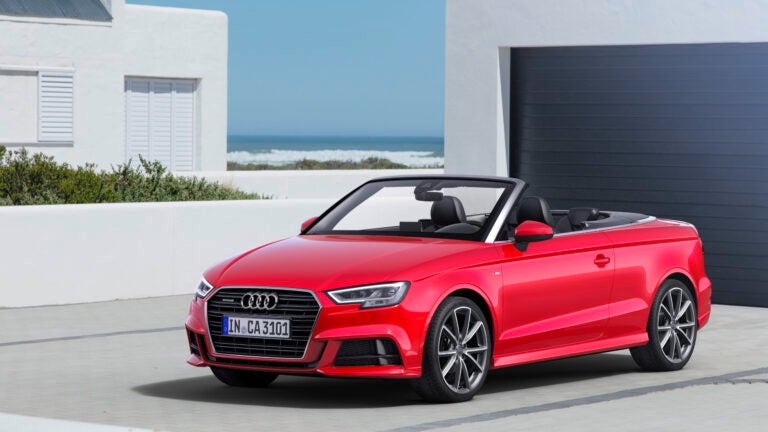
Q. I own a 2015 Audi A3 convertible with 80,000 miles. In December 2024, the right headlight needed replacement. The bulb cost about $190 and with labor the total came to $210. The left headlight failed in April 2026, and now, after only about a year and a half, the right headlight has failed again. I have a couple of concerns. First, I brought the car in for an inspection and asked the shop to check a flickering right headlight. I was never told the bulb needed replacement until I picked up the car and found the work had already been done. Second, how could the original bulb last 10 years while the replacement lasted only 16 months? The car is garaged, driven on good roads, and the lights are set to automatic. Shouldn’t the mechanic have asked my permission before replacing the bulb? And rather than simply installing another bulb, shouldn’t he be looking for an underlying cause?
A. On the authorization question, if you asked the shop to inspect a flickering headlight, they certainly had reason to conclude the bulb was failing. However, unless you previously authorized repairs up to a certain dollar amount, I would have expected a phone call before the work was performed. Audi commonly uses Osram and Philips HID bulbs, so unless the replacement bulb was defective or improperly handled during installation, I would have expected a longer service life than 16 months. I would also want the shop to look beyond the bulb itself. Based on the bulb price, your Audi likely uses HID/Xenon headlights, and a failing ballast (flickering headlight symptom), wiring issue, control module problem, poor electrical connection, or even charging-system voltage fluctuations could contribute to premature bulb failure. A thorough diagnosis is warranted before simply replacing another bulb.
Q. I have a 2016 Hyundai Santa Fe. Can you tell me how to upgrade the software? My clock is off by two minutes.
A. There was a time when vehicle clocks were never particularly accurate. Like you, many people now want their vehicle clocks to be as accurate as the time on their phone or computer. The 2016 Hyundai Santa Fe does not support over-the-air (OTA) software updates. That technology was introduced on much newer Hyundai models and was not available on this generation. You should be able to correct the clock through the vehicle’s settings menu. If the clock continues to lose or gain time, it may be worth checking whether the time is being set manually rather than through the radio’s GPS or synchronization feature, if equipped.
Q. About six months ago, my wife and I bought a 2024 Subaru Crosstrek from our local Subaru dealer. Naturally, they are sending us emails saying it is time for an oil change. They advertise genuine Subaru synthetic oil and a genuine Subaru oil filter. Since dealerships generally charge more than local repair shops, is it worth paying extra for the “genuine” parts, or would I be just as well off using a quality synthetic oil such as Havoline and a good aftermarket filter?
A. For routine oil changes, what matters most is using the correct oil specification and a quality oil filter, not necessarily whether the products come in Subaru-branded packaging. Subaru’s factory oil and filters are excellent, but many independent shops use premium oils and filters that meet or exceed Subaru’s requirements. If your vehicle is still under warranty, keep detailed maintenance records and make sure the shop uses products that meet Subaru’s specifications. Whether you choose the dealer or an independent shop, following the recommended maintenance schedule is far more important than the logo on the bottle.
Q. My boss provides me with a company car, which I appreciate, and she also takes care of the maintenance. The tires are getting pretty worn. When I mentioned replacing them, she said her mechanic had inspected them and found they were fine. I measured the tread depth with a metal ruler and got about 1/8 inch. Should I be concerned?
A. A tread depth of 1/8 inch, which equals 4/32 inch, is above the legal minimum tread depth and generally provides adequate performance on dry roads. The concern is wet-weather traction. Studies have shown that tires worn down near 3/32 inch can require substantially longer stopping distances on wet pavement, even though they remain legally usable. Since safety is the primary concern, you might consider offering to split the cost of replacement tires. A good set of all-weather tires would provide significantly better traction in rain and also improve performance in snow and ice.
Q. I recently purchased a relatively inexpensive new car. It has smart cruise control, blind-spot monitoring, automatic emergency braking, and several other advanced safety features. With so much technology involved, how reliable are these systems over the long term, and what can I do to help prevent expensive electronic problems as the vehicle ages?
A. Modern automotive electronics are generally very reliable, but they can be sensitive to low battery voltage, water intrusion, poor-quality collision repairs, and lack of maintenance. Keeping the battery in good condition, addressing warning lights promptly, and using a reputable repair facility after any accident can go a long way toward preventing problems. Fortunately, most manufacturers have spent years refining these systems, and many have proven to be remarkably durable in everyday use.
Q. I expect to be shopping for a new vehicle within the next year. As automakers continue improving fuel economy through smaller engines, turbochargers, hybrid systems, and advanced transmissions, I worry about long-term repair costs. For drivers like me who tend to keep vehicles for 15 or 20 years, are these newer technologies really worth it? Should I sacrifice a few miles per gallon in exchange for lower maintenance and repair costs down the road?
A. In many cases, the fuel savings outweigh the added complexity, especially for drivers who accumulate a lot of miles. However, long-term ownership costs can vary dramatically by make and model. Before buying, research reliability records, review long-term ownership data, and look for powertrain combinations with a proven track record. A slightly less efficient vehicle with an excellent reliability history may ultimately cost less to own than a highly sophisticated model with expensive repair requirements, especially when you consider big ticket items like hybrid batteries.
Q. I was watching YouTube and saw someone repairing rust holes with expanding foam. When he finished, it actually looked pretty good. I have an older truck with rust holes in the rocker panels. Could this be an effective repair?
A. I have seen those videos as well. The process usually involves filling the hole with expanding foam, shaping it, covering it with body filler, and then priming and painting the area. While the finished product may look good from a distance, it is not a proper rust repair. Expanding foam can trap moisture and allow corrosion to continue spreading behind the panel. A durable repair requires removing the rusted metal, treating any remaining corrosion, and welding or patching in new metal before refinishing. Foam repairs should be viewed as temporary cosmetic fixes rather than permanent solutions.
John Paul is AAA Northeast’s Car Doctor. He has over 40 years of experience in the automotive business and is an ASE-certified master technician. E-mail your Car Doctor question to [email protected]. Listen to the Car Doctor Podcast on Apple Podcasts or other popular podcast sites.
Sign up for the Today newsletter
Get everything you need to know to start your day, delivered right to your inbox every morning.
