In 1995, an 18-year-old in Mumbai did something that made no obvious sense at the time. He mortgaged his family’s house to fund an editing studio in his father’s garage, built around a single computer.
He had no proof that Indian visual effects work could ever hold its own against Hollywood. Namit Malhotra bet on it anyway.
Three decades later, the studio that grew out of that garage has gone on to win eight Academy Awards for visual effects, working on films like Dune, Interstellar and Blade Runner 2049.
A family of storytellers, a different tool
Malhotra was born into a filmmaking family, which makes his choice of tools all the more striking.
His grandfather was a Bollywood cinematographer who worked on one of India’s first colour films in 1953, and his father, Naresh Malhotra, produced hits including the 1988 classic Shahenshah.
Namit grew up around film sets and storytelling, and he dreamed of telling stories himself. But rather than picking up a camera the way his family had, he picked up a computer.
Instead of following his family’s filmmaking legacy behind the camera, Namit Malhotra chose computer graphics to tell stories. Photograph: (Bollywood Hungama)
He recruited three instructors from the computer graphics course he had just completed and began building a company from that single machine.
Many people around him were unconvinced. His early hires were not industry veterans either. A number of them had no prior experience in the field at all, some the children of chai sellers and paan shop owners.
As Malhotra has since put it, it became something of a joke in the industry: if you had no experience, you went to Prime Focus, where fresh talent was trained from scratch. Malhotra bet that skill could be built even where opportunity had never existed before, and it paid off.
Building Prime Focus
The garage venture initially focused on television commercials and music videos. In 1997, it merged with his father’s equipment rental business to form Prime Focus.
The company went on to pioneer digital intermediate and motion control technology in India, and it went public on India’s stock exchanges in 2006, with Malhotra as managing director.
From there, the ambition turned global. Prime Focus World expanded into London, New York, Los Angeles and Vancouver, working on visual effects and 3D conversion for Hollywood titles well before DNEG existed. It contributed a share of the effects work on James Cameron’s Avatar in 2009, and rode that credibility into a string of other Hollywood contracts.
The 2008 financial crisis hit the company hard around the same time, and Malhotra spent several difficult years steering it back to stability.
What Prime Focus was building was a pipeline of Indian VFX talent capable of working on the biggest productions in the world.
The Oscar years
The turning point came in 2014, when Prime Focus World merged with Double Negative, a London-based studio that had already won an Academy Award for its work on Inception. The combined company became DNEG, and under Malhotra’s chairmanship, it kept winning.
Interstellar, Ex Machina, Blade Runner 2049, First Man, Tenet, Dune and Dune: Part Two each added to the studio’s tally in the years that followed, eventually bringing the total to eight Oscars for visual effects, the most recent coming at the 2025 Academy Awards.
Prime Focus contributed visual effects work to Avatar before later evolving into the global VFX powerhouse DNEG. Photograph: (Wirally)
That run has made DNEG one of the handful of studios capable of building entire digital worlds for cinema’s largest screens. Today it employs thousands of artists and technicians across four continents, a large share of them Indian, doing work that was once assumed to belong exclusively to studios in Los Angeles or London.
What makes Malhotra’s trajectory notable isn’t just the awards. It’s the fact that he built an alternative route into global filmmaking, one that ran through a garage in Mumbai rather than a film school in California, and was staffed largely by people the industry hadn’t thought to look for.
A story closer to home
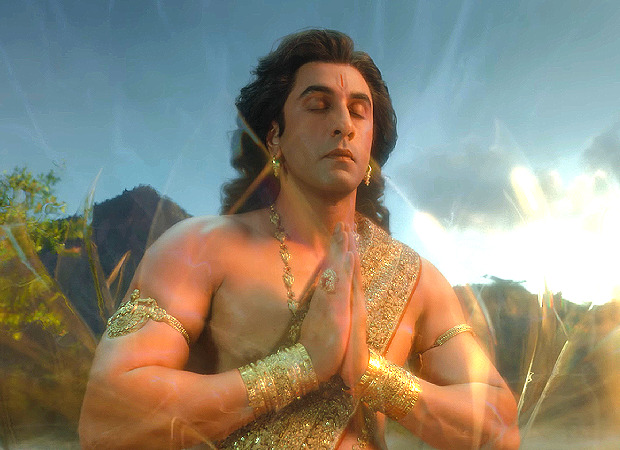
For years, Malhotra has spoken about wanting to eventually turn that same expertise toward a story closer to his own roots: the Ramayana. That ambition is now taking shape as a large-scale film production, with DNEG among the studios handling its visual effects, directed by Nitesh Tiwari.
For Malhotra, it isn’t really a new chapter so much as a continuation of the same instinct that started it all: that Indian talent, given the right tools and enough belief, can build something the whole world watches.
It’s a fitting arc for a man who started with one computer, a mortgaged house, and a handful of people nobody else was willing to train. Three decades on, the visual language he helped build for Pandora, Arrakis and outer space is finally being pointed toward India.