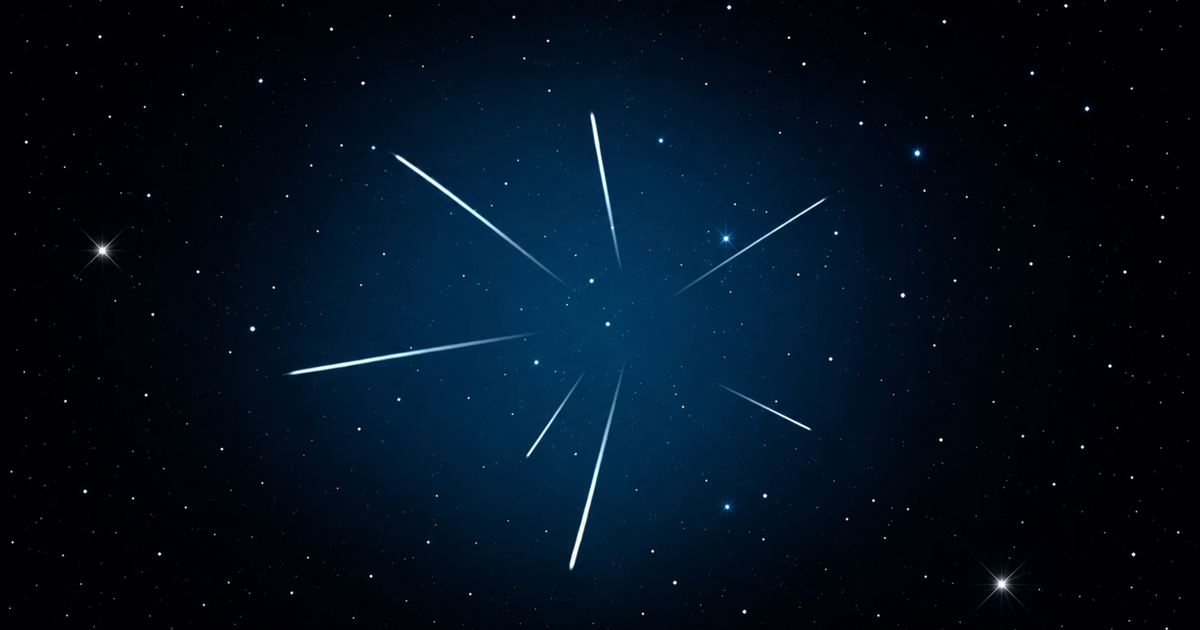
If you have plans on the night of August 12, you may want to move them. One of the year’s most anticipated astronomical events is about to light up the UAE, with the Perseid meteor shower expected to produce up to 100 meteors an hour during its peak.
The annual meteor shower is already active, but the most spectacular display will occur between the night of August 12 and the early hours of August 13. Best of all, you will not need a telescope or expensive equipment to enjoy it. A clear view of the night sky, a dark location away from city lights, and a little patience are all you need.
This year’s event is especially significant because it coincides with a new moon, creating ideal viewing conditions that astronomers say have not aligned this well for the Perseids in several years.
Why The 2026 Perseid Meteor Shower Is Special
The Perseid meteor shower appears every August, but not every year offers the same viewing experience.
In 2026, the shower reaches its maximum activity during a new moon, meaning there will be virtually no moonlight washing out the night sky. The darker the sky, the easier it becomes to spot even the faintest meteors.
Astronomy experts say this combination of peak meteor activity and moonless skies makes this one of the best opportunities for skywatchers in recent years.
Instead of seeing only a handful of bright streaks, observers under dark skies could witness dozens of meteors every hour, with peak rates reaching around 100 meteors per hour under ideal conditions.
What Is The Perseid Meteor Shower?
The Perseids are created when Earth passes through a stream of tiny dust and rock particles left behind by Comet Swift-Tuttle.
Every August, our planet crosses this debris trail. As these particles enter Earth’s atmosphere at extremely high speeds, they heat up and burn almost instantly, producing the bright flashes commonly known as shooting stars.
Although the comet itself only returns to the inner Solar System about once every 133 years, its debris continues to create the annual Perseid meteor shower.
Despite their spectacular appearance, the meteors are usually no larger than grains of sand or small pebbles. Their incredible speed is what makes them shine so brightly across the night sky.
When To Watch In The UAE
The Perseid meteor shower will remain active throughout early and mid-August, but the best viewing window is expected to be:
- Night of August 12
- Early morning of August 13
- Best viewing time: After midnight until dawn
Meteor activity generally increases as the night progresses because the side of Earth facing the direction of travel moves into the densest part of the debris stream before sunrise.
This means those willing to stay up late—or wake up very early—are likely to see the highest number of meteors.
Best Places To Watch Near Dubai
Light pollution is one of the biggest obstacles to seeing meteor showers.
For the best experience, astronomers recommend heading away from bright city lights to locations with wide, open views of the sky.
Popular areas for UAE skywatchers include:
- Al Qudra Desert
- Al Marmoom Desert Conservation Reserve
- Lahbab Desert
- Fossil Rock area in Sharjah
- Remote desert locations outside Dubai and Abu Dhabi
Choose a safe location, check weather conditions before travelling, and avoid stopping along busy roads or highways.
You Do Not Need A Telescope
Unlike planets or distant galaxies, meteor showers are actually easier to watch with the naked eye.
A telescope narrows your field of vision, making it harder to spot the fast-moving streaks that can appear anywhere across the sky.
To maximise your chances:
- Allow 20 to 30 minutes for your eyes to adjust to the darkness.
- Avoid looking at your phone or other bright screens.
- Lie back or use a reclining chair to view as much of the sky as possible.
- Be patient. Meteors often appear in bursts followed by quieter periods.
The longer you stay outside, the greater your chances of seeing multiple meteors.
Meet Comet Swift-Tuttle
The Perseid meteor shower owes its existence to Comet Swift-Tuttle, first discovered independently by astronomers Lewis Swift and Horace Tuttle in 1862.
Its nucleus measures approximately 26 kilometres across, making it one of the largest known objects responsible for an annual meteor shower.
Although the comet will not return to the inner Solar System until the 2120s, the stream of debris it has left behind continues to intersect Earth’s orbit every August, creating the reliable display that skywatchers look forward to each year.
Why This Meteor Shower Matters
Opportunities like this are relatively uncommon in the UAE.
While the country enjoys many clear nights, factors such as city lighting, humidity, and moonlight can significantly reduce visibility during astronomical events.
The 2026 Perseid peak benefits from exceptionally dark conditions, giving residents and visitors a rare chance to enjoy one of nature’s most impressive celestial displays without any special equipment.
The event is also expected to attract astrophotographers hoping to capture long-exposure images of meteors streaking across desert skies.
For families, amateur astronomers, and anyone looking for a memorable outdoor experience, the Perseids offer a reminder that some of the world’s best spectacles are completely free.
The Bottom Line
The Perseid meteor shower UAE is expected to deliver one of its strongest displays in years when it peaks on the night of August 12 into August 13.
With a rare new moon creating darker skies and peak rates reaching up to 100 meteors an hour, this year’s event offers ideal conditions for skywatching across the UAE.
Find a dark location away from city lights, give your eyes time to adjust, and look up. You may witness one of the most spectacular natural events of the year.