The night the waters rose, roads disappeared first.
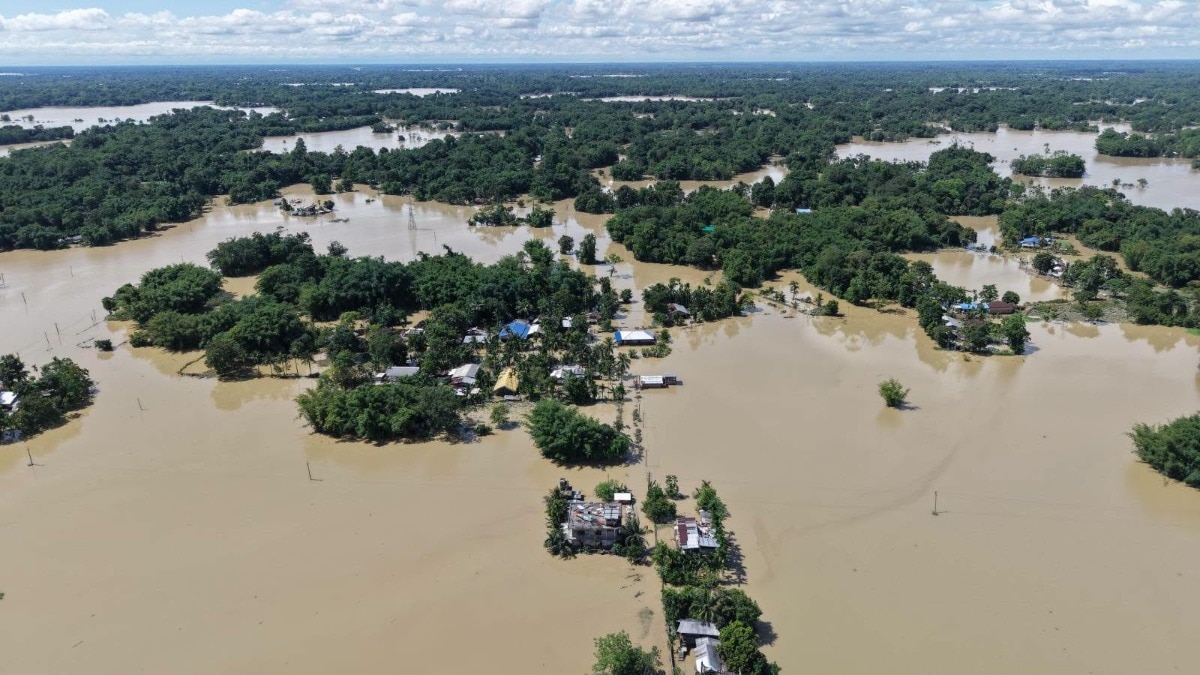
Paths that villagers had walked for years vanished beneath muddy currents. Homes that once held laughter, meals, and memories slowly filled with floodwater. For many families across Upper Assam, the only way out was no longer through the familiar roads but across the dangerous waters that had swallowed them.
And then came the boats.
As floodwaters surrounded villages in Jorhat, Sivasagar and Golaghat, rescue teams moved through the submerged landscape, taking people away from danger while giving frightened families a reason to believe they would be safe again. They carried hope to families waiting in darkness, unsure of when help would arrive.
Behind every boat crossing the flooded rivers was a story of courage, patience, and a promise that no one would be left behind.
According to The Assam Tribune, teams from the National Disaster Response Force (NDRF), State Disaster Response Force (SDRF), Civil Defence, district disaster management teams, Fire and Emergency Services, Assam Police and local volunteers worked continuously to evacuate stranded residents and provide relief to communities cut off by the floods.
Racing against rising waters
For rescue personnel, every minute mattered.
When distress calls began arriving on the night of 19 July, NDRF teams stationed in Jorhat immediately began preparing for operations. Kuldeep Sharma, second-in-command of the 1st Battalion NDRF, said the teams had been receiving emergency calls as villages began going underwater and their priority was reaching people before conditions became more dangerous.
They also helped move patients from a hospital inside the Teok tea estate, including a newborn baby who was only 20 days old. Photograph: (Instagram @ndrfindia)
The rescuers navigated through unpredictable currents, damaged roads and rapidly changing water levels. They reached homes that had been cut off by the floods, helping families escape the rising waters while also rushing patients to safety when every moment mattered.
Among the most challenging missions was the rescue operation in Kawaimari Mising village in Teok, where road connectivity had been completely cut off. Acting on information from the District Disaster Management Authority, the NDRF team travelled several kilometres by boat to reach an elderly woman who needed immediate evacuation.
In another operation, rescuers reached villagers who were dangerously surrounded by rising waters. They also helped move patients from a hospital inside the Teok tea estate, including a newborn baby who was only 20 days old.
For the teams on the ground, every rescue had a face, a family and a story behind it.
The boats that became lifelines
When villages go underwater, a boat becomes more than a means of transport. It becomes a bridge between fear and safety.
Elderly residents who could not walk through deep water, children held tightly by worried parents, pregnant women, and people battling illness all depended on these rescue boats.
The teams worked through difficult conditions, mostly travelling through areas where the strength of the current made navigation risky. However, with each journey, they brought people closer to dry land and temporary safety.
The SDRF remained deployed alongside other agencies, carrying out evacuations during the early days of the flood. As water levels began to fall in some areas, their role expanded from rescue operations to distributing relief materials and supporting rehabilitation efforts.
The rescue continued
For many, falling water levels might appear to signal the end of the crisis. For rescue teams, however, the challenges did not stop.
As floodwaters receded, boats that once moved easily through deep waters began facing new difficulties in shallow areas. Breached embankments and damaged roads made it harder for vehicles carrying food, medicines and emergency supplies to reach isolated villages.
When villages go underwater, a boat becomes more than a means of transport. Photograph: (Instagram @ndrfindia)
The rescue effort was no longer just about pulling people out of danger. It was about helping communities begin again. Teams delivered essential supplies, assisted vulnerable residents and remained prepared for fresh emergencies because another spell of heavy rain could drastically change the situation.
The people behind the lifelines
The impact of a flood is usually counted in numbers, as villages affected, people taken to safety and relief camps opened. But numbers cannot show what it feels like to leave behind a home, watch familiar places disappear under water and depend on the kindness of strangers during the hardest moments.
Behind those figures are moments of humanity.
A rescuer reaching out a hand to an elderly villager stepping into a boat. A family leaving behind a flooded home but carrying the hope of returning someday. A medical patient being carefully transported through water because reaching a hospital could mean the difference between life and death.
According to flood reports cited by The Assam Tribune, hundreds of villages and thousands of people remained affected, with relief camps and distribution centres continuing to support those displaced by the disaster.
The floodwaters may have covered roads, fields and homes, but they could not erase the determination of those who entered the waters to help.
While many watched the rivers rise, these rescuers moved towards the danger.
The teams worked through difficult conditions, mostly travelling through areas where the strength of the current made navigation risky.
They stepped into boats, faced uncertain currents, and crossed flooded villages because, for the families waiting on the other side, they were not just rescue workers. They were the people bringing them home.