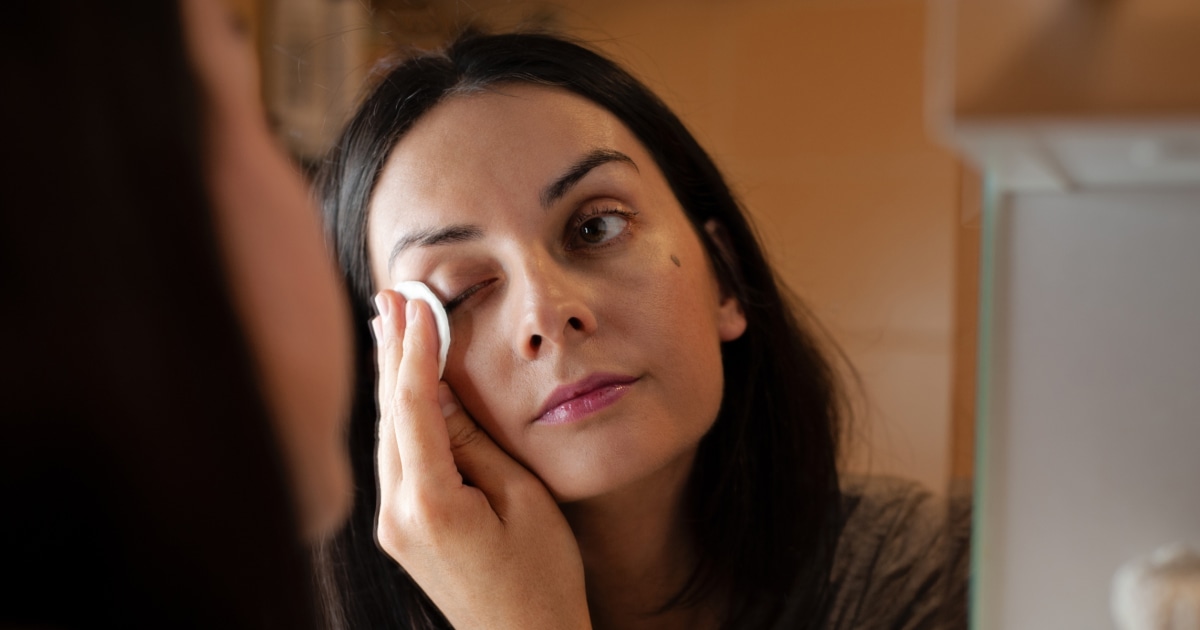
I have always approached retinoids the way one approaches a brilliant but unpredictable ex: with curiosity and a fully prepared exit plan. My skin is acne-prone, reactive and deeply suspicious of anything that promises “overnight renewal”. So when I tried Ocean of Milk, the night concentrate from Amahvas, a new skincare brand founded by beauty editor and author Vasudha Rai, I expected at least some angry patches. There were, to my surprise, none.
Ocean of Milk Nocturnal Renewal Concentrate is a mythologically inspired, biotech-leaning night serum built around 0.1% encapsulated retinaldehyde, 4% bio ferments, niacinamide, PHAs, peptides, humectants and adaptogens.
Retinaldehyde, or retinal, belongs to the retinoid family, but it is not the same as the retinol most of us are used to. Cosmetic chemist Krupa Koestline explains it simply: “They are both vitamin A derivatives, but retinal is one step closer to retinoic acid, which is the form your skin usually uses. Retinol (with an ‘o’) has to go through two conversion steps in the skin before it becomes active, whereas retinaldehyde only has to go through one step.” Because of that, she says, retinal is generally more efficient and can deliver visible results at much lower concentrations. The flip side? “It’s a much more reactive ingredient, so how you formulate it really matters.”
The first night, I used it with the caution of someone who has been humbled by actives before. The texture felt lightweight but not watery. Acne-prone skin often has a very small margin for error: too thin and the skin feels unsupported but too rich and the pores throw a fit. The next morning, my skin looked slightly more even and crucially, not angry. There was no tightness around the mouth, no stinging or red patches. Over the next few uses, I began to understand that this formula coaxes skin issues rather than confronting them. “Retinal was the last ingredient that we chose,” says Rai. “We first started with the idea and all the other ingredients. We chose the milk peptides, the ferments, the lotus and ashwagandha first.”
According to Dr Mikki Singh, board-certified dermatologist and cosmetologist, founder and medical director at Bodycraft Clinics, the use of 0.1% encapsulated retinaldehyde places the formula in an interesting category. “0.1% encapsulated retinaldehyde represents a highly advanced, potent, yet tolerable over-the-counter vitamin A treatment,” she says. “It bridges the gap between gentle but slow-acting standard retinols and harsh prescription-strength retinoids, like tretinoin. However, formulation is everything; a good product undergoes rigorous R&D and multiple trials.”
“For me, it has never been about using a higher percentage of retinol to make something work,” says Koestline. “It’s so much more about the entirety of the formulation. If you are increasing cell turnover, you also have to support the skin barrier at the same time.” She points to humectants, biomimetic lipids, soothing ingredients and antioxidants that help minimise transepidermal water loss and reduce inflammation.
Ocean of Milk is inspired by the Samudra Manthan, with each of its 14 hero ingredients tied to one of the treasures that emerged from the churning of the cosmic ocean. For Rai, the story was not added after product development as ornament. The idea arrived during a morning walk. What drew her to the story was the idea of churning through poison to reach nectar. “That’s what retinol or strong serums are, isn’t it?”, she tells me. Except Ocean of Milk seems to be making the case that the poison phase need not be quite so dramatic.
What I appreciated most was that the serum did not make me feel like I had to earn results through irritation. That said, retinal is still an active ingredient. Koestline recommends starting slowly with retinaldehyde. “I would start two nights per week, then gradually increase frequency depending on how your skin responds,” she says. “Pairing it with a nourishing moisturiser is always a good approach, especially during an adjustment phase. And sunscreen is an absolutely essential thing every morning.” She also advises avoiding multiple aggressive actives at the same time. “The goal with a retinoid isn’t to overwhelm your skin. It’s really to create a consistent routine that you can stick to and maintain for months and years to come.”