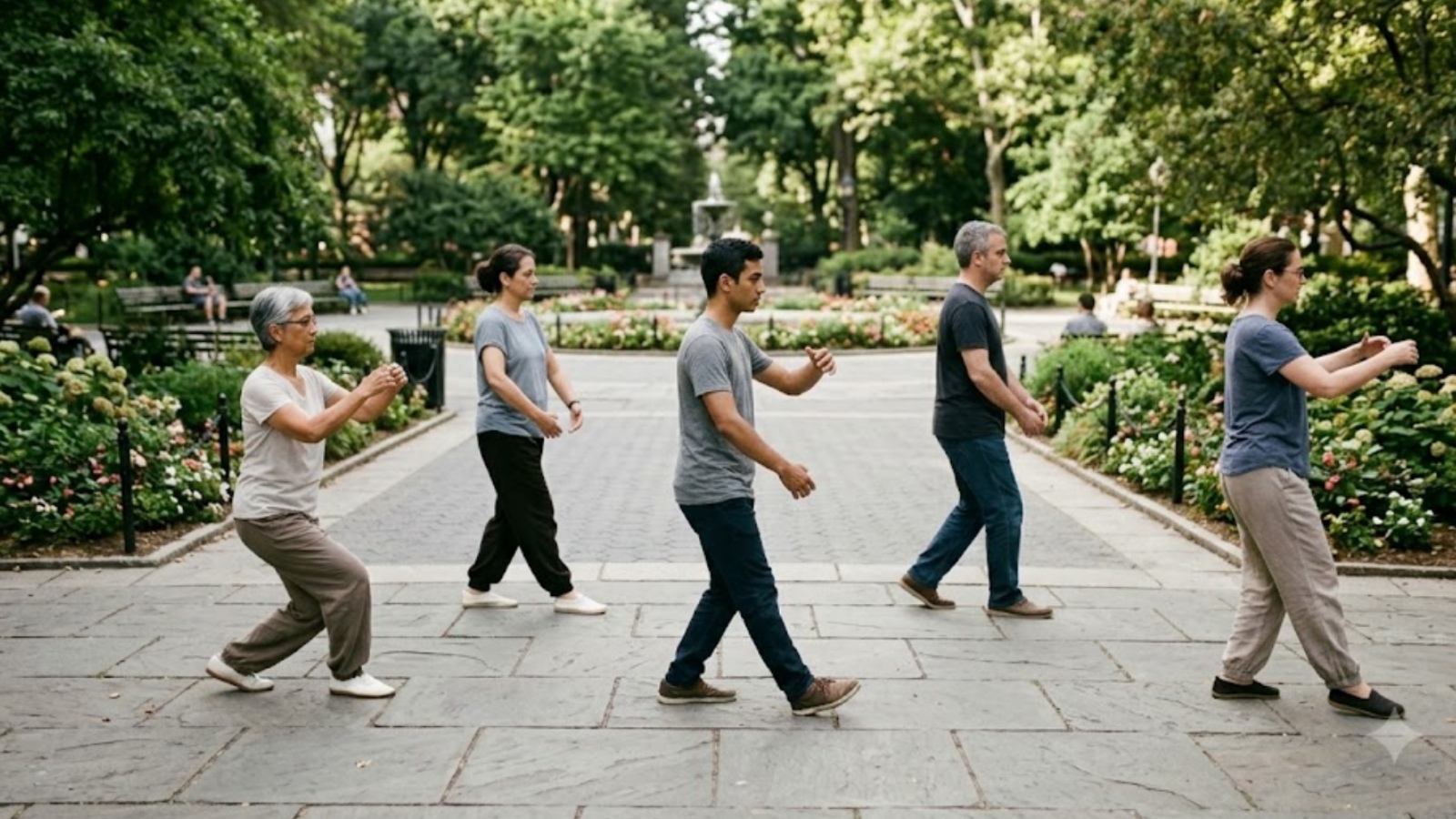
Gastroenterologist Dr Palaniappan Manickam recently drew attention to Tai Chi walking in a video, describing it as a practice that allows people to meditate while walking and improve their balance. While the concept may sound simple, Tai Chi walking has been gaining recognition worldwide for its potential benefits for physical and mental health, particularly among older adults.
According to Dr Gaurav Prakash Bhardwaj, Director, Sports Injury, Joint Preservation & Replacement Surgery, PSRI Hospital, Tai Chi walking combines mindful movement, controlled breathing and body awareness, making it far more than an ordinary stroll.
DISCLAIMER: This article is based on information from the public domain and/or the experts we spoke to. Always consult your health practitioner before starting any routine.
What exactly is Tai Chi walking?
Tai Chi walking is derived from Tai Chi, the ancient Chinese mind-body practice known for its slow, flowing movements and emphasis on mindfulness.
“Tai Chi walking is a form of slow, mindful movement where the focus is not simply on reaching a destination or increasing fitness levels,” says Dr Bhardwaj. “Instead, attention is placed on every step, body posture, breathing pattern and weight transfer.”
Unlike regular walking, where people often move automatically while their minds wander, Tai Chi walking encourages participants to stay fully present. “In Tai Chi walking, individuals consciously shift their body weight from one leg to the other while maintaining relaxed muscles and proper alignment,” explains Dr Bhardwaj. “Because of this mindfulness component, many researchers refer to it as a form of ‘moving meditation’.”
The practice can help calm the mind, reduce stress and improve concentration while simultaneously engaging the body, he adds.
How does Tai Chi improve balance and reduce fall risk?
“As we age, muscle strength, reaction time and proprioception—the body’s awareness of its position in space—naturally decline,” says Dr Bhardwaj. “Tai Chi walking helps counter these changes by training the body to perform slow, controlled weight transfers while maintaining stability.”
Story continues below this ad
During the practice, the body’s centre of gravity repeatedly shifts from one leg to the other in a deliberate and controlled manner. This challenges the systems responsible for balance and strengthens muscles that support posture and movement.
“Regular practice can improve both static balance, which is the ability to stand steadily, and dynamic balance, which helps us remain stable while moving,” Dr Bhardwaj notes.
Research has shown that Tai Chi may help improve:
- Balance and postural control
- Coordination between the upper and lower body
- Body awareness and proprioception
- Reaction time
- Confidence while walking and moving
“Several clinical studies and public health organisations recognise Tai Chi as an effective strategy for fall prevention among older adults,” he adds.
Who stands to benefit the most?
According to Dr Bhardwaj, Tai Chi walking can be beneficial for a wide range of people. “Older adults looking to reduce fall risk often benefit greatly from Tai Chi,” he says. “It can also help people recovering from periods of inactivity, individuals with mild arthritis, those experiencing stress or anxiety, and adults seeking a gentle way to stay active.”
Story continues below this ad
People with mild mobility limitations or balance concerns may also find the practice useful. However, he advises caution for certain groups. “Individuals with severe balance disorders, advanced neurological conditions or significant musculoskeletal problems should consult a healthcare professional before beginning any new exercise programme,” he says.
How soon can beginners expect results?
“For most healthy individuals, Tai Chi walking is one of the safest forms of exercise because the movements are slow, controlled and easily adaptable,” says Dr Bhardwaj. Beginners do not need prior experience in meditation, martial arts or yoga. Most experts recommend starting with short sessions lasting 10 to 15 minutes a day.
“The initial focus should be on posture, breathing and smooth weight transfer rather than mastering complex techniques,” Dr Bhardwaj advises.
Research suggests noticeable improvements can occur relatively quickly. “Studies have shown that when practised consistently two to three times a week, people may experience improvements in balance, mobility and overall wellbeing within six to twelve weeks,” he says.
Story continues below this ad
DISCLAIMER: This article is based on information from the public domain and/or the experts we spoke to. Always consult your health practitioner before starting any routine.