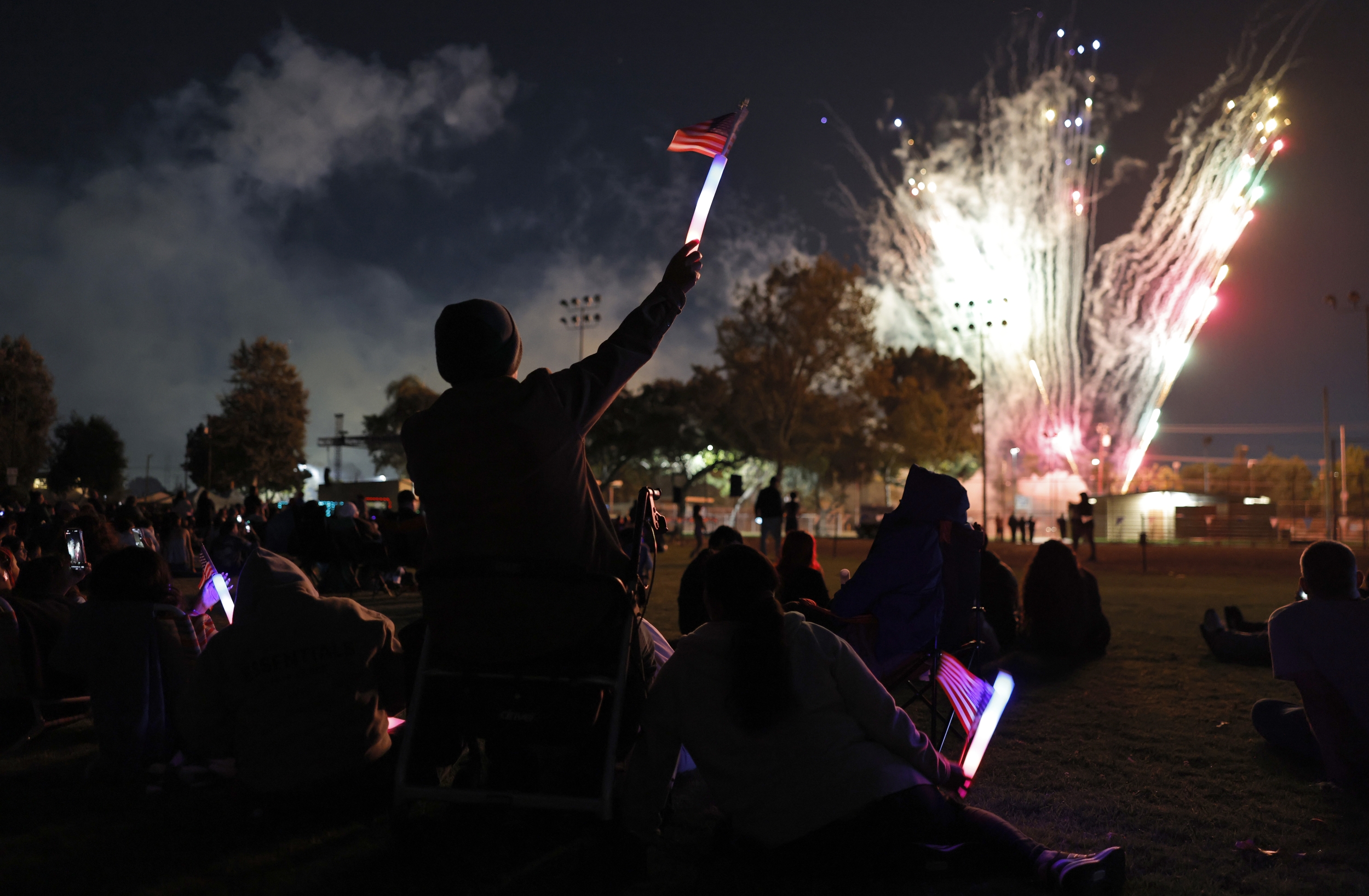
Most people attending July 4 fireworks think about their eyes and hands — the injury risk from sparks and debris. They do not think about the air they breathe for hours after the show ends. They should.
The South Coast Air Quality Management District issued a formal particle pollution advisory for Southern California on July 2–3, 2026, warning that the Air Quality Index could reach the hazardous category in parts of Los Angeles and Orange counties as fireworks smoke accumulated. In Washington, D.C., CNN confirmed the city experienced Code Red air quality on the morning of July 5 — the worst air quality of any major city in the world at that moment — after the record-breaking 40-minute National Mall fireworks display launched hundreds of thousands of shells across 10 sites.
For the approximately 25 million Americans with asthma, millions more with COPD, and tens of millions with cardiovascular disease, this is not a minor nuisance. It is a measurable health risk.
Why This Matters
Fine particulate matter — PM2.5, the particles smaller than 2.5 micrometers in diameter — is the primary health concern from fireworks. These particles are small enough to penetrate deep into the lungs and enter the bloodstream. The American Lung Association has documented that short-term exposures to elevated PM2.5 are linked to respiratory and cardiovascular events, including asthma attacks, COPD exacerbations, cardiac arrhythmias, and heart attacks.
The July 4 window is uniquely high-risk for a reason most people do not appreciate: fireworks pollution is not uniformly distributed. Neighborhoods downwind of major displays can experience PM2.5 concentrations 10 to 100 times above normal background levels for two to six hours after a show ends. The smoke is often invisible to the eye at typical distances from displays — but it is being inhaled.
What We Know So Far
From the AQMD’s July 2026 advisory, KFI AM 640’s AQMD coverage, CNN’s D.C. air quality reporting, and published research:
- AQMD formal advisory: July 4 and July 5 consistently produce the highest particle pollution levels of the year in the South Coast Air Basin
- D.C. Code Red: Washington, D.C., briefly hit the worst air quality of any major city in the world on July 5, 2026, after the record National Mall fireworks display
- NOAA research at 315 U.S. monitoring sites: PM2.5 elevated by an average of 42% over the 24-hour July 4 period; some monitors next to displays showed concentrations rising 370%
- Peak exposure window: PM2.5 peaks between 9 and 10 p.m. on July 4 — exactly when most fireworks shows occur — and persists in downwind areas for hours
- Additional pollutants: Fireworks release PM2.5, PM10, toxic metals, and gas-phase pollutants, including sulfur dioxide and volatile organic compounds
Where the Risk Is Highest
The highest PM2.5 exposure during July 4 fireworks is in:
- Neighborhoods directly downwind of major displays, which can experience 10 to 100 times normal background PM2.5 levels
- Cities with large public displays in enclosed or low-wind settings: Washington D.C.’s National Mall, Chicago lakefront, New York Harbor, San Diego bay — locations where smoke from shells can accumulate with limited dispersal
- Urban neighborhoods with higher proportions of Hispanic residents, according to a UC Irvine study — where consumer fireworks use is associated with higher localized PM2.5 exposure, raising environmental justice concerns
- Any area where consumer fireworks are used at the street level rather than from centralized professional displays, as this creates distributed, close-range exposure
What the AQMD and Health Officials Say
“Breathing particle pollution can lead to cardiovascular and respiratory health effects such as heart attacks, asthma aggravation, decreased lung function, coughing, or difficulty breathing and may lead to premature death in people with heart or lung disease,” the South Coast AQMD stated explicitly in its July 2026 advisory.
“Fireworks activity can lead to significant increases in particle pollution, affecting air quality throughout the Valley and making it difficult for some residents to breathe,” said Jaime Holt, Valley Air District chief communications officer, in a statement from the San Joaquin Valley Air District.
Dr. George Thurston, a respiratory epidemiologist quoted in news coverage, noted that the people most vulnerable to fireworks-related air pollution — those with asthma, COPD, and cardiovascular disease — are disproportionately present in lower-income communities.
What the Evidence Shows — and What It Does Not
MedicalDaily Evidence Check
- Data sources: AQMD July 2026 advisory; NOAA 315-site analysis; peer-reviewed studies on PM2.5 and cardiovascular/respiratory outcomes; CNN D.C. air quality reporting
- What it found: Fireworks produce significant PM2.5 spikes on July 4 — 42% elevation over 24 hours on average nationally; up to 370% near displays; D.C. experienced Code Red air quality on July 5, 2026
- What it does not prove: That any specific fireworks display caused a specific cardiac or respiratory event; individual risk depends on baseline health, duration of exposure, and location
- Key limitation: Post-fireworks air quality impacts are real and documented, but most events are brief enough that healthy individuals do not face significant acute risk
- What readers should know: People with asthma, COPD, or cardiovascular disease should minimize outdoor time in the post-fireworks window (9 p.m. to 2 a.m.) and should stay indoors with windows closed in downwind areas
Who Faces the Greatest Risk?
- Adults and children with asthma — fireworks smoke can trigger acute attacks, including potentially severe ones
- People with COPD — PM2.5 exposure is associated with exacerbations requiring emergency care and hospitalization
- People with cardiovascular disease, including heart failure, coronary artery disease, or arrhythmia — short-term PM2.5 spikes are linked to cardiac events
- Older adults — who have reduced respiratory and cardiovascular reserve
- Residents in downwind neighborhoods of major displays, especially those with limited ability to close windows or leave
- People in lower-income urban communities where consumer fireworks use creates localized, ground-level exposure
Symptoms and Warning Signs to Watch For
People with asthma, COPD, or heart disease should watch for the following in the hours after fireworks:
- Increased coughing or wheezing
- Shortness of breath or tightness in the chest
- Increased use of rescue inhaler beyond normal frequency
- Chest pain, palpitations, or rapid heartbeat
- Unusual fatigue or dizziness
Seek emergency care for:
- Difficulty breathing that does not improve with rescue inhaler use
- Chest pain that is severe or persistent
- Signs of severe asthma attack: inability to speak in full sentences, cyanosis (blue lips or fingernails), rapid deterioration
What You Can Do Now
- If you have asthma, COPD, or cardiovascular disease, stay indoors with windows closed during and for at least two to three hours after a major fireworks display. Run HVAC on recirculation rather than fresh-air intake if possible.
- Check the Air Quality Index for your zip code at AirNow.gov before any planned outdoor activity in the day following July 4.
- Have your rescue inhaler accessible and review your asthma action plan before fireworks season.
- If you use a portable oxygen concentrator or are on home oxygen, consult your pulmonologist about additional precautions during fireworks season.
- Children with asthma should be kept indoors during and immediately after fireworks displays; even attending professional shows at a distance can create meaningful exposure.
Cost and Access: What Patients Should Know
Air quality data is available free and in real time at AirNow.gov, which provides zip-code-level AQI for PM2.5, PM10, and ozone. The site also provides health guidance by AQI level for sensitive groups.
For patients whose asthma or COPD was aggravated by July 4 smoke exposure, care is available through primary care providers, urgent care clinics, and hospital emergency departments. Patients without insurance can access respiratory care at federally qualified health centers on a sliding-fee basis.
What Happens Next
Air quality agencies monitor post-fireworks pollution levels annually. The D.C. situation on July 5 was notable for its scale — the largest fireworks display in U.S. history — and officials are reviewing whether larger public displays require formal public health advisories for downwind residential areas. The EPA’s AirNow system provides real-time air quality monitoring that readers can track throughout the summer season.
The Bottom Line
July 4 fireworks create a measurable post-display air pollution event — one that produces Code Red air quality in some cities and 10- to 100-times-normal PM2.5 levels in downwind neighborhoods. For most healthy adults, the exposure is brief enough to be tolerable. For the 25 million Americans with asthma and millions more with COPD or cardiovascular disease, the post-fireworks window — roughly 9 p.m. to 2 a.m. in areas downwind of displays — represents a genuine health risk that should be managed by staying indoors with windows closed.