As negotiations between the US and Iran appear to further stall, US President Donald Trump has issued a bizarre demand over destruction.
The biggest sticking point in the lasting peace deal the US President claims that Iran wants nuclear material. Mr Trump has repeatedly said that Iran can never have a nuclear weapon.
As part of his sought deal, he wants Iran to stop its nuclear program, specifically uranium enrichment, something Tehran claims it does to pursue nuclear energy. Enriched uranium is also the key ingredient to a nuclear weapon.
Sign up to The Nightly’s newsletters.
Get the first look at the digital newspaper, curated daily stories and breaking headlines delivered to your inbox.
By continuing you agree to our Terms and Privacy Policy.
“The Enriched Uranium (Nuclear Dust!) will either be immediately turned over to the United States to be brought home and destroyed or, preferably, in conjunction and coordination with the Islamic Republic of Iran, destroyed in place or, at another acceptable location, with the Atomic Energy Commission, or its equivalent, being witness to this process and event,” Mr Trump said on Truth Social on Monday evening.
His comments come hours after Iran revealed it was in no rush to strike a deal with the US, and that it would continue to hold the Strait of Hormuz and the world’s oil supply hostage as its key bargaining tool.
Israel and Mr Trump have repeatedly claimed that Iran is close to having enough enriched uranium to make a nuclear weapon.
Last year, the US conducted Operation Midnight Hammer, which, at the time, Mr Trump said set Iran’s nuclear program back years. That claim was disputed by news agencies and intelligence services.
Since then, Mr Trump launched Operation Epic Fury, an all-out war against Iran and receiving information that Tehran may have been planning an attack on the US.
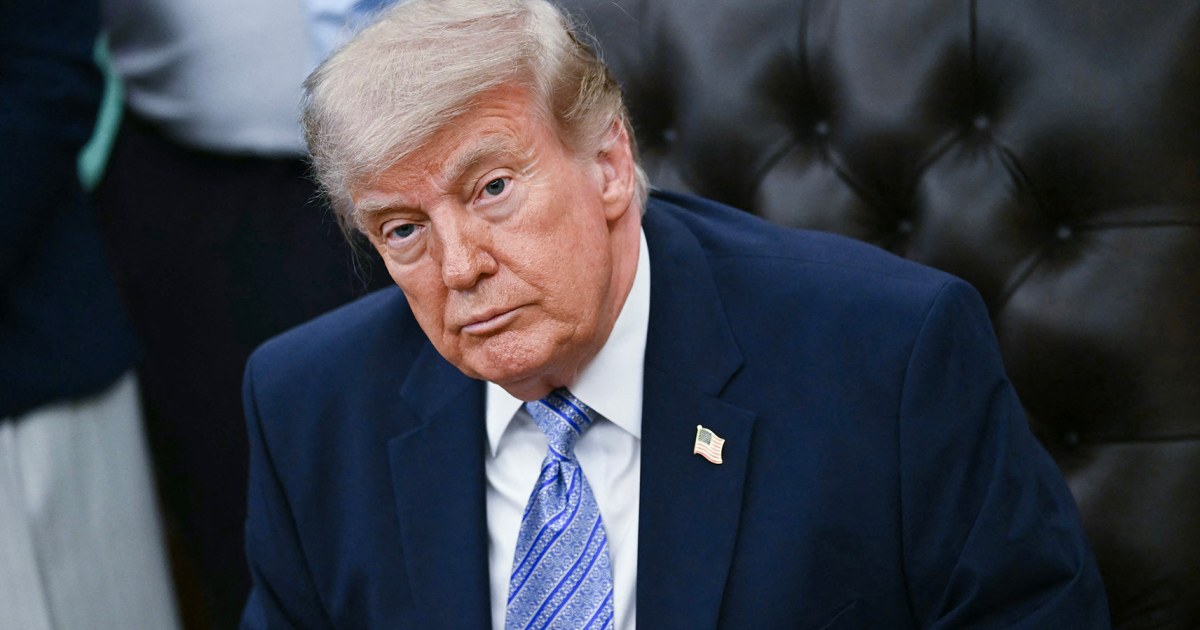
US President Donald Trump has issued a nuclear demand. Credit: Unknwon
Operation Epic Fury saw the killing of Iran’s former leader, Ayatollah Ali Khamenei, and several high-ranking members of the supreme leader’s inner circle.
Khamenei’s son, Mojtaba Khamenei, was also severely injured in the attack, and has not been seen since, despite being thrust into the country’s highest role.
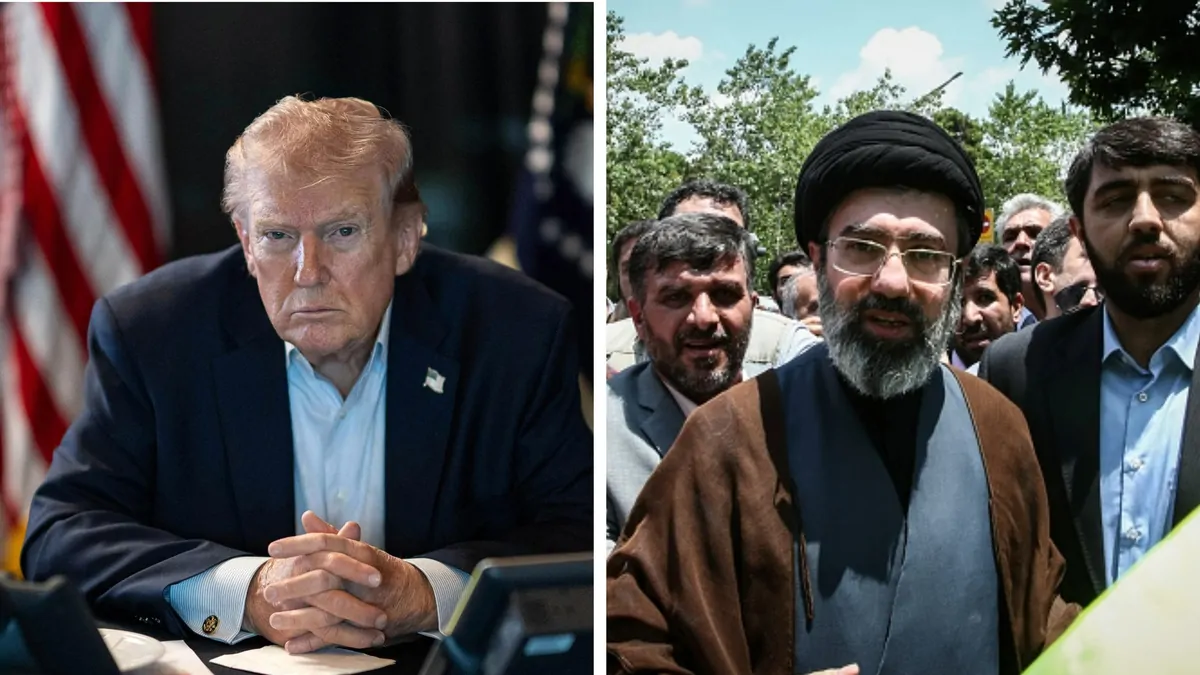
Iran’s new Supreme Leader Mojtaba Khamenei. Credit: Saeid Zareian/picture alliance via Getty Image
Iran, as yet, has not budged on maintaining the nuclear program which was central point of both operations.
Mr Trump has also said another attack, something “nasty”, would go ahead if a deal was not reached soon.
US-Iran deal negotiations
Iran’s top negotiator and its foreign minister are in Doha for talks with Qatar’s prime minister on a potential deal with the United States to end the three-month-old war, an official briefed on the visit says, after both sides played down hopes for an imminent breakthrough.
US Secretary of State Marco Rubio told reporters in New Delhi earlier that the United States would give diplomacy every chance to succeed before considering whether to deal with Iran in “another way”.
There was a “pretty solid thing on the table in terms of their ability to open up the strait (of Hormuz), get the strait open, enter into a very real, significant time-limited negotiation on the nuclear matter and hopefully we can pull it off,” Mr Rubio said.
In a post on Truth Social on Monday, Mr Trump said talks with Iran were going “nicely” but warned of fresh attacks if they failed.
It “will only be a Great Deal for all, or no Deal at all,” he wrote.
The official briefed on the Iranians’ Doha visit told Reuters the discussions focused primarily on the Strait of Hormuz and Iran’s stockpile of highly enriched uranium while Iran’s central bank governor attended to discuss the potential release of frozen Iranian funds as part of a final deal.
Iran’s foreign ministry spokesman Esmaeil Baghaei said earlier that nuclear issues would only be negotiated on if the framework accord is agreed first.
The two sides remain at odds on several other issues, such as Israel’s war in Lebanon with the Iran-aligned Hezbollah militia and Iranian demands for the lifting of sanctions and the release of tens of billions of dollars of Iranian oil revenues frozen in foreign banks.
As efforts to reach a deal continued on Monday, Iran said it had downed a “hostile” stealth drone using a new air defence system, Iranian news agencies reported, without saying where it had come from.
“This is a sign from us that no more stealth drones can penetrate the skies of the Persian Gulf,” Fars quoted unnamed officials as saying.
Potentially complicating the Lebanon track in later talks, Israeli Prime Minister Benjamin Netanyahu said on Monday Israel would intensify strikes against Hezbollah in Lebanon.
Israel’s military soon thereafter said it was attacking Hezbollah infrastructure in Lebanon’s eastern Bekaa Valley and several other areas.
In his Truth Social post, Mr Trump also called on more Muslim countries to sign up to the Abraham Accords, brokered during his first term in office and aimed at normalising ties between those states and Israel.
He said Saudi Arabia and Qatar should immediately sign and Pakistan, Egypt, Jordan and Turkey should follow suit.
A Pakistani source familiar with the matter said that the statement reflected an attempt to use the Iran diplomacy for a wider push around the accords – but that the two issues were “not interlinked and cannot be made so”.
Others saw the suggestion as aimed at making an Iran deal more palatable to sceptics.
Mr Baghaei said the potential Iran deal contained no specific details on management of the Strait of Hormuz, through which about a fifth of the world’s oil and liquefied gas usually flows.
Iran will not charge tolls for ships to pass through but there will be a cost for services offered such as navigation and steps to protect the environment, he said, under a protocol to be agreed with Oman, which lies on the opposite shore of the waterway.
Citing a Middle East diplomatic source, the Japanese Nikkei newspaper reported the US and Iran were discussing a plan to open the strait about 30 days after reaching a deal to end hostilities.
Iran would then clear mines from the strait during a 30-day window, after which ships from all countries could navigate freely and safely, Nikkei reported.