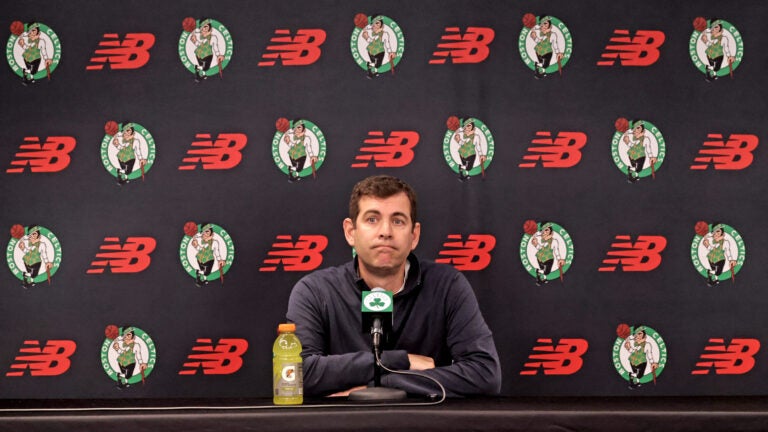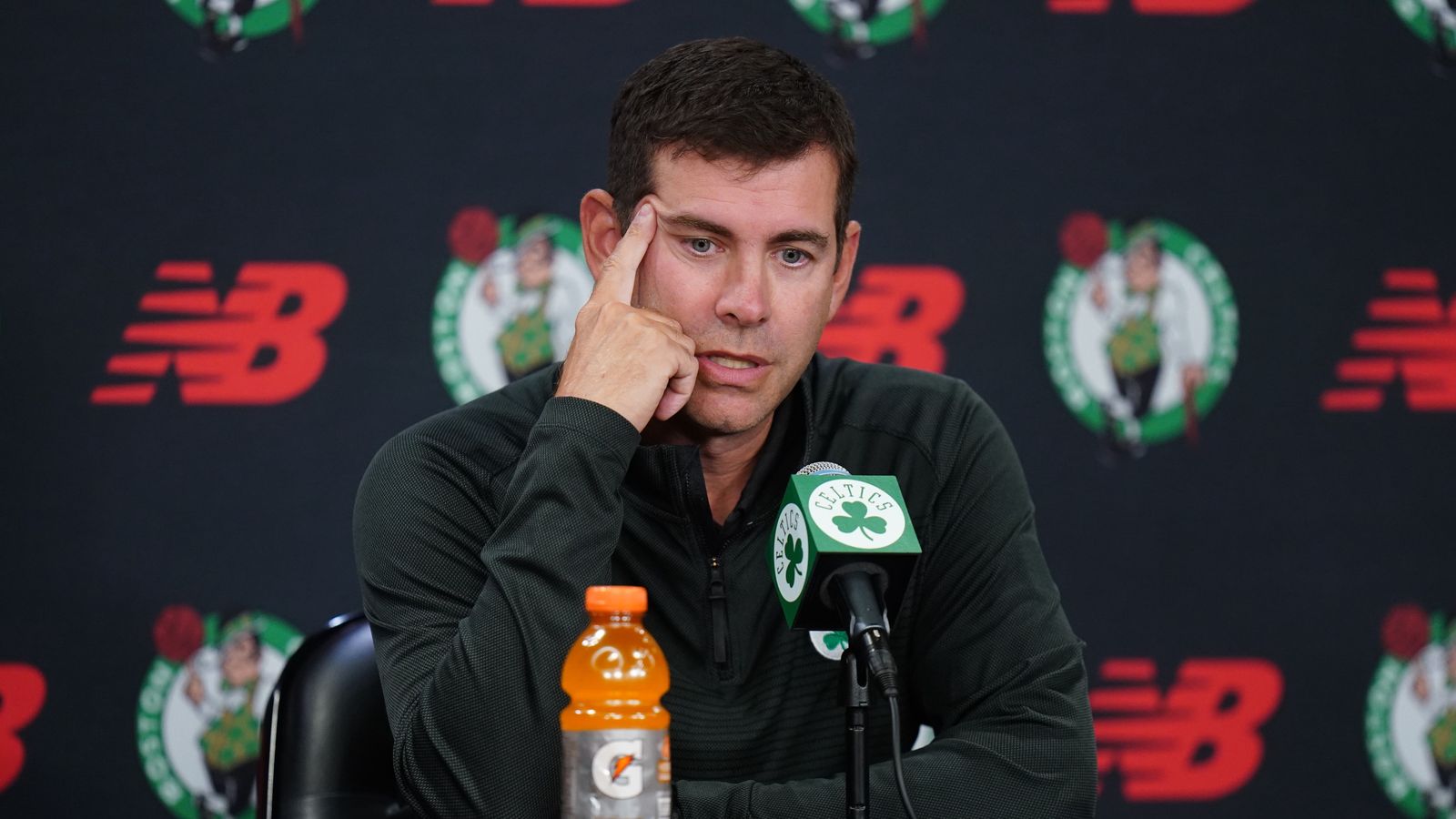
BRIGHTON – Brad Stevens is not happy. Not happy at all.
Even during his years leading benches at Butler and with the Boston Celtics, Stevens never really had a flair for the dramatic. No sharp, half-witty, half-painfully sarcastic Joe Mazzulla-esque comments. No borderline-rude Ime Udoka remarks. No rally-towel, deeper-meaning, Doc Rivers speeches.
Since Stevens got to Boston, he’s been as straightforward as they come. Never giving up too much information about his overarching plans, but also never failing to tell it how it is. All with his same old calm demeanor and a smile.
But for Stevens — rarely angry Stevens — Wednesday was enlightening.
The Celtics were not good enough this season. Anyone who watched the first round would be able to come to that conclusion, but hearing it from the mouth of Stevens hits a different nerve. Because while those words may not have directly left his lips on Wednesday morning, that was the obvious message.
From his opening statement to the final comments of the day, Stevens voiced his concerns regarding Boston’s lack of consistent offensive creation, inability to attack the rim effectively, absent-mindedness in big moments, and the overall need to add to the roster, in general.
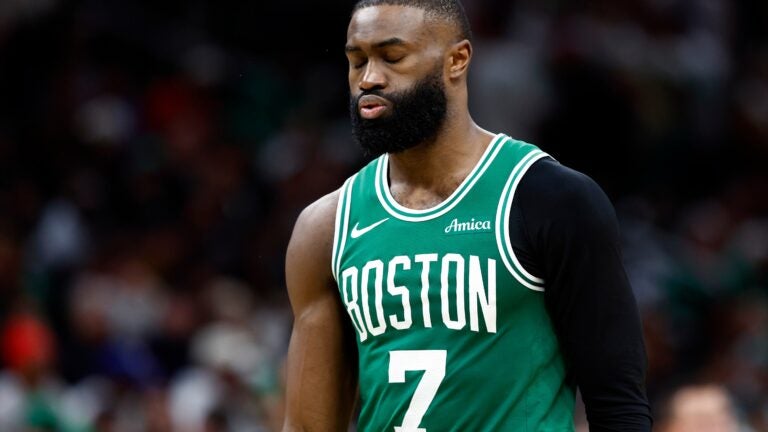
A day littered with questions about Boston’s 3-point rate, Jaylen Brown’s eyebrow-raising comments, and potential offseason changes ultimately always boiled down to the offensive issues.
Stevens’ comments danced around that idea.
“One of the things that we’ve got to figure out is how to have more of an impact at the rim. And I think we do need to add to our team to do that.”
“I thought we struggled to get to where we wanted to go on offense a lot of the series.”
“Our first-shot offense wasn’t very good the whole series.”
But it was more than Boston not being good enough this year. It was the Celtics’ failing to get over the hump on multiple occasions and, even in their championship season, missing the mark at times.
Stevens referenced their 2023 exit at the hands of the Miami Heat. Their Game 2 losses to the Heat and the Cleveland Cavaliers in 2024. Their 2025 series against the Orlando Magic and subsequent loss to the New York Knicks.
All included poor performances, largely defined by Boston’s inability to put the ball in the basket consistently. Where most are choosing to blame the 3-ball, Stevens is looking at the bigger picture.
“I know the threes are a big talking point, but it all goes back to being able to generate the best looks,” Stevens said.
© Petre Thomas
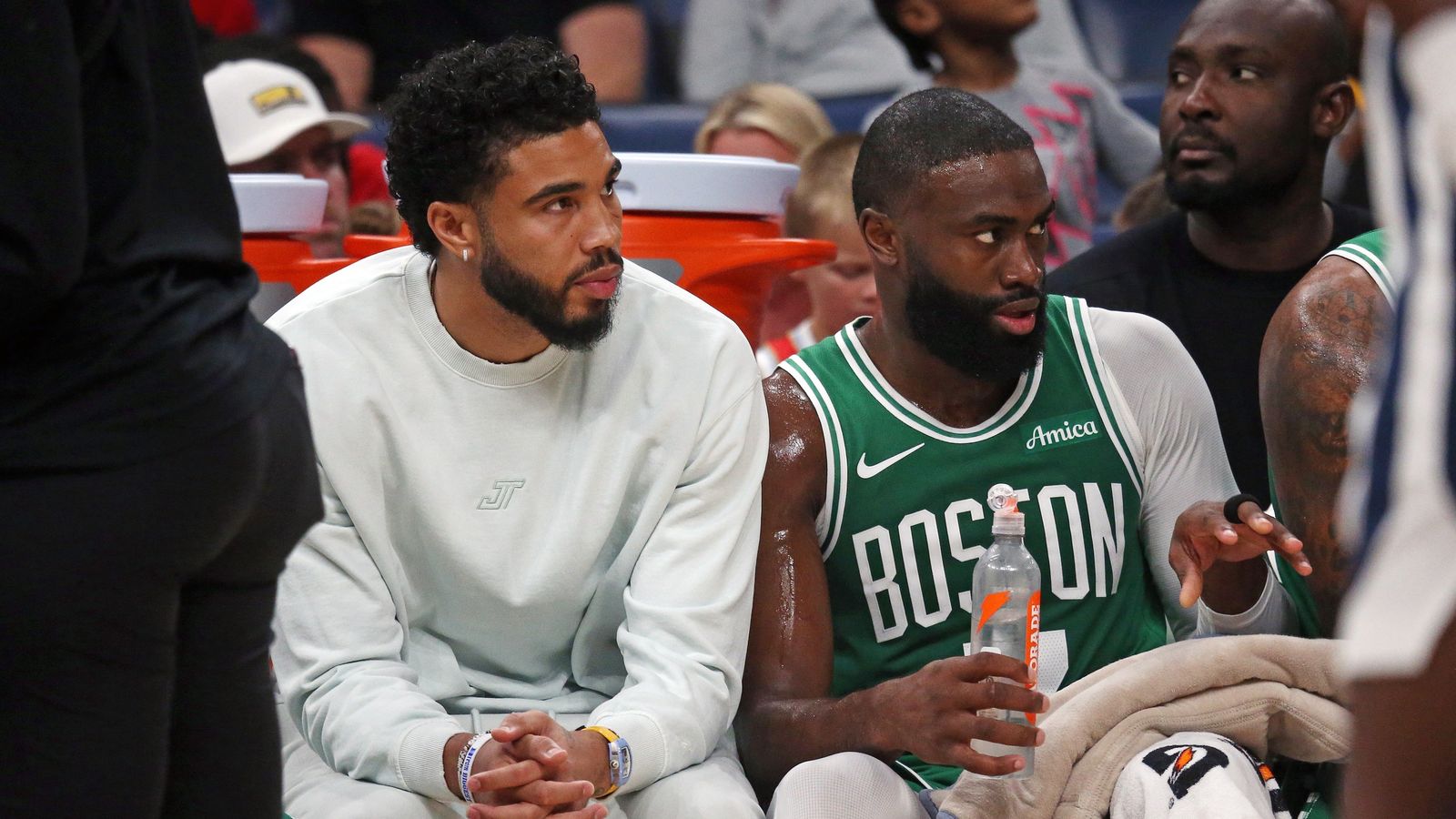
Walter Clayton Jr. and Jayson Tatum
Are the threes a problem because they are threes? Or are they a problem because they aren’t going in? Well, the latter, right? Because when the threes don’t go in, the Celtics don’t often win.
But to Stevens’ point, it’s less about the threes and more about generating quality looks — and making them.
Everyone has been bringing up the Celtics’ record when they make threes versus when they don’t. And that’s a valid statistic, considering how drastic the difference is.
Since Joe Mazzulla took over as head coach, the Celtics are 199-29 when they shoot at least 35% from behind the 3-point line (regular season and playoffs included). When they don’t, they are 75-82.
When they make 35% of threes, the Celtics’ winning percentage is .873, which would put them on pace for nearly regular-season 72 wins. When they don’t, it falls to .478, on pace for just over 39 regular-season wins.
League average sits around 36%, so if the Celtics shoot even a bit worse than that mark, they are one of the greatest teams ever assembled.
That’s the formula for the 3-point haters. And again, it’s a fair one. One that Stevens himself even welcomed. “First of all, I think it’s really fair, and we need to look at everything,” he said.
But since we’re looking at shot-making in general, why not give the other shots a spin? What if the Celtics shoot poorly from 2-point range?
Well, in that same time frame, the Celtics are 192-50 when they shoot at least 54% on twos (league average is around 55%). When they fail to reach that mark, 82-61.
Not quite as significant as the threes, but close enough to draw the parallel. When shots don’t fall, the Celtics lose a lot of basketball games — point-blank period.
That’s what Stevens was getting at, and that, in and of itself, is a major problem.
I understand the 3-point hatred. I truly do. I may not agree with it, but I get it, especially for those who grew up watching a very different brand of basketball.
Even from a psychological standpoint, shots taken farther from the basket, rather than trying to force the issue closer to the rim, can be a frustrating watch, no matter the (very real) math behind it.
© Eric Hartline
Paul George and Jaylen Brown
But put that aside for a moment — even if just a moment — and humor me. Read this quote from Stevens’ Wednesday morning availability:
“The biggest thing is, can we generate looks at the rim? Yeah, everybody wants to do that, and every one of us would prefer a dunk over that, over a three,” Stevens said. “Every single one of us, those are hard to get, and we struggle to generate them, and so, yeah, we certainly shot some bad ones. I’m not telling you we didn’t. There’s no question about that.
“But I also thought we shot some really hard shots at the rim, really hard shots in the midrange too, and I don’t necessarily fault anyone for that, other than credit to Philly’s defense, and we’ve got to do a good job as we build out the roster to have more options.”