BRIGHTON – Nothing can excuse the performances the Boston Celtics trotted out in their first-round meltdown loss to the Philadelphia 76ers. Four losses full of 3-point misses, adjustments that felt two quarters too late, and an abandonment of the fundamentals that lifted the Celtics to that point.
Yet the sheer fact that Boston was in that spot deserves acknowledgment.
“The team was super exciting and fun to watch this season,” Jayson Tatum said. “There’s only one team that can win the championship. And it’s always tough to lose, whenever it does happen. Beginning of May or end of June, it’s always a tough pill to swallow.”
Now, acknowledgment doesn’t necessarily mean praise. In some regard, it doesn’t, but in others, it simply means an admittance that a lot of this — in a lot of people’s eyes — wasn’t supposed to happen.
The term “gap year” has been overused. Shoved down the throats of fans and the national media who, in the Celtics’ defense, did seem to largely write the Tatum-less group off.
So, rather than thinking of that same old exhausting term, time-travel back to October, when it was all starting. The coaches played the media in a pick-up basketball game. The Celtics blew a preseason game to the Toronto Raptors. A 0-3 start to the campaign, with losses to the Sixers, New York Knicks, and Detroit Pistons — now, three of the best teams in the East.
From that point onward, the Celtics completely altered their trajectory. In a flash, they went from potential Play-In team, or perhaps even AJ Dybantsa-bound, to a regular-season powerhouse. Beating the expectations that were placed in front of them.
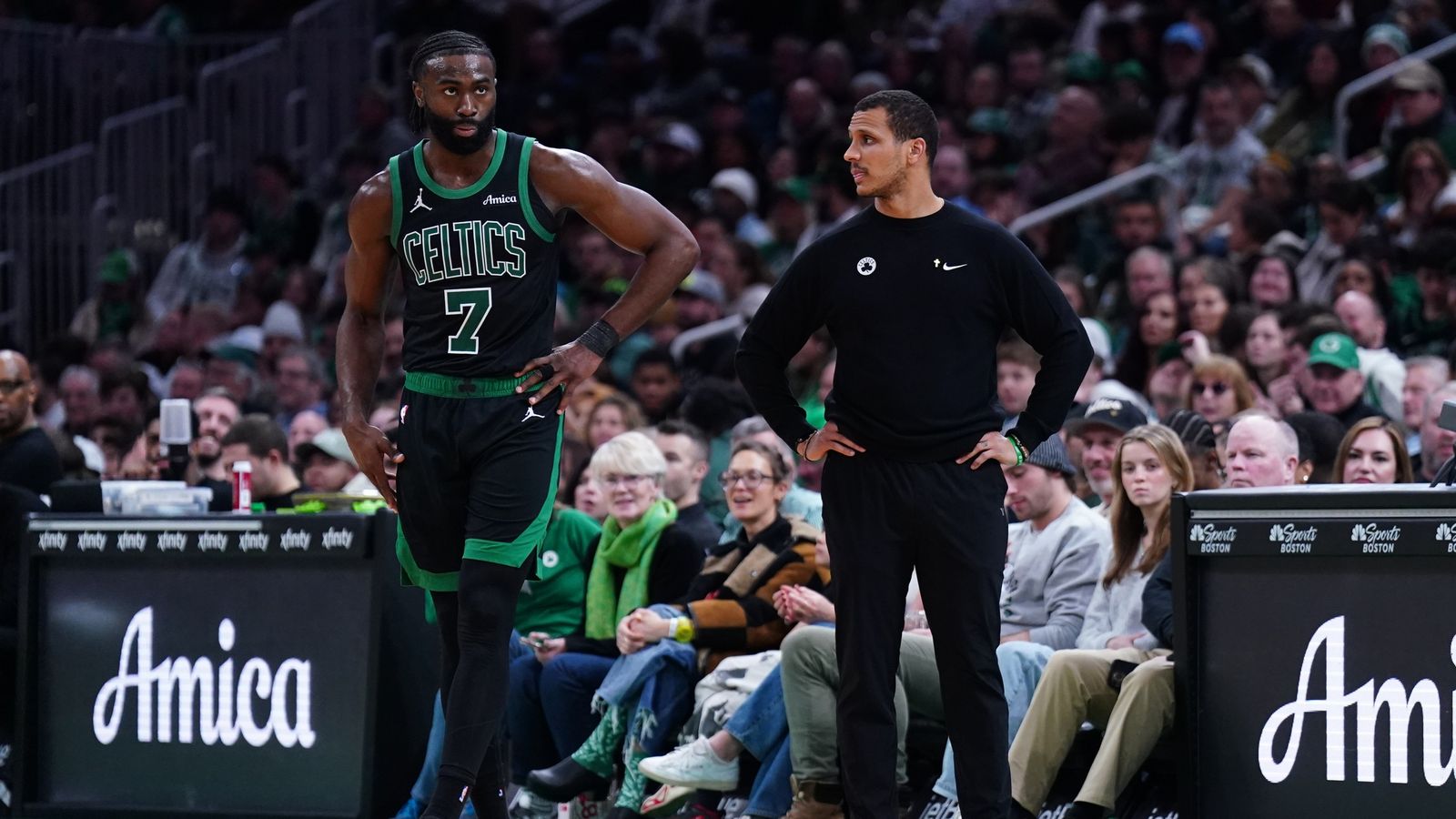
Joe Mazzulla found a way to squeeze every last drop of talent out of guys most general NBA fans may never have heard of. Jaylen Brown’s shot-making soared off the charts, and his decision-making improved alongside it. Payton Pritchard made the leap from solid sixth man to legitimate high-level scoring option. Neemias Queta turned into a top-10 center in the league.
The problem is that almost all of it disappeared in just seven playoff games.
© Paul Rutherford
Tyrese Maxey and Baylor Scheierman
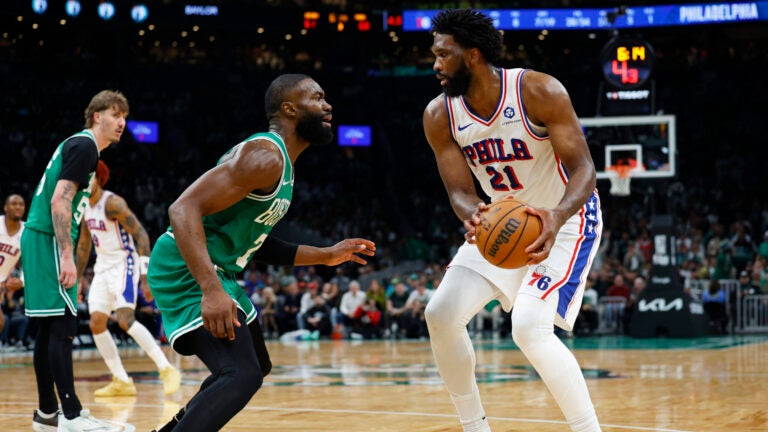
Mazzulla’s end-of-the-bench trust wavered. Brown’s on-court decisions became questionable at best. Pritchard was relegated to a fourth or fifth scoring option on some nights. Queta was played off the floor by Joel Embiid.
As quickly as the Celtics transformed into a title contender — in reality, even quicker — they were bounced from the playoffs, blowing a 3-1 lead in the process.
Jobs will be questioned, and none more than Mazzulla’s. Trade ideas will be tossed around into the ether without a second thought, fans and media members concocting potential solutions to a seven-game problem that followed an 82-game success story.
And to be clear, both of those truths can co-exist. They do co-exist.
This year’s Celtics group was a wildly impressive regular-season basketball team. Queta was an every-night starter after being a fourth-string center for most of his career. Baylor Scheierman and Jordan Walsh were both consistent starters at times. Again, Mazzulla and his unbelievably talented coaching staff got the most out of everyone.
“At the start, our backs were kind of against the wall, and nobody really expected a lot out of us, and we kind of came together as a team,” Scheierman said. “And everybody had moments of contributing, and I think that made a lot of fun, and just a really close lock room, and everyone’s supporting each other.
“Obviously, the season’s super long and can be a grind, and I think having that camaraderie between everyone, I think just made the season super fun and enjoyable. And it’s definitely one that I’ll remember for a long time.”
In fact, Mazzulla and this Celtics roster were so impressive that they wholly changed the minds of the rest of the world.
“Going into the season, a lot of people wrote us off, and I think we proved a lot of people wrong in that aspect, and through a lot of different things,” Sam Hauser said. “With starting the year, 0-3, obviously, not having JT, and then kind of figuring out who we were, and getting a lot of guys in the rotation that really haven’t had much experience in the NBA to this point.”
Instead of scrapping through the season as a seventh, eighth, or even 13th seed, Boston flourished. And with that, expectations changed rapidly. It was no longer a fun season for fans to enjoy, result notwithstanding.
No. The Celtics had new expectations. A new goal. A Tatum return and a championship to gun for. From that standpoint, this season can be viewed as nothing but a failure.
And in a sense, considering Boston’s own internal belief never matched what was set in place for them, then failure may be the only lens through which to view the 2025-26 season.
“When you start a season, you think you’re going to be playing until June every single year,” Hauser said. “That’s the expectation, especially being in Boston and with the Celtics, the standard is a championship, and when you fall short of that, it’s disappointing.”
© Bill Streicher
Paul George and Jayson Tatum
At the end of the day, it’s all part of the unique life of the NBA.
Sitting on couches, in front of TVs, and on barstools, it’s easy to let the frustration flow. Flip headspaces from a blissful lack of expectations to seeing a clear-cut path for a championship run. And then having that painfully stripped away before the run even began.
That’s no excuse. The millions flowing into NBA players’ pockets come with a different level of outside noise than an everyday 9-to-5. It’s inevitable with the territory, and part of the payday and joy that comes with being a professional athlete is having to deal with some of that noise.
As is the case with almost everything in life, there are two sides to every story.
Few are more heartbroken about the season’s result than the players. The coaches. The trainers. The staff that made the Celtics who they became by the end of the year.
But what’s rarely considered is the work-life balance of professional athletes and the attitudes they must maintain to sustain a healthy lifestyle. And not in the traditional sense, either.
For the players, coaches, and staff, as much as they love their job, basketball is work. It’s a constant, never-ending grind to improve, with the ultimate goal of winning a championship. But for the fans, it’s life.
For fans, basketball is an escape from work. For players, it’s the opposite.
So, as fans brood in frustration as their post-work enjoyment was ruined, players are forced to sift through the endless emotions of a tough loss — at least, that’s the case for the 29 teams that don’t win a championship every season.
Players have families to go home to. Families who understand the inevitable disappointment but also want to enjoy their newfound free time with their husbands, wives, moms, and dads once the unrelenting schedule of the NBA season is over.
The tough reality is, nothing the Celtics could have said after losing 3-1 would have sufficed. There was no acceptable explanation. Even a simple ‘We just weren’t good enough’ would have been met with