Synopsis: This Pharma-Chemical stock is a global Ibuprofen leader with a large integrated manufacturing base, low debt and new API expansion plans. But the bigger question is whether Paracetamol, non-Ibuprofen APIs, exports and regulated markets can turn this stable pharma-chemical business into a stronger growth story.
A pharma-chemical stock is drawing attention as a long-stagnant manufacturing business looks to enter a stronger growth phase through new API expansion plans. The company has built global scale in Ibuprofen, but its next phase depends on whether it can reduce dependence on one product and successfully expand its broader pharmaceutical ingredient portfolio.
Shares of IOL Chemicals and Pharmaceuticals Ltd closed at around Rs. 94.2, with a market capitalization of around Rs. 2,765 crore. Another notable point is that promoter holding increased from 52.62 percent in December to 57.48 percent in March 2026, indicating higher promoter ownership in the company. The key question now is simple: is this a genuine transition story or just another commodity-led pharma-chemical stock?
What Does The Company Do?
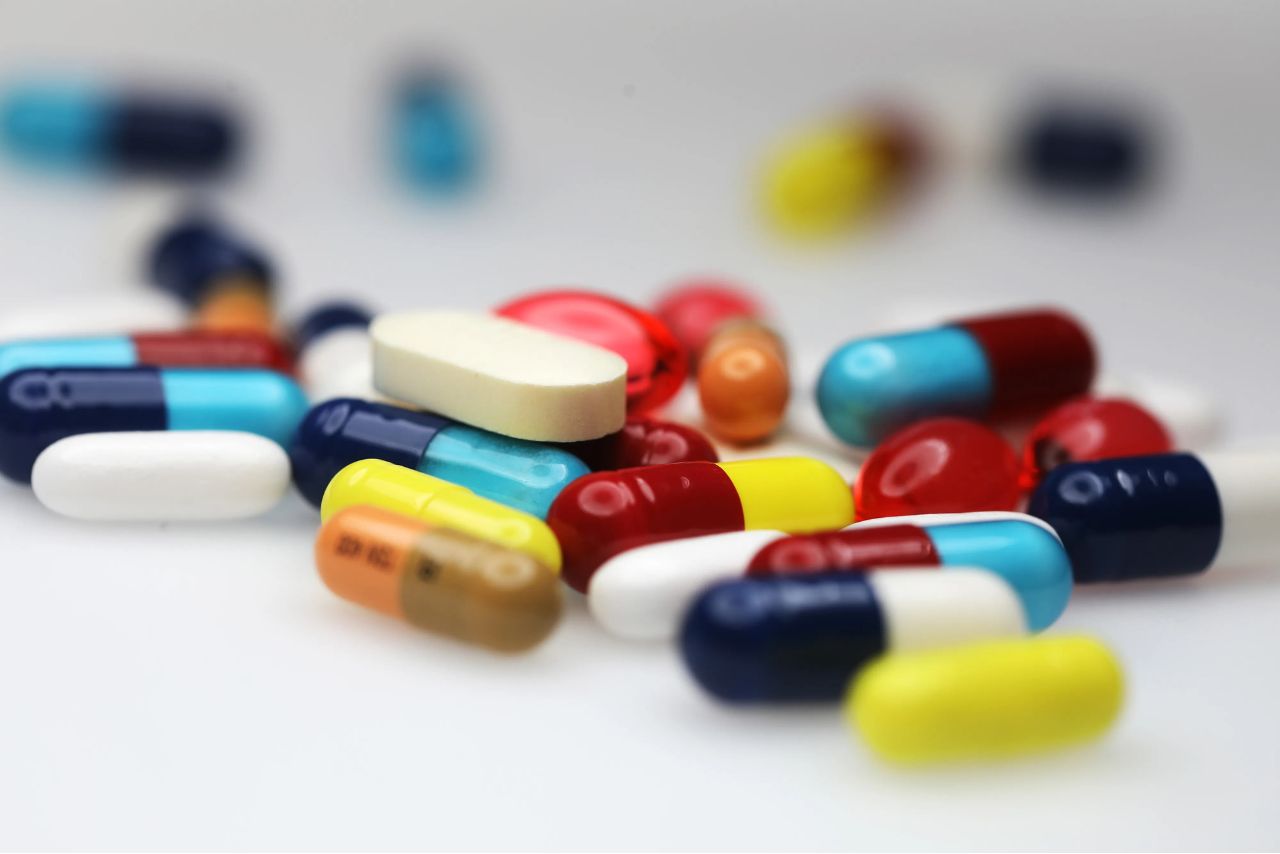
IOL Chemicals and Pharmaceuticals is mainly an API and specialty chemicals company. In simple words, it makes the key ingredients that go into medicines, along with chemicals that are used both inside its own business and sold to outside customers. Its biggest identity is Ibuprofen, a pain and inflammation medicine ingredient. The company says it is the largest global producer of Ibuprofen and the only company worldwide that is fully backward integrated for the product, with annual Ibuprofen capacity of 12,000 MT.
Backward integration means the company does not only make the final Ibuprofen API. It also makes important inputs used to manufacture it, such as Iso Butyl Benzene, Mono Chloro Acetic Acid and Acetyl Chloride. This gives the company better control over supply, quality and cost. This is important because API manufacturing can be highly sensitive to raw material prices and supply chain disruptions.
Apart from Ibuprofen, the company is also building a wider non-Ibuprofen API portfolio. Its product basket includes Paracetamol, Metformin Hydrochloride, Clopidogrel, Pantoprazole Sodium, Fenofibrate, Levetiracetam, Lamotrigine and Losartan Potassium. These products are used across areas such as pain and fever, diabetes, cholesterol, acidity, blood thinning, epilepsy and hypertension. The company also mentioned that the non-Ibuprofen share in its pharma segment increased from 18 percent in FY21 to 34 percent in FY25, which shows that diversification is already underway.
The company also has a large specialty chemicals business. Its products include Ethyl Acetate, Acetic Anhydride, Iso Butyl Benzene, Mono Chloro Acetic Acid and Acetyl Chloride. Ethyl Acetate is used in industries such as flexible packaging, paints, inks, textiles and pharmaceuticals, while Acetic Anhydride is a key input for Paracetamol. The chemicals business therefore plays two roles: it earns revenue from external sales and also supports the company’s API backward integration.
Manufacturing Strength And Financial Position
IOL’s biggest strength is its manufacturing base. The company has an existing facility spread across more than 180 acres and has also acquired 101 acres near the Chandigarh-Bathinda Highway for future expansion. It has 11 dedicated manufacturing units, a customer base across 80 countries, more than 3,000 employees, over 20 commercialized products and 9 products in the pipeline. Its R&D facility is DSIR-approved and includes a 120-member team with more than 50 scientists.
The company’s manufacturing set-up includes batch manufacturing for APIs and continuous manufacturing for intermediates and specialty chemicals through DCS-based technology. Its facilities include reaction, filtration, centrifugation, drying, blending, sieving and micronization operations. It also has a zero-discharge effluent treatment plant, solvent recovery plants, ISO class-8 HVAC systems, 185 MTPH steam generation capacity and a dedicated 17 MW co-generation plant. This shows that IOL is not just a small generic API player, but an integrated industrial pharma manufacturer.
Its balance sheet is also comfortable. The company reported a debt-to-equity ratio of 0.07 as of December 2025. Management has also said that the financial position remains stable, supported by healthy operating cash flow and prudent financial management, allowing it to continue investing in growth initiatives while maintaining balance sheet strength.
This low-debt position is important because the company is still in expansion mode. For FY27, management indicated that regular capex could remain around Rs. 150 crore to Rs. 200 crore. For FY26, capex was expected to be slightly below the earlier Rs. 150 crore budget, around Rs. 130 crore to Rs. 135 crore, with around 60 percent going towards growth and the remaining 40 percent towards infrastructure development and automation.
What Is Happening Right Now?
For Q3FY26, IOL reported revenue from operations of Rs. 580.4 crore, up 10.9 percent year-on-year from Rs. 523.3 crore. EBITDA stood at Rs. 62.6 crore, up 22.8 percent year-on-year, while profit before tax before exceptional items rose 39.3 percent to Rs. 38.8 crore. For the nine months ended December 2025, revenue from operations stood at Rs. 1,699.6 crore, up 9.6 percent year-on-year, while EBITDA increased 24.8 percent to Rs. 196.1 crore.
At first glance, these numbers show improvement. However, the story is not completely clean. The company’s reported profit after tax for Q3FY26 was Rs. 20.6 crore, almost flat compared with Rs. 20.5 crore in Q3FY25. One reason was an exceptional item of Rs. 11.2 crore related to provisions and adjustments for the implementation of new labour codes. Without looking at this separately, the PAT growth can look weaker than the operating performance.
The business mix is also changing. In Q3FY26, pharma revenue stood at Rs. 356 crore, while chemicals revenue was Rs. 224 crore. Pharma contributed 61 percent of total revenue and chemicals contributed 39 percent. Within pharma, management said Ibuprofen revenue was Rs. 228 crore and non-Ibuprofen revenue was Rs. 128 crore. This means Ibuprofen is still the largest product, but non-Ibuprofen APIs are becoming more important.
On a geographical basis, the company’s 9MFY26 revenue mix was still largely domestic, with 76 percent from India and 24 percent from exports. This is important because even though the company is a global leader in Ibuprofen manufacturing, its total revenue is still not export-heavy. The opportunity ahead is to increase export contribution, especially in regulated markets.
Why Has Growth Looked Slow For A While?
The reason IOL has looked stagnant for some time is that the company is still dealing with a mix of commodity pricing, cost pressure and product transition. In the Q2FY26 earnings call, management said volume growth was being witnessed quarter-on-quarter, mainly from the non-Ibuprofen portfolio, but pricing pressure had remained for the past three to four quarters. This means the company has been selling more volumes, but better volumes have not always translated into strong margin expansion.
Chemicals have also seen a similar pattern. Management said volumes were recovering, but pricing remained subdued. Ethyl Acetate and Acetic Anhydride were running near full utilization, but weak pricing limited the extent of upside. In other words, the plants are busy, but realizations are not strong enough to create a sharp profit jump.
Another issue was fuel cost. In Q2FY26, Punjab floods affected the company’s power and fuel cost because rice husk, which is used to generate power and steam, had higher moisture and could not be used efficiently. The company had to use costlier materials and buy power from the electricity board, leading to an impact of around Rs. 7 crore to Rs. 8 crore. Management said this impacted margins by around 1 percent.
In Q3FY26, management expected fuel costs to reduce, but that did not happen because husk prices remained at the same level or slightly increased. As a result, the company could not achieve the earlier margin target of around 13 percent to 14 percent. Management said EBITDA margin could improve by 1 percent to 2 percent in Q4 through better efficiencies and marketing.
New API Expansion Plans
The biggest current expansion driver is Paracetamol. The company started a new Unit 11 for Paracetamol with an installed capacity of 10,800 MTPA. This is a fully backward-integrated and automated facility. Management said Paracetamol is a growth driver, although the product is still ramping up and pricing is not very strong. In Q2FY26, management said the new Paracetamol plant had reached around 55 percent to 60 percent utilization, and in Q3FY26 they said capacity is being increased gradually.
The second growth area is non-Ibuprofen APIs. Management wants to increase the non-Ibuprofen share within pharma. In Q2FY26, management said the company expects pharma to move towards a 50:50 mix between Ibuprofen and other pharma products in the coming years. In Q3FY26, management went further and said that over the next few years, the ideal mix would first be 60 percent API and 40 percent chemicals, and later 75 percent API and 25 percent chemicals. Within APIs, the near-term objective is 50 percent Ibuprofen and 50 percent non-Ibuprofen, while the longer-term ambition is 25 percent Ibuprofen and 75 percent non-Ibuprofen.
Metformin is another important product because management said the earlier facility used for Paracetamol could be converted back to Metformin or other products. Clopidogrel has also seen capacity increase from 180 MTPA to 240 MTPA, while Pantoprazole, Fenofibrate and other APIs remain part of the broader regulated market portfolio.
Minoxidil is another future product to watch. Management said the company recently received CEP for Minoxidil and is already selling Minoxidil intermediate in the merchant market. Its initial strategy is to supply the final Minoxidil API to international regulated markets, with expected start in the first quarter of the next financial year. This should further enhance the non-Ibuprofen API portfolio.
Should You Watch?
The bull case is that IOL has real manufacturing strength, global leadership in Ibuprofen, backward integration, low debt and a clear plan to expand beyond one product. The company is also trying to grow exports, shift more products into regulated markets and build a stronger non-Ibuprofen API portfolio. If Paracetamol scales well, Minoxidil commercializes smoothly and exports improve, the company could see better growth and margin quality over the next few years.
The bear case is that this is still not a pure high-margin pharma story. A large part of the business remains linked to commodity-like APIs and chemicals where pricing is not fully in the company’s control. Management has itself spoken about pricing pressure, fuel cost pressure and the need to improve efficiencies. Revenue is growing, but not explosively, and PAT growth can remain uneven when costs, depreciation, pricing and exceptional items move against the company.
IOL is not yet a fully proven high-growth company, but it is also more than just a stagnant commodity business. Right now, it appears to be in a transition phase. The company has strong manufacturing capabilities and a healthy balance sheet, but the real key is whether non-Ibuprofen APIs, Paracetamol, Minoxidil and exports can scale enough to significantly improve its long-term profit profile.
For now, this Rs. 96 pharma-chemical stock is worth watching because the building blocks are real. But the rerating case depends on execution. If the company successfully moves from an Ibuprofen-heavy model to a broader API-led platform, the story can become stronger. If not, it may remain a solid but cyclical pharma-chemical manufacturer.
Disclaimer: The views and investment tips expressed by investment experts/broking houses/rating agencies on tradebrains.in are their own, and not that of the website or its management. Investing in equities poses a risk of financial losses. Investors must therefore exercise due caution while investing or trading in stocks. Trade Brains Technologies Private Limited or the author are not liable for any losses caused as a result of the decision based on this article. Please consult your investment advisor before investing.