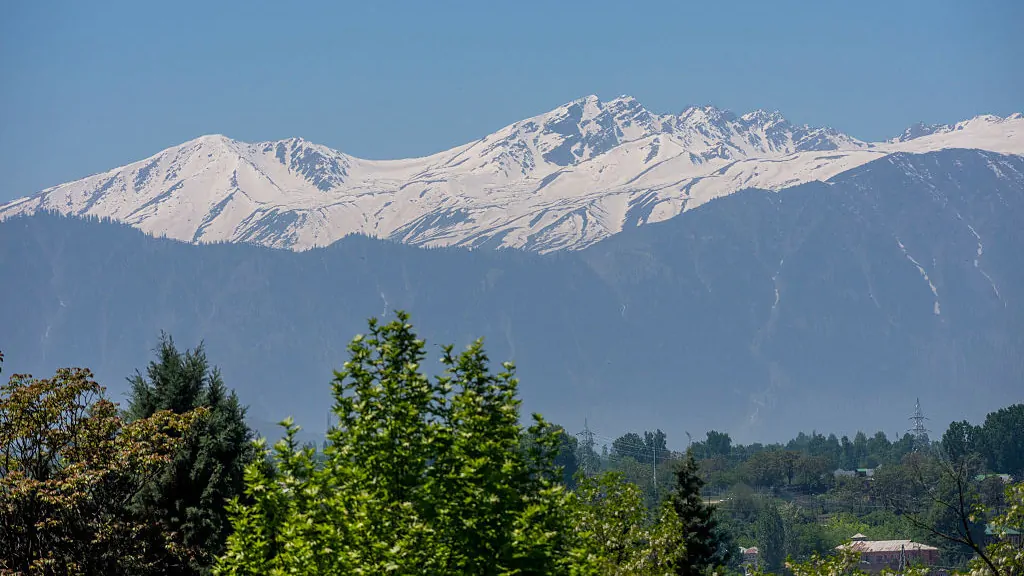
PAHALGAM, Jammu and Kashmir — The pony handlers are usually busy this time of year saddling up a steady stream of tourists near Pahalgam, a hill town in the disputed Himalayan region of Kashmir.
But as they lined the road that leads up from the valley last weekend, only a few cars passed by.
Instead of frenetic haggling over rides into the meadows, there were long stretches of idleness.
Sign up to The Nightly’s newsletters.
Get the first look at the digital newspaper, curated daily stories and breaking headlines delivered to your inbox.
By continuing you agree to our Terms and Privacy Policy.
“We just wait,” said Shabir Ahmad, who has worked here for more than a decade. “Sometimes a customer comes. Sometimes there is no one for hours.”
A year ago, on April 22, 2025, three men armed with assault rifles stormed a lush meadow and opened fire on tourists in Pahalgam, a town in the southern part of Indian-administered Kashmir. The attack turned a popular picnic spot, in a picturesque region that locals often call a “mini Switzerland,” into the scene of a massacre.
Of the 26 people killed, 25 were Hindus, many of them singled out and shot in cold blood. The other was a Kashmiri Muslim pony handler who had tried to stop the attackers.
The killings triggered a raging, four-day military conflict between India and Pakistan. (India accused Pakistan of sponsoring the terrorist attack; Pakistan denied any involvement.) Both countries control parts of Jammu and Kashmir but claim the region as a whole.
By the time President Donald Trump declared the conflict over, relations between India, Pakistan and the United States had been reordered.
Tourism across the broader Jammu and Kashmir region was badly hit in the aftermath of the attack but has shown a gradual revival, according to Peer Zahid Ahmad, deputy director for tourism in the regional administration. Figures are still being compiled, he said, but the industry was now “in a more comfortable position.”
Local business leaders are less sanguine. Javed Burza, president of the Pahalgam Hotels and Owners Association, said hotel bookings were at about 30% of previous levels.
Hoteliers say they have cut their staff by more than half. Along the road from Anantnag to Pahalgam, dozens of small juice stalls and roadside cafes have shut down.
Many pony handlers said they knew colleagues who have left the trade and taken up work as day laborers at nearby construction sites.
“I had to pull my two daughters out of their private school and put them in a local government school,” said Nisar Ahmad Khatana, 42, who handled ponies. “There was no money coming in.”
Tourism in Muslim-majority Kashmir has long depended on middle-class visitors from the cities and plains of India, most of them Hindus. Their numbers were suppressed throughout the long militancy that began in 1989, when targeted violence and fear drove many Kashmiri Hindus out of the valley. Hundreds of thousands of Indian soldiers and paramilitary have outnumbered paying guests for many stretches since then.
But after 2019, when the Hindu-nationalist government led by Narendra Modi abolished Kashmir’s special status as a state and declared that it would be ruled directly from New Delhi, mainstream tourists headed there. The flow paused during the COVID-19 pandemic, but, whether from a sense of assurance about security or national pride, the industry was back.
Pahalgam, with steep ravines, grassy hillsides and pine forests that give way to open meadows at the top of the narrow valley, also lies along the route of the annual Amarnath Yatra, which brings hundreds of thousands of pilgrims each summer to visit a Hindu shrine high in the Himalayas.
A senior police official said regional security was significantly stepped up after the attack. Nearly 400,000 people made it to the holy cave shrine in July and August last year — down only about 20% from 2024.
Locals say they hope this year’s pilgrimage will help kick-start tourism more broadly, after a year of losses, in places such as Pahalgam that are wholly dependent on visitors.
Near a small viewpoint overlooking a shallow stream, Bashir Ahmad Bhat, 45, sat on the ground with a stack of shawls folded beside him. In the past, he said, he could make about 5,000 rupees, roughly $60, in sales on a good day. Now he makes barely 1,000 or 1,500 rupees a day; there are days when he sells nothing at all.
“What else can we do?” he said.
In the main market, shops remained open. Shelves were stacked with shawls, dry fruits, and souvenirs. Shopkeepers sat behind counters, watching occasional visitors walk past.
At a restaurant nearby, Ajaz Ahmad, 31, moved between tables taking orders and checking on staff. He has worked in this restaurant for 14 years, most recently as a floor manager.
In January 2025, just months before the attack, he decided to start his own restaurant. He took out a bank loan, sold his wife’s jewelry, and hired 25 employees.
“For four months everything was going well,” he said. “Then suddenly it all stopped.”
Within weeks, he shut the restaurant and returned to his former job
“Coming back like this was not easy.”
Residents say the change in Pahalgam is visible not only in numbers but in rhythm. Streets that were once crowded are mostly empty.
Burza of the hotels association said some travel agents now steer visitors away from Pahalgam.
“In the years before the attack, millions of tourists coming to Kashmir would have Pahalgam as their first stop,” he said. “Now it is not even 30% of what it used to be.”
On the outskirts of town, Mohammad Aslam Chopan, 38, stood holding a white pigeon in his hands.
In earlier years, he brought several birds to popular viewpoints, offering tourists the chance to take photographs holding them. Payments were small, but steady enough to support his household.
After the attack, visitors stopped coming. “For eight months, whenever I fed them and I cried,” he said.
Now he has returned to the same spots, but his earnings are minimal.
On a recent afternoon, a small group of visitors stopped near him. Among them was Devyani Jana from the Indian state of West Bengal, who was traveling with her family.
She paused near the viewpoint where Chopan stood and agreed to take a photograph with one of his pigeons. She handed him 50 rupees, about half a dollar.
She said she had been unsure about the trip at first. “People told us to be careful,” she said. “But we wanted to come.”
© 2026 The New York Times Company