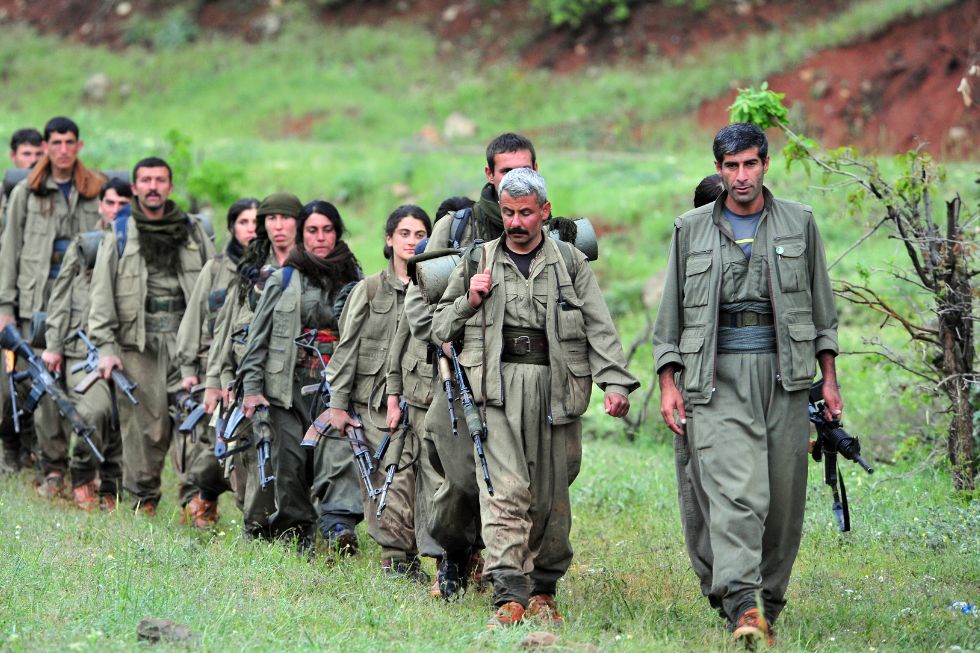
In early March 2026, US President Donald Trump called Kurdish leader Mustafa Hejri, the head of the Iranian Democratic Party. The purpose of this call, according to the sources, was to push Kurds to support the US–Israel war against Iran. In this regard, reports indicate that US and Israeli intelligence agencies are working with the Iranian Kurdish fighters to use them as ground forces against Iran in western Kurdistan.
The US has long-standing ties with the Kurds, which date back to the 1970s during the Kurdish rebellions against the Iraqi central government. Following the uprising in Iraqi Kurdistan in March 1991 and the creation of the no-fly zone over the Kurdistan region of Iraq, relations between the Kurds and the US have improved significantly. This relation with the regime change in Iraq in 2023 has further enhanced as the Kurdish fighters play a key role in helping the US open a new frontline in northern Iraq to topple the Saddam regime.
Similarly, during the war against the Islamic State of Iraq and Syria (ISIS) in 2014, the US decisively supported the Kurdish figures in Iraq and Syria. The Kurds, with help from the US, played a key role in defeating ISIS in both countries. Hence, this historical partnership has laid the groundwork for Washington to publicly discuss the possibility of using Iranian Kurdish fighters as ground forces in a conflict against the current Iranian regime.
Trump has sent mixed messages in this regard. On March 5, he argued that he would support Kurdish forces if they decided to launch a military offensive against Iran, describing the idea as positive. When asked whether the US would provide air support for the operation, he declined to give a clear answer, saying he could not discuss that.
However, on March 7, Trump ruled out having Kurdish fighters join the war against Iran. In this regard, he said, “I don’t want the Kurds going in. I don’t want to see the Kurds get hurt, get killed. I told them I don’t want them. The war is complicated enough.”
There is no clear answer whether the US will finally topple the regime or, at this specific stage, end this war. Hence, the key question is: Why has the Kurdish factor in Iran suddenly become an important topic in the US and Israel’s war against Iran?
In reality, there are many explanations for this. One possibility is that Israel and the US could move toward overthrowing the Iranian regime in Tehran. However, this has not yet been officially and clearly announced by the US. Moreover, Kurdish fighters could be viewed as an effective instrument in this context. In particular, the US and Israel seek to make western Kurdistan a platform for inciting and encouraging a general uprising in the rest of Iran.
Another possibility is that the US might have wanted to use Kurdish forces as a tool to pressure the current Iranian authorities and push them to make greater concessions to Trump’s demands. As he recently said, the aim of the war is “unconditional surrender” of the Iranian authorities.
Fear of abandonment: Kurdish demands for guarantees in any alliances against Iran
The Iranian Kurdish opposition parties are willing to seize the opportunity and ally with the US and Israel against Iran to achieve their historic ambition, manifested in establishing a federal or autonomous region in western Kurdistan. However, they have serious concerns about moving forward with such a policy without concrete guarantees of protection. In particular, the US doesn’t have a clear strategy, and it explicitly argues that the endgame is not regime change in Iran, but the destruction of Iranian military capacities.
Furthermore, while the US has supported the Kurds at different times, it has also abandoned them on several occasions, leaving them to face existential threats. For example, following the Kurdistan independent referendum in September 2017, the Trump administration allowed Iraqi federal troops and Iranian-backed Hashd al-Shaabi militias — with direct support of Iran — to attack the Kurdish Peshmerga forces in Kirkuk and disputed areas. As a result, the Kurds lost roughly 40% of the territory that Peshmerga had held. At that time, Trump said the US would not take a side.
In January 2026, even though the Kurds were key partners of the US in the war against ISIS in Syria, they were abandoned once again. The Trump administration allowed the former commander of Al Qaida al-Sharia, with his Damascus-led army, to attack the Kurdish forces and take the territory under the control of the Syrian Democratic Forces (SDF). As a result, on January 20, Tom Barrack, US Special Envoy for Syria, declared that the Kurdish-led SDF’s role as the primary anti-ISIS force had “largely expired.”
This background indicates that Kurdish concerns are genuine, as they fear the possibility that the US could once again abandon them. Therefore, before taking further steps, they seek guarantees and assurances from the US. The key demands of the Iranian Kurds are a guarantee that they will not be abandoned in the face of an Iranian threat, in both cases, whether the Iranian regime collapses or remains in place.
This is a very important point, in particular, if the regime survives, it may again crush the Kurds and could even commit genocide against them as it has done after 1979. Hence, in this case, establishing a no-fly zone in Eastern Kurdistan is crucial to ensure that the Kurdish people are protected. Further, the Kurds seek to convert their military achievements into political gains. Therefore, the US should back the Kurds by guaranteeing support both if the current regime collapses and in advancing their demands for some sort of autonomy.
Between Iranian threats and proxy attacks: Kurdistan faces rising security risks
In fact, any cooperation between the US and Iranian Kurdish groups against the regime in Iran would have serious implications for the Kurdistan Regional Government (KRG). It is clear that the KRG has sought to reassure Tehran that it would not pose a threat. However, increasing conflict with the US is pushing the Iranian regime to pursue a more aggressive policy in the KRG. In particular, Iran and its proxy militias in Iraq have frequently threatened and targeted the Kurdistan region.
Since the 2020 assassination of Qasem Soleimani, an Iranian military officer who served in the Islamic Revolutionary Guard Corps (IRGC), Iran has essentially turned the Kurdistan Region of Iraq (KRI) into a battlefield, sending a message to the US, Israel and its allies. Following the regime’s murder of the young Kurdish-Iranian woman, Jina Mahsa Amini, and the outbreak of demonstrations across Iran in September 2023, the country has intensified its attacks against the KRI. As a result, the IRGC bombarded the Kurdish-Iranian opposition groups.
Iran blames the Iranian Kurds for instigating and sustaining the protests in Iran. Even the head of Iran’s elite Quds Force, Esmail Ghaani, has threatened an unprecedented ground military operation against Iraqi Kurdistan if Baghdad does not disarm Iranian Kurdish opposition groups on Iraqi soil. Following the 12 days of war with Israel in June 2025, Iranian proxies in Iraq hit oil fields and infrastructure in the Kurdistan Region of Iraq. These strikes targeted oil facilities, airports and some military locations.
With the start of the new military operation by the US and Israel against Iran beginning February 28, once again, the KRI turned into a battlefield, and Iran and its proxies are intensively targeting infrastructure in the Kurdistan region. These attacks intensified following reports that Trump spoke with Iraqi Kurdish leaders by phone, urging them to support the Iranian Kurdish opposition.
In a statement, the KRG strongly rejected reports suggesting the Kurdistan Region is taking part in a plan to arm and send Kurdish opposition parties into Iranian territory. Furthermore, the KRG emphasized that it would not be part of the current conflict, which could expand across the region. It reiterated the Kurdistan Region’s stance of avoiding further conflict amid the current regional turmoil.
Hence, it can be argued that if the US pushes Iranian Kurdish opposition groups to participate in a war against Iran, the KRG could face serious and even existential risks, even if it rejects or refuses to support such a policy.
The Iranian authorities are clearly sending a very serious warning and threatening the KRI in case Iranian Kurdish fighters are involved in the war. On March 6, Iran’s Defense Council released a statement stressing that so far, Iran has only focused on US and Israeli bases in the region, as well as opposition political parties operating within the Kurdistan region.
It added that:
“Should their continued presence and plotting be permitted, or should these groups or [Zionist] regime elements enter the borders of the Islamic Republic through the Region, all facilities of the Kurdistan Region of Iraq … will be targeted on a massive scale.”
Further, the Spokesperson of the Khatam Al-Anbiya, Lieutenant Colonel Ebrahim Zolfaghari, issued a serious warning to the Kurdistan region, stating that any attempt by the Kurdistan region to deploy hostile forces in the Iranian border strip will be met with severe action by the Iranian armed forces.
Hence, in the case of involving the Iranian opposition Kurds in this war, the most dangerous scenario for the KRG would be if the political system in Iran remains in place and does not collapse, and if the US and Israel halt their attacks. There’s no doubt the KRG would face a serious threat, and Iran would do everything to undermine the KRG’s position.
One of the key instruments that Iran could use, besides directly attacking the Kurdistan region, is using its militia proxies in Iraq and even the Iraqi government led by the Shia parties against the KRG. In particular, since the eruptions of the current war, the Shia militias have intensified their attacks against the Kurdistan region. According to Rudaw News, since the beginning of the war, more than 638 drones and missiles have targeted the Kurdistan Region.
Therefore, in any scenario where the US pushes Iranian Kurdish fighters to participate in a war against Iran, it should provide clear assurances and guarantees not only to the Iranian Kurdish groups but also to the Kurdistan Region, which could face serious security consequences from such involvement.
[Zania Morgan edited this piece]
The views expressed in this article are the author’s own and do not necessarily reflect Fair Observer’s editorial policy.