What if the value of your vote could change, not because you moved, but because the boundaries around you did?
That’s the question at the heart of delimitation, a technical-sounding process that’s suddenly the news all around you.
With a proposed Delimitation Bill now in Parliament, bringing it back into public discussion, understanding this process isn’t just for policy experts. It is essential for anyone who wants to make informed decisions as a voter.
First, what exactly is delimitation?
In simple terms, delimitation is the process of redrawing the boundaries of electoral constituencies. These are the geographic areas from which Members of Parliament (MPs) and Members of the Legislative Assembly (MLAs) are elected.
The government proposes to increase the number of seats in the Lok Sabha and State Assemblies by 50% on a pro-rata basis using the 2011 Census. Photograph: (The Times of India)
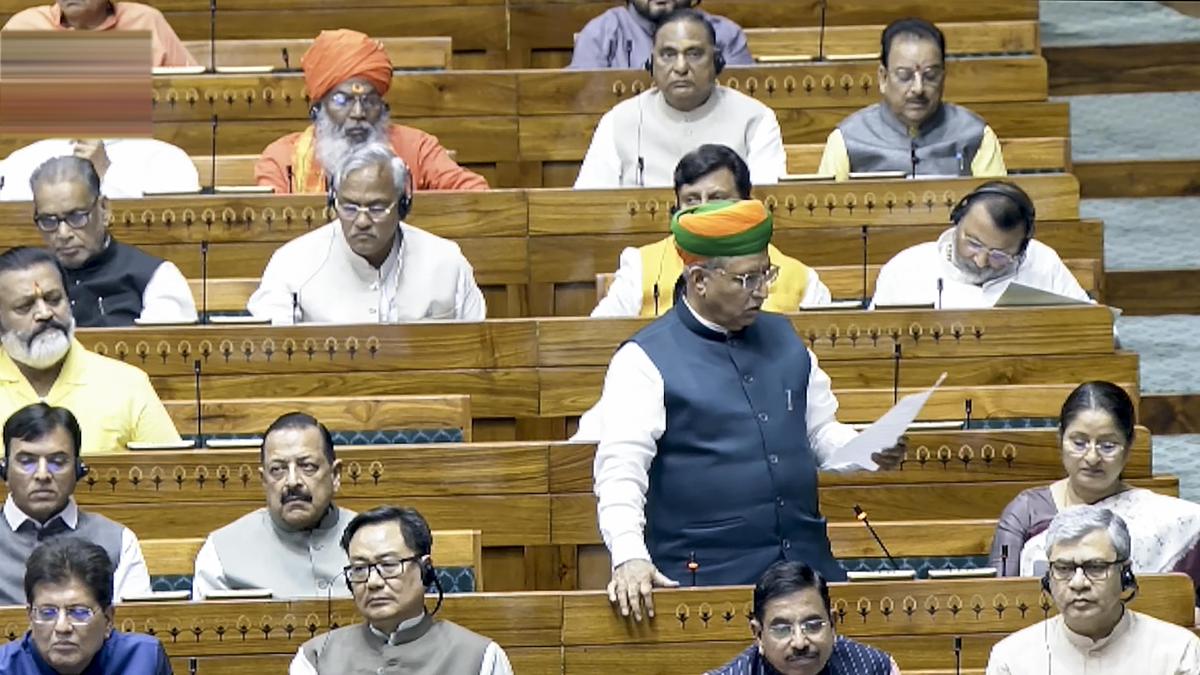
India currently has 543 Lok Sabha seats, which are proposed to increase to around 850 after the delimitation exercise.
But why redraw them at all?
Because populations change, some areas grow rapidly, others more slowly. Over time, this can create imbalances, where one MP represents far more people than another.
Delimitation aims to fix that by ensuring each elected representative speaks for roughly the same number of people. It’s about keeping representation fair and balanced.
Has this happened before?
Yes, but not recently.
India has conducted delimitation exercises several times since Independence — most notably in 1952, 1963, 1973, and in the early 2000s based on the 2001 Census — each reshaping electoral boundaries to reflect population changes.
However, in 1976, the number of Lok Sabha seats was frozen to ensure that states that controlled population growth were not “penalised” with fewer seats, while others did not gain an automatic advantage. This freeze, initially until 2001, was later extended to 2026.
Since 1976, a constitutional freeze has prevented adjustment of seats based on
population changes. Photograph: (X/@IndiaHistorypic)
As a result, while boundaries were redrawn in the 2000s, the total number of seats has remained unchanged for decades despite significant population growth.
With the freeze nearing its end and a bill now in Parliament, delimitation is back in focus.
So, what could change?
At its core, delimitation can reshape constituency boundaries, the number of seats in Parliament, and the distribution of seats across states. Your voting area may change, the total number of representatives could increase, and the balance of representation across regions may be updated.
That means the map of political representation in India could look quite different after the next exercise.
But here’s where it gets interesting — and why people are paying attention right now.
How does this affect you as a voter?
When fewer people elect one representative, each vote carries more influence. In larger constituencies, the same vote is one among many more, making its impact relatively smaller.
For instance, if two constituencies, one with 10 lakh people and another with 20 lakh people, each elect one MP, a vote in the smaller one effectively holds more weight.
Delimitation aims to correct such imbalances. As boundaries shift, your constituency size may change, your MP could represent more or fewer people, and you may even find yourself in a new constituency, reshaping how your vote translates into representation.
The Centre will constitute a new Delimitation Commission to carry out the exercise, which is most likely to conclude before the next General Elections in 2029. Photograph: (Frontline, The Hindu)
After the 2008 delimitation, many constituencies were redrawn so significantly that voters found themselves in entirely new political landscapes.
In parts of Delhi, long-standing constituencies disappeared, while in rural areas, villages were merged with towns or split — changing how effectively local issues were represented.
Why is it being discussed now?
The renewed attention is closely tied to the delimitation bill currently being discussed in Parliament. After decades of limited change, this has brought the process back into focus at a national level.
There has been a long gap since the last comprehensive delimitation, and there is a growing need to update representation based on current population data.
At the same time, the approaching end of the freeze on Lok Sabha seats in 2026 makes this a crucial moment — any future exercise could potentially reshape not just boundaries, but the size and structure of representation itself.
For many citizens, this is also the first time they’re encountering delimitation in detail, which makes it a moment worth paying attention to.
Is delimitation just a technical exercise?
On paper, yes. It’s carried out by an independent Delimitation Commission, which uses Census data and follows set guidelines. Its decisions are typically final, which is meant to keep the process neutral and insulated from political pressures.
With the delimitation exercise, villages may be merged with others to form towns or carved out of existing ones, thereby reshaping electoral landscapes at the grassroots level. Photograph: (Medium/@VishanJajra)
https://www.etvbharat.com/english/bharat/lok-sabha-rajya-sabha-in-new-parliament-building-pm-modi-mps-photo-session-live-updates/na20230919093813169169291But in practice, it has real-world implications.
Redrawing boundaries doesn’t just shift lines on a map; it changes how communities are grouped together, which issues get prioritised, and how representation is distributed.
A rapidly growing urban area may gain more representation, while a sparsely populated region may see its boundaries expand geographically.
In some cases, communities may find themselves part of a different constituency than before. These shifts can influence everything from local development priorities to national policymaking.
What should you watch for going forward?
As discussions evolve, there are a few key questions worth keeping in mind. Will constituencies become more equal in population size? Will the total number of seats change? How will new boundaries affect your area? And when will the next Census data be used?
You don’t need to follow every policy detail, but keeping an eye on these basics can help you stay informed.
Why this matters more than it seems
Delimitation doesn’t grab headlines like elections do. There are no rallies, no manifestos, no campaign slogans.
And yet, it quietly shapes the playing field on which elections happen.
It determines how many voices are heard, how evenly representation is distributed, and how your vote compares to someone else’s. In a democracy, that’s foundational.