As global tensions continue to disrupt energy supply chains, the ripple effects are being felt closer home. The ongoing war-driven volatility in fuel markets has once again put LPG in the spotlight in India, bringing back concerns around rising cylinder costs, inconsistent supply, and the long-term sustainability of relying on fossil fuels for something as essential as cooking.
For large-scale setups like community kitchens, hostels, and temple kitchens, these challenges are even more pronounced.
Which is why innovations in clean cooking are beginning to draw attention, not just as alternatives, but as possible long-term solutions.
A new player in clean cooking enters the conversation
One such innovation comes from Greenvize (GreenVize SPC Techno Pvt. Ltd.), a Haryana-based clean-tech startup founded in 2024.
Working at the intersection of green hydrogen and sustainable energy, the company has introduced what it calls a plug-and-play hydrogen cooking system, designed to eliminate the need for traditional LPG cylinders.
Founded by Sanjeev Choudhary, Greenvize is part of a new wave of Indian startups aligning with the country’s National Green Hydrogen Mission.
Beyond cooking solutions, the company is also exploring technologies like fuel cells, biomass power, carbon capture (CCUS), and industrial wastewater treatment — positioning itself within the broader clean energy ecosystem.
But it’s their hydrogen stove that’s currently generating the most curiosity.
What makes this stove different?
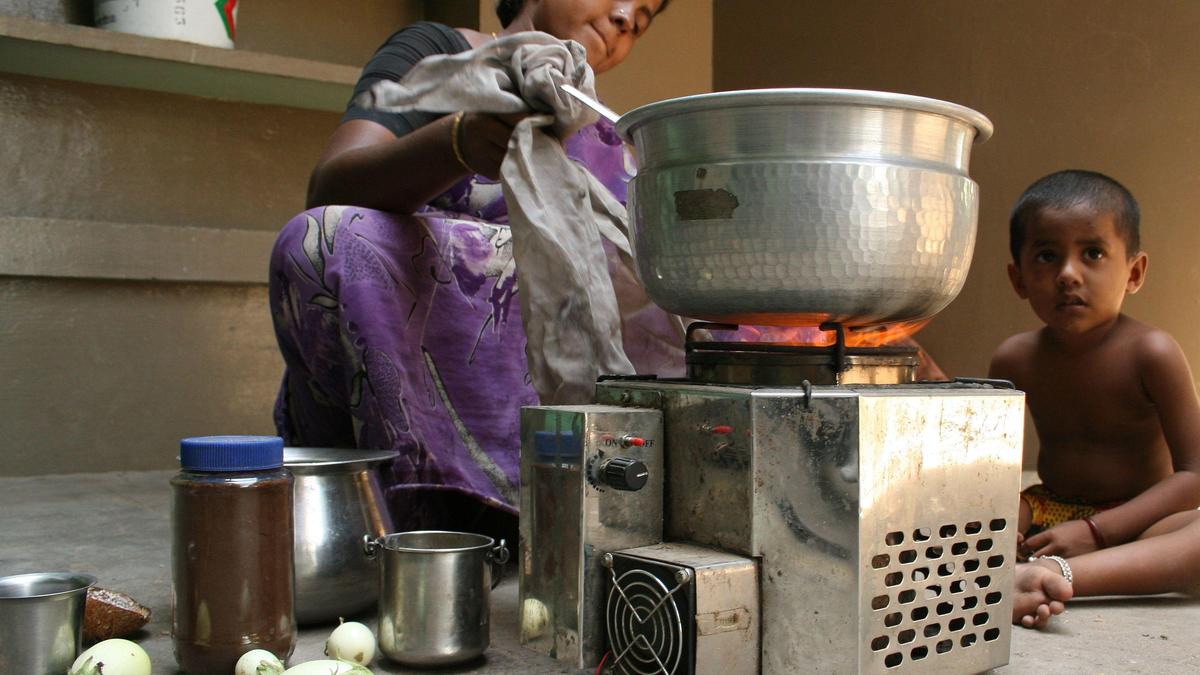
At first glance, the stove looks similar to a regular tabletop gas stove, but it is a lot more different than we think. The unit runs entirely on green hydrogen and typically comes with a dual-burner setup, built using durable materials like stainless steel and operating through manual ignition.
Designed for community kitchens, the system removes the need for LPG cylinders and refills. Photograph: (Ascendants)
What sets it apart is how self-contained the system is. There are no bulky cylinders, pipelines, or external fuel storage requirements. Instead, the stove produces its own fuel as needed, making it a compact, all-in-one solution.
In terms of efficiency, early reports suggest that the system requires about 100 ml of water and roughly 1 kWh of electricity to support several hours of cooking.
Compared to electric induction cooktops, which often consume higher power per burner, this system aims to strike a balance between energy use and flexibility.
Another practical advantage is that it works with regular cookware, unlike induction stoves that need specific utensils.
How does this hydrogen stove actually work?
At its core, the system is built around an integrated Proton Exchange Membrane (PEM) electrolyser, a technology that splits water (H₂O) into hydrogen and oxygen using electricity.
So, instead of storing hydrogen in bulk, the Greenvize stove generates it on demand. Water is fed into the system; the electrolyser separates hydrogen, and this hydrogen is immediately used as cooking fuel. Oxygen, the only by-product, is safely released into the air.
Using a built-in electrolyser, the stove splits water into hydrogen for fuel and oxygen as a by-product. Photograph: (Instagram/@trendinginsocial)
This on-demand model removes the need for fuel storage and transportation logistics that are typically associated with LPG. It also creates a more streamlined system where the primary inputs are simply water and electricity.
From an environmental standpoint, the difference is significant. While LPG combustion releases carbon emissions, hydrogen burns clean, producing only water vapour.
This makes it a potentially attractive option for institutions looking to reduce their carbon footprint without compromising on cooking performance.
Features, costs, and real-world use
The hydrogen stove is designed with institutional use in mind. Think large kitchens that require continuous cooking, such as langars, industrial canteens, or hostel messes.
The system is built to run for extended hours, offering consistency in fuel supply without the interruptions that can come with LPG refills.
However, this innovation comes at a cost. With units priced significantly higher than conventional LPG setups (reportedly around Rs 1.5 lakh per unit), it is clearly an investment-heavy solution at this stage. But the long-term equation may look different if hydrogen production costs decrease and fuel savings begin to offset the initial expense.
As LPG costs fluctuate, innovations like this are exploring cleaner, more reliable cooking alternatives. Photograph: (PV Magazine India)
There are also practical considerations, like access to reliable electricity, installation space, and technical maintenance, which will play a role in how easily such systems can be adopted.
Could this be a real alternative to LPG?
The idea of cooking with hydrogen might have sounded futuristic not too long ago, but it is now entering real-world conversations, especially in the context of sustainability and energy independence.
Greenvize’s innovation doesn’t position itself as an overnight replacement for LPG. Instead, it offers a glimpse into what the future of clean cooking could look like, particularly for large-scale operations where both environmental impact and fuel efficiency matter.
Whether it can truly compete with LPG will depend on multiple factors: cost reductions, infrastructure readiness, and how quickly the ecosystem around green hydrogen evolves in India.
For now, it answers an important question many are beginning to ask: if not LPG, then what? And hydrogen, it seems, is stepping forward as one possible answer.