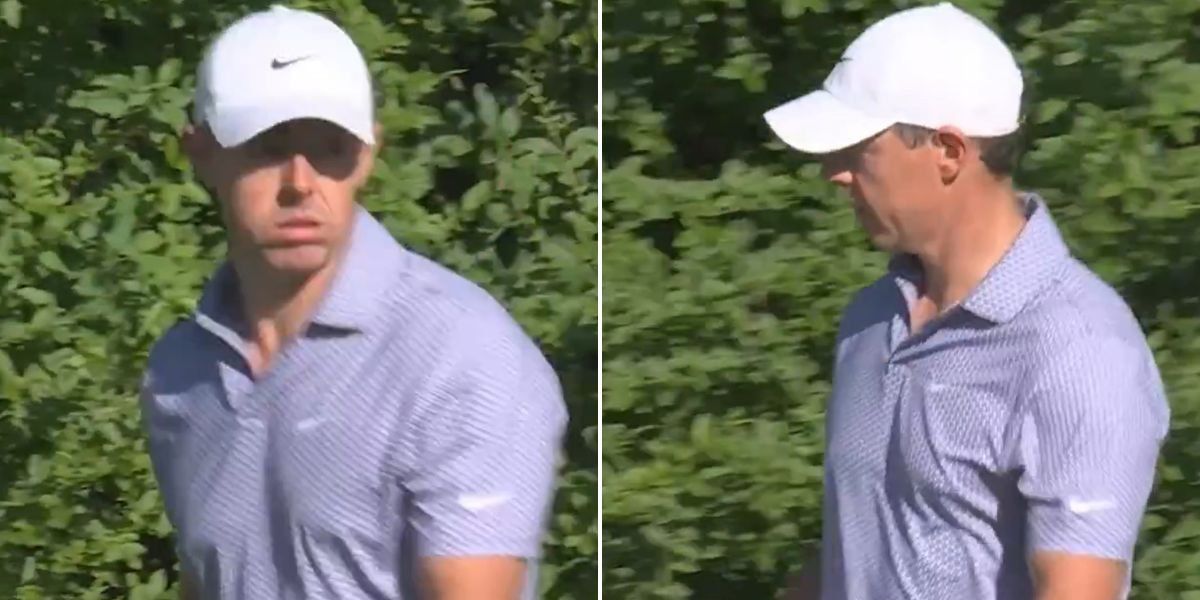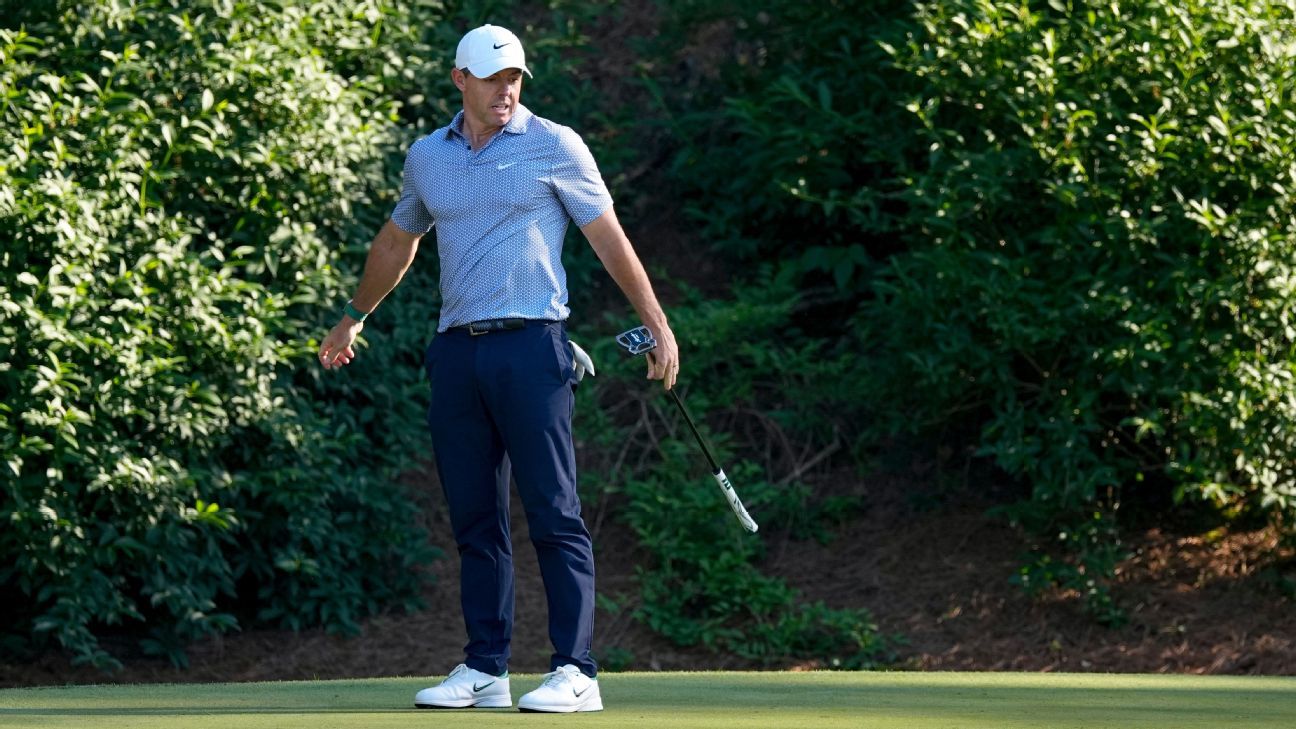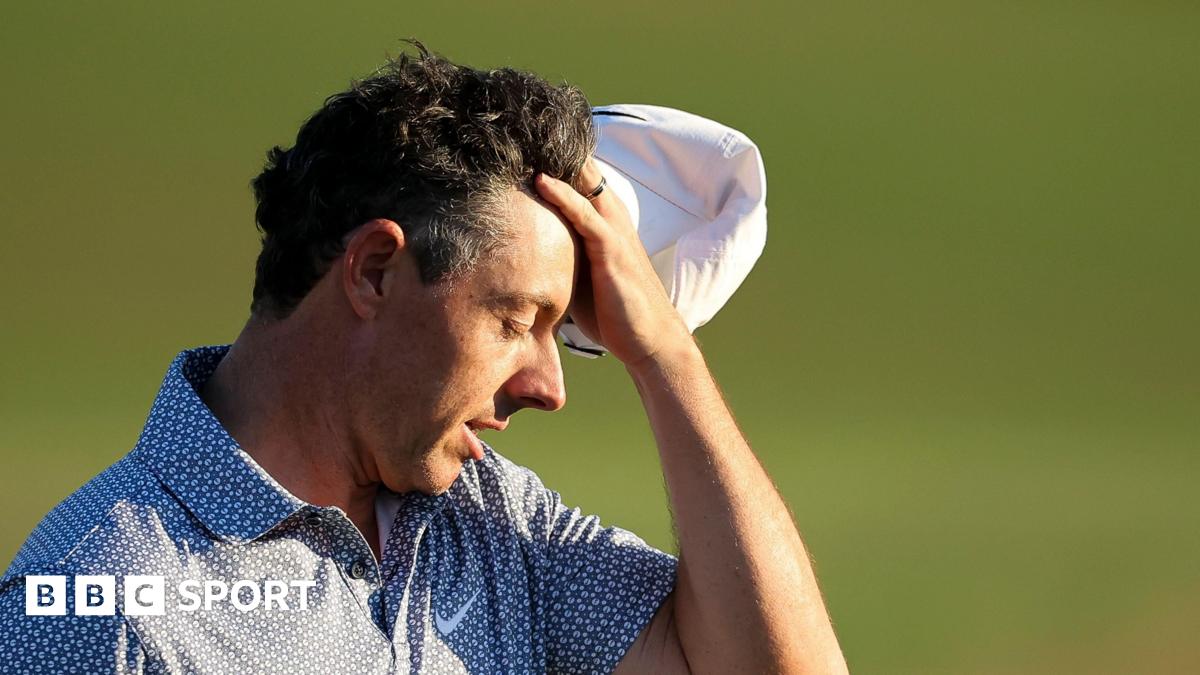
During his first two rounds this week, he played with the greater mental freedom which he predicted reaching his golfing Everest – finally conquering Augusta National – would provide.
The five-time major champion showed patience to take control of the leaderboard, even though he was not playing as well as the scoreboard suggested.
The ability to recover from wayward driving was the key to McIlroy’s success, staying calm in the pressure moments to play sensibly when required before attacking when the chances arose.
An uncluttered mind – aided by his superb short game – was missing on Saturday and could not ride to the rescue.
“I will go to the range and figure it out. I still have a great chance but if I am going to win I will have to play better,” McIlroy said.
McIlroy found eight of the 14 fairways in the third round – the same as he did on Friday when he shot a 65. On Thursday, he only hit five as he posted a 67.
Of those to make the halfway cut, he is bottom of the class in accuracy off the tee, and when you couple that with his poorer short game on Saturday, it’s easy to see how Augusta took chunks out of his lead.
Many players gave the old place a beating on Saturday, with watered greens allowing favourable scoring conditions.
But McIlroy was one of three players inside the top 28 who did not finish under par for their rounds, alongside England’s Tommy Fleetwood and Norway’s Kristoffer Reitan.
“It’s so rare to see a player shut the door on a major in the way Tiger Woods did,” said BBC golf correspondent Iain Carter.
“If he had a sniff he’d be so pragmatic and make sure nobody could get near him.
“McIlroy doesn’t have that in his locker. Woods was a super-human golfer, McIlroy is a human golfer.”