Overview:
In Port-au-Prince, AVÈK community savings groups help members access small loans through collective savings to fund businesses and income-generating activities, providing an alternative to banks for vulnerable populations. Introduced after the 2010 earthquake to boost economic resilience, the model has supported financial inclusion and entrepreneurship across Haiti. However, its sustainability remains challenged by repayment risks, lack of guarantees and ongoing economic instability.
Editor’s note: The names used to describe the participants in this story are pseudonyms of the featured group located in the Port-au-Prince metropolitan area. They asked that their identities not be revealed for security reasons, given the proximity to gang activity around the capital.
PORT-AU-PRINCE — When Julmice Bastien, 37, left his country for the United States a couple of years ago, one thing he carried with him was his affiliation with ‘AVÈK,’ a neighborhood savings group that had helped him finance certain projects. One loan from the group for 500,000 gourdes, about $3,846, allowed Bastien to purchase a box truck about four years ago. He contracted out the vehicle to delivery drivers, generating about 3,000 gourdes, or $23, per day that he splits with the operators.
In all, the AVÈK member for more than five years says it helped the financial collective to achieve financial independence, including providing the funds to operate a vocational school in the neighborhood. The Haitian Times is withholding the name of the area for security reasons. Though living abroad now, Bastien is still repaying the loan and plans to apply for another 500,000 gourdes to purchase a three-wheeled motorcycle to operate as a taxi-moto along the Delmas Road.
“Even when the loans are not large amounts, they have allowed me to keep moving forward with my small businesses and not depend on anyone,” Bastien said.
AVÈK, which stands for “Asosyasyon Vilajwaz Epay ak Kredi” in Haitian Creole, or village savings and loan associations, are community groups that help members save money and make out small loans to them. The word in Haitian Creole also means “together,” an intentional play on words meant to connote the collaborative, supportive nature built on mutual trust that participants like Bastien find alluring. Located mostly in areas where banks are already scarce, the groups have become a lifeline in the capital’s metropolitan area, which is under such heavy gang control that visiting existing financial institutions is often a dangerous errand.
From disaster comes an uplifting opportunity
AVEK groups are modeled after an initiative popularized in Niger in the 1990s by CARE International, according to the Implementation Guide of Village Savings and Loan Associations in Cocoa Communities. The goal then was to expand financial inclusion among low-income and rural communities. When the January 12, 2010, earthquake struck Haiti, CARE brought in the approach as a way to strengthen the economies of the most vulnerable communities. It encourages local savings and provides small loans managed by the group’s members to support income-generating activities or help families cope with emergencies.
By 2015, according to a CARE report that year, it had helped create more than 1,200 AVÈK groups throughout Haiti that collectively saved more than $1.2 million. Other groups, including Fonkoze, have also adopted the model. In 2022, the World Bank reported that Haiti has more than 10,000 savings groups in the informal sector, including mutual solidarity groups (MUSO) and AVÈK groups. Some similar-sounding groups, proven controversial for functioning more like pyramid scams, are also included in the World Bank figure.
“It’s one of the best decisions I’ve made in my life to join an AVÈK, especially the one established in Tabarre,” said Bastien, a father of two.
“To this day, I remain connected to it, even from afar, because through it I continue to invest — even in small ways — in my country,” he said.
Members pool their money, save and lend to one another
More than any feature of an AVÈK, members say what makes the savings club work is their trust. However, the groups do have an agreed-upon system or structure to gather, save or lend funding.
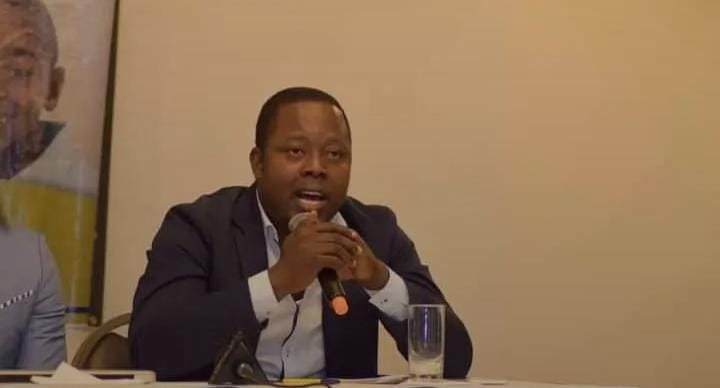
Bastien’s local AVÈK, for one, has operated on a 12-month cycle since its creation in 2020. It has grown from about 20 to nearly 100 members. Founder Jean Bazin said they meet every Sunday to make their agreed-upon contributions to a shared fund managed and kept safe by an elected committee.
“It’s easier to get a loan with AVÈK. They are different from bank loans—they are based on trust, since everyone knows each other and can provide references, have a short processing time, and charge very low interest rates.”
Jean Bazin, one of the founders of AVÈK in Tabarre
Each individual contribution, called a “share,” is set at 1,000 gourdes, about $8. Members can buy one to 10 shares per meeting. Each person’s shares are then returned to them when the cycle ends in December.
When the fund is large enough, members can take out loans repayable with 1% to 1.5% interest within the 12 months. The interest paid is shared among all members in proportion to their contributions, with adjustment made for anyone who has an outstanding loan not yet paid.
“It’s easier to get a loan with AVÈK,” said Bazin, who, along with the first members, received training on the AVÈK model in 2019.
“They are different from bank loans,” he explains. “They are based on trust, since everyone knows each other and can provide references, have a short processing time, and charge very low interest rates.”
Similar models breed confusion
For centuries in Haiti, one form of informal savings system that already existed is the humble “sol.” In this arrangement, a trusted group gets together to contribute equal amounts into one pool at agreed times. Then, each participant takes turns receiving the full, pooled sum — while continuing to contribute even after their turn — until all members have received the same amount.
While the “sol” allows members to save money, it does not allow them to lend funds to one another.
“Even when the loans are not large amounts, they have allowed me to keep moving forward with my small businesses and not depend on anyone.”
Julmice Bastien, 5-year AVÈK member
For Lovena Nelson, 43, a member of the Bastien’s AVÈK since 2021, the arrangement should be replicated across Haiti, given that access to credit for the most vulnerable remains virtually nonexistent.
“When I joined AVÈK, I didn’t take any loans at first because I didn’t have a business,” she explained. “But when I decided to start, my first loan was about 250,000 gourdes [$1,924]. I eventually borrowed up to one million gourdes through AVÈK.”
She now runs a cosmetics and hardware business.
“The institution taught me the importance of saving and setting money aside,” the entrepreneur said.
Past fraudulent cooperatives leave bad mark
Within their local AVÈK, more than 6 million gourdes can circulate during a 12-month cycle through savings, loans and interest, says Bazin. This activity led to the creation of a larger cooperative, which The Haitian Times is also not identifying for security reasons, by existing AVÈK members.
Under those community savings clubs, which began in 1937 in a northern Haiti port town, members also save together and borrow from the fund under set terms. In the 2000s, however, a new crop of cooperatives promised 10% to 12% monthly interest to attract new deposits. In reality, these groups resembled pyramid scams in their membership requirements and were involved in numerous unsound, unethical and illegal schemes across all levels of Haitian society. In all, according to the Haitian Microfinance Market Analysis conducted by Fonkoze, participants in these new versions of cooperatives suffered losses of more than $200 million.
For Bazin, the difference with cooperatives lies in trust, as every member knows each other personally. He explains that they belong to the same church, work at the same company, or are friends involved in several joint initiatives. To accept a new member, an existing member must recommend and vouch for them.
Furthermore, a study by the Institute for Training and Support of Small and Medium Enterprises (IFEPME) highlights the challenges AVÈK faces in providing credit to the most vulnerable, with over 80% of urban households below the poverty line in 2018. The study notes that the most common problem is members’ inability to repay loans, often worsened by inflation, political instability, fluctuating market prices, and now insecurity. Because AVÈK relies on members’ savings, its stability can be compromised when the economic situation deteriorates.
According to IFEPME, AVÈK groups often lack protections like insurance or guarantees. They also cannot meet all financial needs, especially larger loans or services offered by banks. The institute stresses the need for additional support mechanisms to help them manage risks and protect funds.
Nelson says to observe a lack of engagement from some members, who often refused to take on leadership responsibilities, leaving the management of funds to a single committee.
Savings associations praised by their members
These funds are then used to provide loans for various needs, such as school fees, land leasing, vehicle purchases, starting a business or buying goods to grow a business. This was the case for Daphkar Macajoux, an accountant and mother of two, whose first loan of 250,000 gourdes about $1,924 was intended to expand her business, she explains.
“Before I took the loan, my business was struggling a lot. But after, it was completely different, even though I haven’t yet reached my goals,” says Macajoux, who does not fully grasp the challenges of community credit associations. “This is an initiative that should be expanded across the country so that people can rise out of poverty.”
Jacquelin Prince, an agronomist living in Delmas, shares a similar view. He joined the AVÈK through a friend and sees it as an effective economic tool, helping those with limited means access opportunities and financial resources to manage themselves and grow. From his first participation, he requested a loan of 300,000 gourdes to invest in his business without waiting for a second cycle.
“I think that money helped me a lot in my business; it allowed me to relaunch it and buy more products to sell,” Prince. “I believe it is more than a necessity to encourage and promote this type of activity.”
Like this:
Loading…