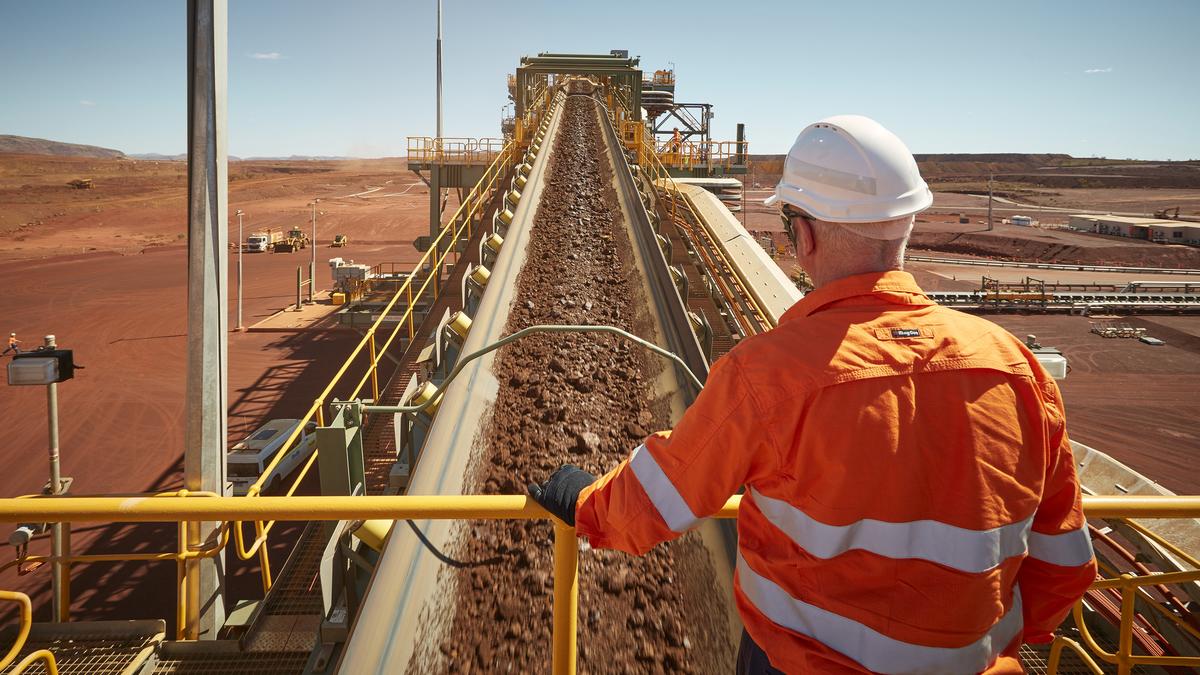
The Pilbara’s status as Australia’s economic powerhouse is under threat from rising union activity that “doesn’t help productivity”, the head of mining’s peak lobby group says.
Minerals Council of Australia chair Andrew Michelmore accused unions of a “targeted campaign against BHP” moments after Prime Minister Anthony Albanese spoke of the need for government and the mining industry to set aside their differences to counter the Iran war-induced energy crisis.
BHP sites in the Pilbara alone recorded almost 900 right-of-entry requests in 2025 and 164 to March 10, Mr Michelmore said — an average of 2.4 every day.
Sign up to The Nightly’s newsletters.
Get the first look at the digital newspaper, curated daily stories and breaking headlines delivered to your inbox.
By continuing you agree to our Terms and Privacy Policy.
“That doesn’t help productivity,” he said at a Minerals Council event in Canberra on Monday night.
“The Pilbara’s cooperative workplace model has delivered the highest wages of any industry world leading productivity and secure jobs through modern workplace arrangements.
“Now, rising disruption and escalating right of entry activity, risks undermining the productivity and reliability that it is defined the Pilbara region for more than three decades.
“Sustainable wages that keep pace with cost-of-living pressures depend on maintaining a globally competitive industry, not on a return to industrial conflict.“
The Prime Minister had earlier urged the sector to work together in the “national interest” and look ahead to a”more self-reliant” future after the global oil crisis.
“Over the years, I acknowledge that from time to time we’ve had our differences on policy, just as the companies in this room are not always on the same page as each other,” he said.
Mr Albanese had declared the “stable, predictable world of ever-expanding free trade is gone”, adding that he believed it would “not be returning any time soon” but cast the industry as Australia’s shield against the global energy crunch.
“What the companies in this room do every day, is essential for dealing with the challenges confronting us. And for seizing the opportunities ahead of us,” he said.
“The best way to deal with global uncertainty is to mobilise all our national strengths.”
“That is where the mining industry is so important.
“It can be hard to look much further than the end of the day, hard to contemplate the future, let alone plan for it.
“But this is precisely the time when all of us need to be thinking about what comes next.”
In 2024, the Minerals Council’s event made headlines after its chief executive Tania Constable criticised the Federal Government over their “Same Job, Same Pay” industrial relations laws.
Ms Constable on Monday night reminded Canberra’s political elite that the resource sector was the “foundation stone of Australia’s history and development”.
She said the industry appreciated the government’s “swift” response in convening National Cabinet” and undertaking a suite of measures to shore up fuel in industries which “keep Australia running”.
“Mining does not ask for privilege. We ask for stability. For clarity,” she said.
“For policy settings that are competitive, predictable and principled — including stable tax and royalty regimes, lower cost and more reliable energy, efficient approvals and clear environmental and workplace laws.
“We have built sovereign capability in this country before; we practice it every day and we are a natural partner for the future.
“In the years ahead, Australia will need more. More productivity, more resilience, more export strength. The mining industry is ready to do its part.”
Mr Michelmore also warned against driving “capital offshore” through tinkering with tax settings and added that the sector was eagerly awaiting “practical improvements” in the wake of changes to the Environmental Protection Act.