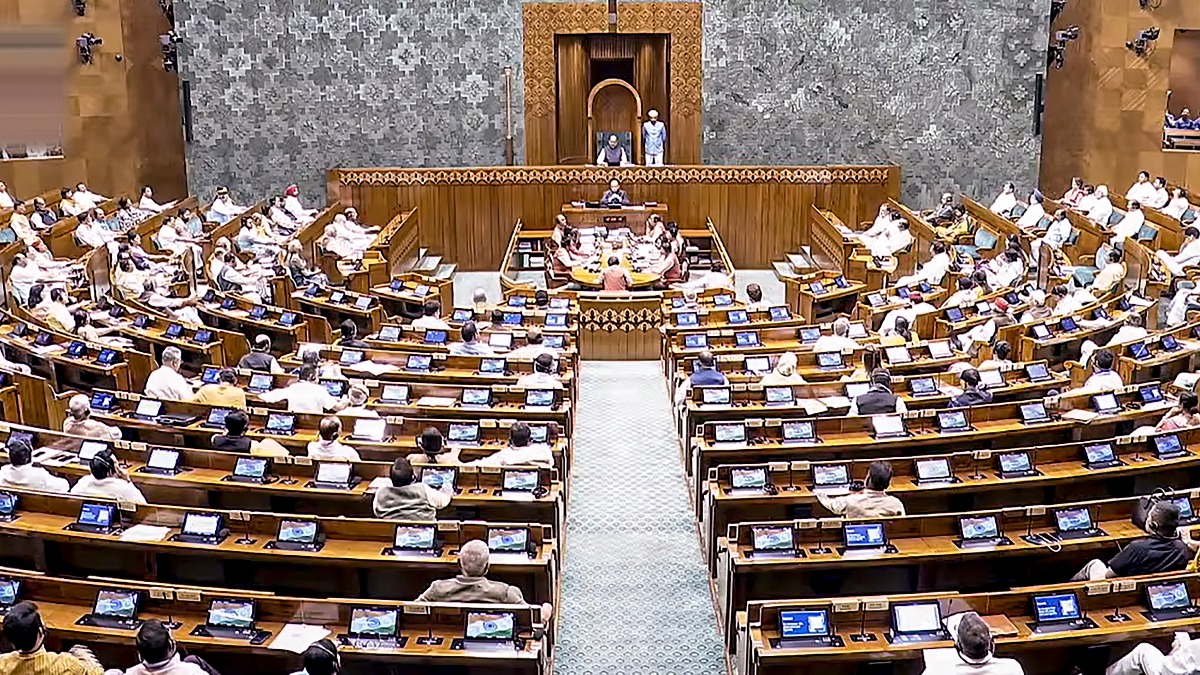
As Parliament prepares to take up the proposed amendments to the Transgender Persons (Protection of Rights) Act, transgender rights activists have sounded a strong warning, arguing that the changes could roll back key protections by undermining self-identification and narrowing the legal definition of transgender persons, effectively erasing large sections of the community.
The activists, along with Members of Parliament from several Opposition parties, held a public meeting on Sunday to protest the amendments, which are scheduled for consideration and passage in Parliament on Monday.
Read Full Story
At the heart of the opposition is the proposed shift towards requiring “medical proof” of gender identity, effectively undermining the principle of self-identification. Activists say this marks a departure from the 2019 law, which defined a transgender person as someone whose gender does not match the one assigned at birth and recognised a broad spectrum of identities.
The amendments seek to remove this inclusive definition and replace it with a restricted list of categories, excluding many individuals who were previously covered.
The Bill also states that it “shall not include or shall never have included” persons with diverse sexual orientations and self-perceived sexual identities — an approach activists say conflates gender identity with sexual orientation, despite the Supreme Court’s 2014 NALSA (National Legal Services Authority) judgment clearly distinguishing between the two.
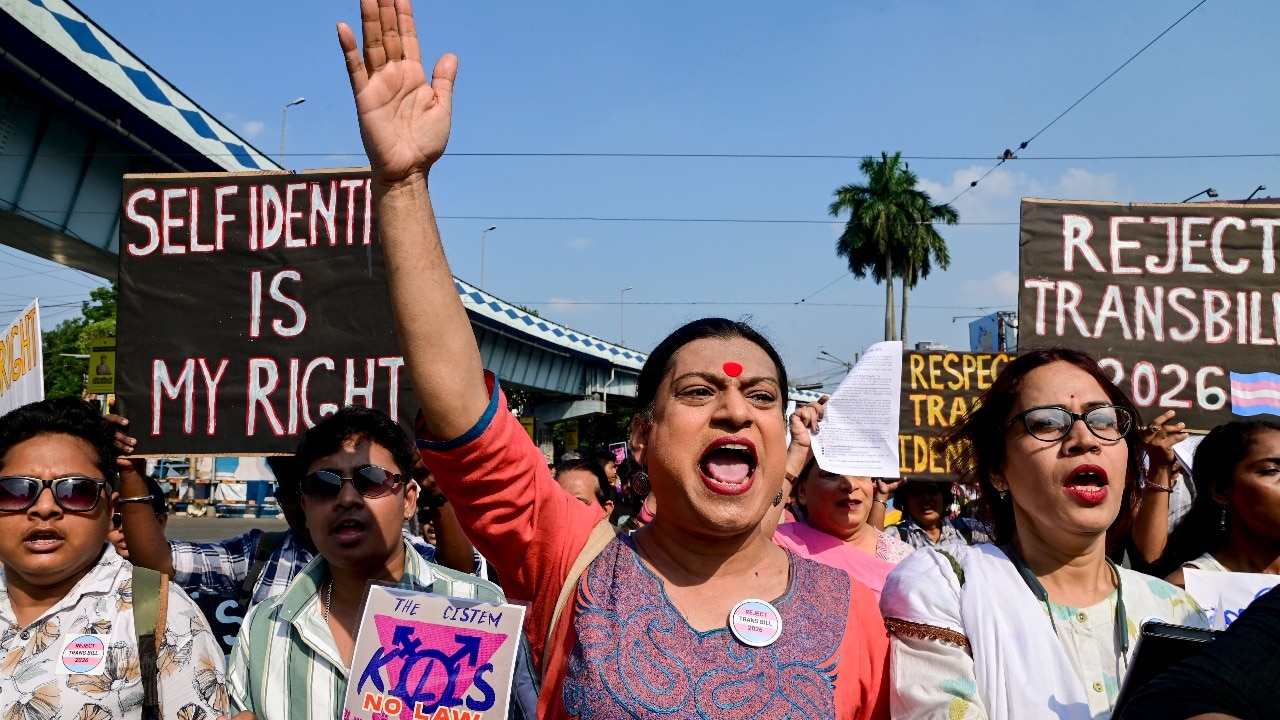
People from the LGBTQ+ community take part in a rally over Transgender (Amendment) Bill in Kolkata on Sunday. (Photo: PTI)
Speaking to India Today, lawyer and activist Raghavi, who is herself a trans woman, said the amendments ignore ground realities, pointing out that not all trans persons have the financial means to undergo surgery to align with their identified gender.
According to the proposed amendment, only those who are “born intersex” or have been “forced or induced” to undergo castration, mutilation, or surgical, chemical, or hormonal therapy would be registered as “trans persons.” However, a large number of trans persons are excluded from this definition.
“It’s not easy to get the surgery. If you remove self-identification, then how does one get included? I myself am a transwoman but getting the surgery requires a huge amount of money and support that most people do not have,” says Raghavi.
Another issue, according to the activist, is bureaucratic recognition. Raghavi also questioned how individuals would prove “socio-cultural identity” if recognition is limited to communities such as kinners, hijras or eunuchs.
“Do they expect everyone to join a Gharana and accept a Guru? Would this mean that any Guru can sign the certificate ?” asks Raghavi, who says that many such groups don’t accept people easily.
“Many transpersons face abuse at home because of how they feel about the gender assigned at birth. Many run away as teenagers or young adults due to social and family pressure to conform to that assigned gender. If the definition is restricted to those born with physical or genetic variations, what will happen to all these people?” Raghavi asked.
Additionally, activists argue that such a definition effectively excludes trans men from recognition, as kinnar and hijra communities have traditionally included trans women but not individuals assigned female at birth who identify as men. They also question the fate of trans women who do not wish to join, or are denied entry into, these communities.
“Not everyone is accepted even by the akharas. When I ran away from home at 17, I tried to stay with one of them, but they said they couldn’t take me in because I was under 18 and they did not want trouble with the police. This myth that transgender persons kidnap children and force them into such lives appears to have influenced the language of this Bill. It seems that whoever drafted it has bought into this myth and the anti-trans movement in the United States,” an activist told India Today.
Activists also point out that this amendment seems to “buy into the myth that trans persons force children to undergo castration”.
“It assumes that children or adults are forced into presenting themselves as trans through coercion or ‘undue influence’. This framing suggests that transgender identity is something imposed or artificially created, and shifts the legal narrative towards suspicion and control rather than recognising gender identity as based on self-identification,” says a public statement released last week by activists.
The statement further warned that “these changes strengthen negative stereotypes by linking transgender identity with crime and coercion”.
“The proposed changes also criminalise transgender individuals and their kins or allies by rigorous imprisonment of up to five years for “alluring” or “forcing” individuals to become transgender, despite there being no credible evidence or documented pattern of such conduct in India. The language used in the Bill is vague and broad and will lead to misuse and violence, disproportionately affecting an already marginalised community and discouraging open expression of identity,” say activists.
Members of the Odisha Transgenders Association stage a demonstration near the Odisha Assembly during the Budget session, demanding withdrawal of the Centre’s proposed Transgender Persons (Protection of Rights) Amendment Bill in Bhubaneswar. (Photo: PTI)
LGBTQ rights activist and businessman Keshav Suri told India Today that the amendments undermine the spirit of the Supreme Court’s landmark NALSA judgment, which affirmed the right to self-determination of gender.
“Any step that weakens this fundamental right principle should not move forward without detailed consultation with the transgender and gender diverse communities” says Suri.
Activists also alleged that the amendments were introduced without adequate public consultation. They noted that while the 2019 Act involved engagement with community stakeholders, the current process did not include consultations with the National Board for Transgender Persons. At least four members of the Board have reportedly expressed opposition to the Bill.
Drawing historical parallels, activists said the language of the proposed amendments echoes colonial-era laws such as the Criminal Tribes Act of 1871, which stigmatised entire communities, including transgender persons, as “hereditary criminals”.
They further warned that provisions such as Section 18 could criminalise support systems for transgender individuals, including family members, doctors and social workers, due to vague definitions of “force” and “inducement”. This, they argue, could enable misuse by authorities or families to target those assisting transgender persons.
The provisions allow for a jail term for anyone who “compels any person, whether or not that person is transgender, to dress, present, or conduct themselves as a transgender person against their will.” Activists say this provision could be easily misused by the police and natal families to claim that their child has been “kidnapped” or “forced” into “acting like a transgender person.”
The activists also expressed concern over the fate of individuals who have already secured legal recognition under existing laws. “Thousands who have built their lives based on state-recognised identities now face uncertainty. A rights-based framework risks being turned into an instrument of exclusion,” they said.
With the Bill set to be taken up in Parliament, activists have urged the government to pause the process and hold wider consultations with the transgender community and stakeholders. They maintain that any changes to the law must uphold the principles of self-identification and dignity affirmed by the Supreme Court.
– Ends
Published On:
Mar 23, 2026 10:19 IST