For generations, scientists and innovators have quietly shaped the destiny of nations. But when women step into laboratories, fields, and research centres, often against social expectations — the impact can be transformative. Their work doesn’t just break barriers; it builds futures. One such woman reshaped India’s agricultural landscape so profoundly that every spoonful of sugar we consume today carries her legacy.
Yet, her name is rarely found in textbooks.
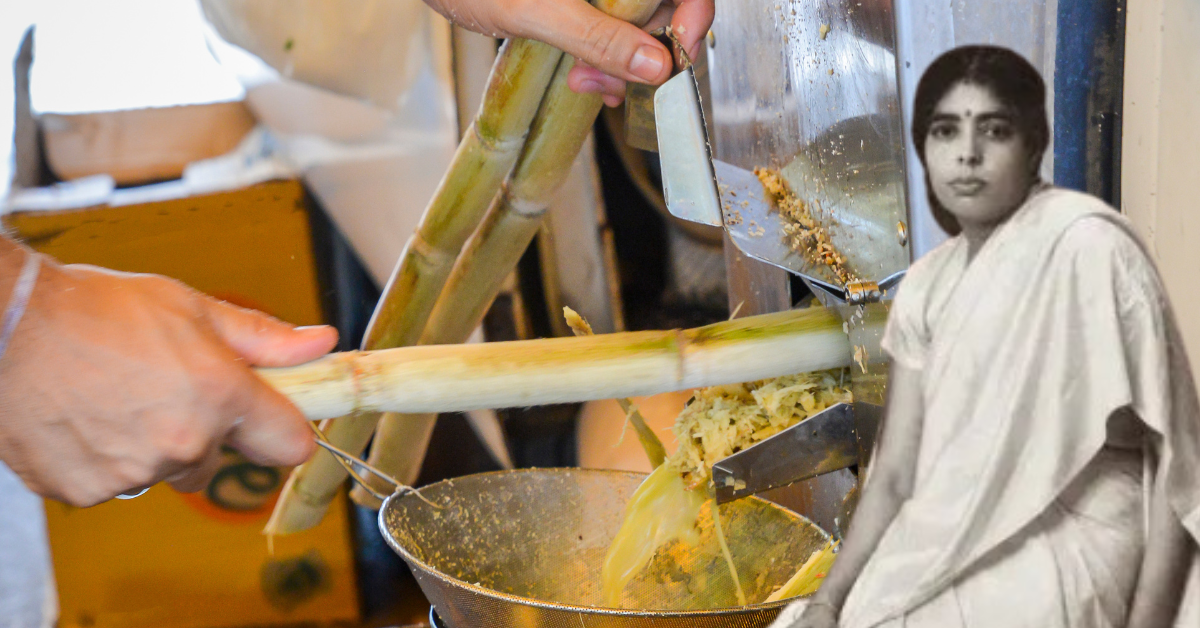
Her hybrid breeding research improved yields and resilience, helping India rise from importer to one of the world’s leading sugarcane producers. Photograph: (SheThePeople.TV)
She was Dr Janaki Ammal, the botanist without whom India might still have depended on Southeast Asia for sugarcane.
Choosing science over society
In 1932, at a time when most women her age were expected to marry and settle down, she chose science. She became the first Indian woman to earn a PhD in botany from the University of Michigan — a remarkable feat in itself. Marriage was not her dream; research was.
When she returned to India, she joined the Sugarcane Breeding Institute in Coimbatore as a geneticist. Back then, India’s sugarcane crop lacked sweetness and resilience. The best varieties were imported from Papua New Guinea via Southeast Asia, and India was dependent on imports. The crop struggled in local conditions, and something had to change.
So she got to work.
Through painstaking hybrid cross-breeding, Dr Janaki Ammal developed a high-yielding, sweeter sugarcane variety suited perfectly for Indian soil and climate. It was not an overnight breakthrough but years of research, experimentation, and quiet determination. Her innovation transformed the industry. India went from being an importer to becoming the world’s second-largest producer and exporter of sugarcane, generating crores in revenue annually.
A legacy that outlived discrimination
But while her research flourished, her life in India did not.
As a single woman from a marginalised caste, she faced discrimination from male colleagues who refused to accept her authority and brilliance. The hostility became unbearable, forcing her to move to London.
Dr Janaki Ammal showed that knowledge can outgrow prejudice and shape nations. Photograph: (Seema)
There, amid the bombings of World War II, she continued her botanical research. It was during this time that she developed a unique magnolia species that still bears her name — Magnolia kobus ‘Janaki Ammal’.
In 1951, at the request of Prime Minister Jawaharlal Nehru, she returned to India to lead key botanical initiatives and strengthen the country’s scientific institutions. She later received the Padma Shri for her contributions and became a pioneer in biodiversity conservation.
Dr Ammal’s story is not just about sugarcane. It is about choosing purpose over pressure and standing firm in the face of prejudice. It is about how one woman’s science sweetened a nation’s future.
Her legacy lives quietly in every grain of Indian sugar and stands as proof that when women dare to innovate, they don’t just change their own destinies; they reshape countries.