With the Assembly election round the corner, food politics has taken centre stage in West Bengal, allowing the ruling Trinamool Congress (TMC) to once more corner the BJP over what is perceived to be its biggest weakness in the state: the perception of being a Hindi Heartland party culturally out of sync with Bengalis.
The trigger for the latest row was neighbouring Bihar, where the NDA government announced a ban on open-air and unlicensed meat sales in urban areas. The government framed the decision announced by Deputy Chief Minister Vijay Kumar Sinha of the BJP as a step towards cleaner cities. Sinha then followed it up a few days later by saying that the sale of fish and meat near religious and educational institutions would be prohibited to “maintain public health and social harmony, and to prevent violent tendencies among children”.
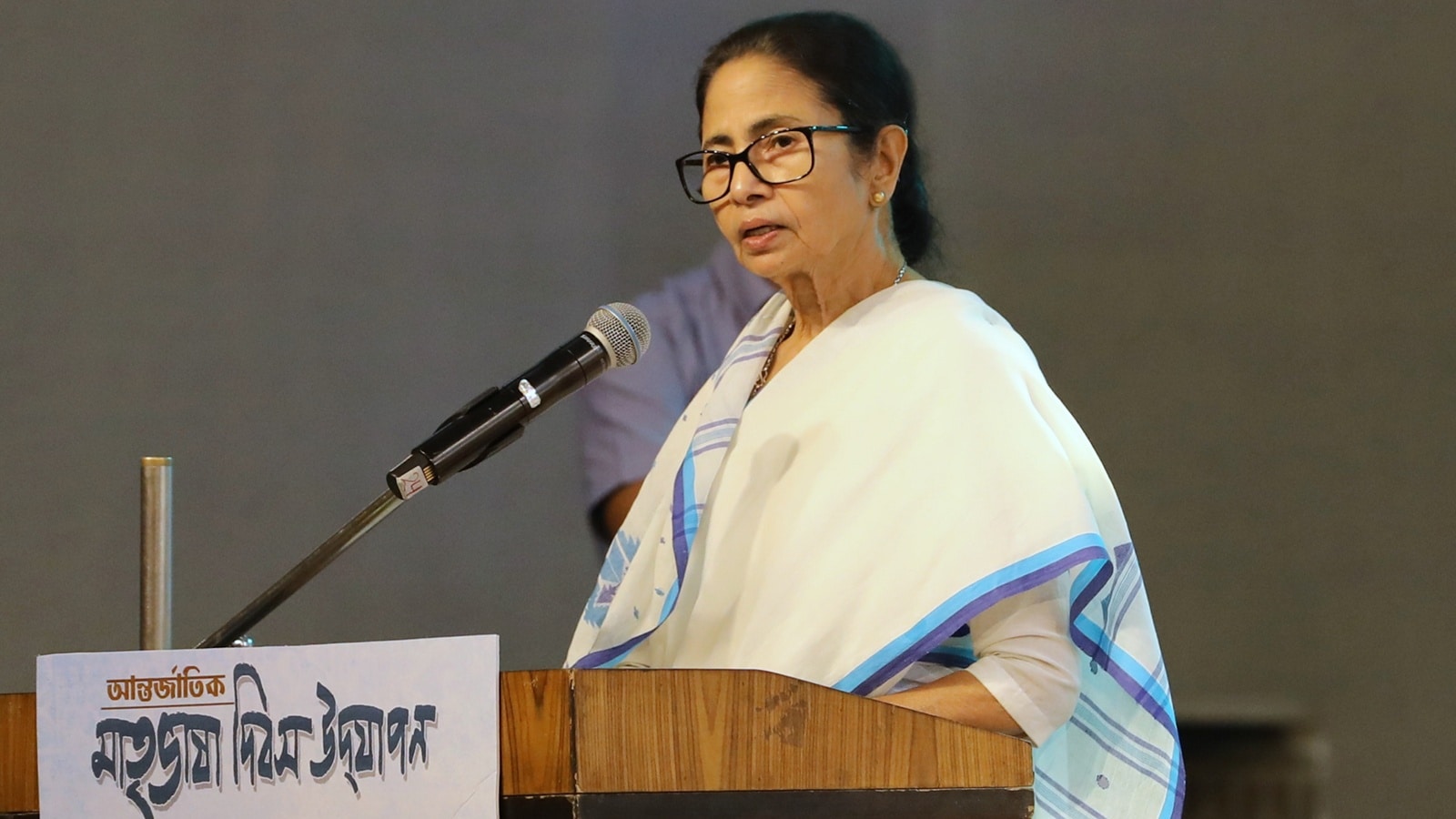
The TMC jumped in fast to fan the flames. “If you vote for them (BJP), they will not allow us to sell fish and meat in the market. I have no problem with those who are vegetarian, but in Bengal you can’t ban selling fish and meat,” Chief Minister Mamata Banerjee said on February 17.
Apprehensive that this narrative would take hold, the state BJP moved swiftly to counter the TMC. “No such ban exists. No one in Bihar or West Bengal will abide by such a ban. Bengal will have its fish and meat,” said state BJP president Samik Bhattacharya, adding that the party was “only against open sale of beef”.
After Sinha’s latest remarks, the TMC was quick to accuse the BJP of “policing food habits” again. “First, it was markets near temples. Then open spaces. Now it’s near educational and religious institutions and crowded areas. What we’re witnessing is a creeping nationwide ban on consuming meat and fish,” the party alleged.
The TMC alleged that “machhe-bhaate Bangali (fish and rice-eating Bengalis)” were being targeted. “We’ve always defied their narrow, homogenised, monolithic definitions, daring to thrive outside their suffocating box. And what BJP can’t comprehend, they seek to erase. This is precisely what awaits if people trust BJP. Bans on fish and meat, policing our plates, and ultimately our very existence,” it said.
This is not the first time that the issue has come to the fore in Bengal politics. Last December, a political row erupted after a video that went viral showed a street vendor selling meat patties getting assaulted near the venue of a Gita recital event in Kolkata. Three people were subsequently arrested in connection with the incident.
Then, in January, the vegetarian-only menu on the Vande Bharat sleeper train between Bengal and Assam, flagged off by Prime Minister Narendra Modi, raised the TMC’s hackles and the party again accused the BJP of “policing” people’s plates. Following the outrage, the Railways provided passengers with the option of non-vegetarian food.
In 2024, Modi had said that Opposition leaders consuming meat and fish during Navratri and the month of Saawan were of a “Mughal mindset”. Back then, Banerjee responded, saying, “The BJP has a problem even if anyone eats fish. Who are you to decide what we eat or wear?”
Warning voters to be cautious of the BJP’s “political agenda”, TMC spokesperson Arup Chakraborty told The Indian Express, “During Kali Puja, we offer meat to the deity and fish during Tara Maa puja. One needs to understand the culture of Bengal. They first banned fish in Vande Bharat trains and only restored it after an outrage.”
Food, a contested arena
The TMC’s attempts to make the most of the latest controversy show that it is sticking to its strategy of painting the BJP as a party that is politically and culturally antithetical to Bengali cultural mores, of which its culinary traditions are a crucial part, while projecting itself as a defender of Bengali interests.
The vegetarianism versus meat-eating debate, in fact, existed in colonial Bengal too. In Nation on a Platter: the Culture and Politics of Food and Cuisine in Colonial Bengal, published in the Modern Asian Studies journal in 2009, historian Jayanta Sengupta wrote that Swami Vivekananda “cared little for vegetarianism as a possible cultural/nationalist marker of Indian cuisine”.
“For him, meat-eating provided the only way to a robust health, which was indispensable for a host of things—like community’s ‘honour’, labour’s productivity, and nation’s ‘progress’. Vegetarianism, on the other hand, was an emasculating habit that put insurmountable obstacles on the path of nation-making,” Sengupta wrote.
Even outside the contested arena of food, there have been a few instances of late that have provided the TMC with opportunities to label the BJP as “anti-Bengali”. Last year, during a parliamentary debate on Vande Mataram, the TMC targeted the BJP after Rajya Sabha MP Dinesh Sharma incorrectly claimed that renowned freedom fighter Matangini Hazra was Muslim.
In January, the TMC accused Union Minister Mansukh Mandaviya of disrespecting Bengal’s football legacy after he stumbled over the pronunciation of football clubs Mohun Bagan and East Bengal. Then, last week, Mamata Banerjee hit out at Prime Minister Narendra Modi for describing Ramakrishna Paramahansa as “Swami” instead of referring to him as “Thakur” as Bengalis do.
However, more than tripping up on the names of football clubs, food politics has the potential to hurt the BJP the most in Bengal if it does not get its messaging right.
“The presence of the rivers and the lakes and the rich coastal waters bordered by the mangrove forests of the Sunderbans, have automatically made freshwater fish a major part of the Bengali diet,” food writer Chitrita Banerji wrote in Eating India. “Even the crustaceans that Bengalis adore—prawn, shrimp and crab—are harvested from lakes, rivers and estuaries, not the open sea. Moreover, fish here, as in many parts of China, is not merely food. As a symbol of prosperity and fertility, it touches many aspects of ceremonial and ritual life.”
The “machhe-bhaate Bangali” is not just a mere stereotype; it is an intrinsic marker of Bengali identity. And that is something the BJP has to internalise as it continues its quest to win Bengal.