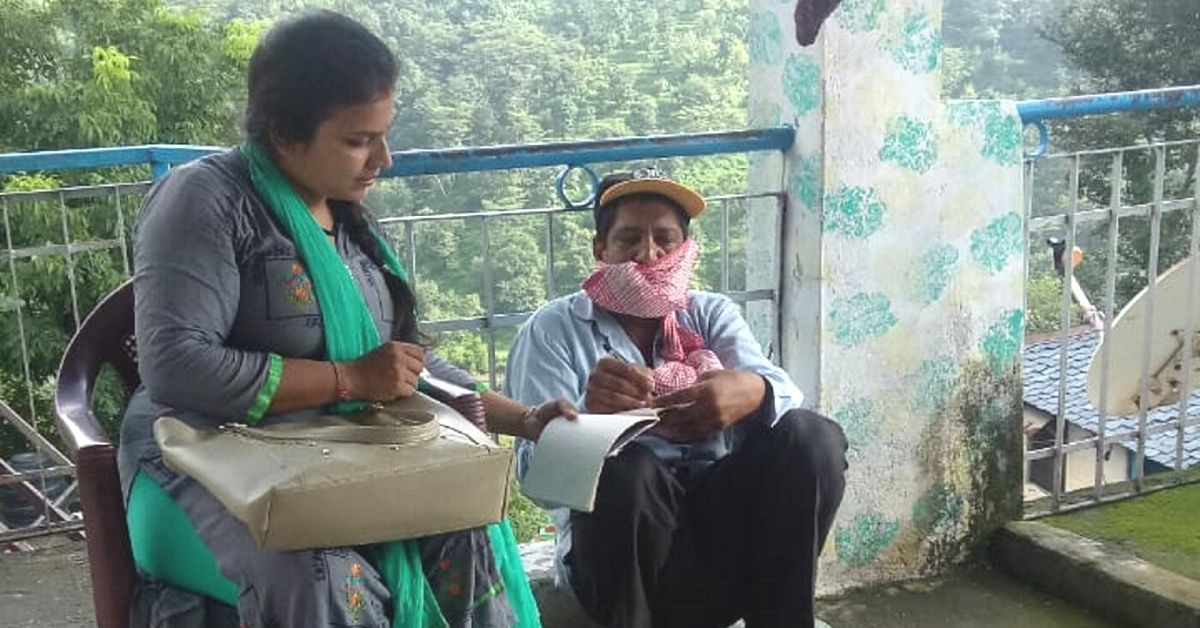
Raksha, a Gramin Dak Sevak posted at Sarsoo Post Office in Himachal Pradesh’s Sirmaur district, walked 10 to 12 kilometres every day—navigating winding mountain trails to deliver mail to some of the region’s most remote and far-flung villages. Her journey took her through dense forests and narrow paths, in scorching summers, harsh winters, and punishing monsoons alike, when isolation only deepened, and access became even harder.
The dangers multiplied during the rainy season. Slippery terrain, poisonous insects, snakes, and wild animals hidden in the thick undergrowth made each walk a test of survival. Yet Raksha pressed on. She delivered letters and carried pension payments to people across nearly 15 villages under her post office—often serving as the only link between elderly residents and the outside world.
“I have to deliver the mail and carry pension payments to people in about 15 villages that come under this post office,” says Raksha, whose designation is that of Assistant Branch Post Master (Mail Deliverer). Risky or not, she has to carry on undaunted to ensure that the mails reach their destinations on time. Despite the dangers though, Raksha enjoys her work and is committed to the job.
Shabnam, another woman Gramin Dak Sevak posted at Kolang in Mandi District, agrees that the rainy season is the worst when rills turn into brooks that are difficult to cross. “Four years ago, when I started working, it took me quite some time to adjust to the job, which meant walking for hours. With time, roads and bridges have been constructed, making it much easier to deliver mail to people in the villages that fall under my branch post office,” says Shabnam.
According to her, the response to a woman mail deliverer is overwhelmingly warm and compassionate. Villagers often ask her to rest and insist she have a cup of tea before continuing her journey. Aware of the physical and emotional challenges these women postmasters face, they offer help in quiet, generous ways. At times, they even press her to take home whatever they are growing in their fields, a simple yet powerful gesture of gratitude. “Especially when I was pregnant, the villagers would give me a ride on their bikes as I walked from one hamlet to another and also offered any other help that I wanted.”
Shilpa, who is currently on deputation as Branch Postmaster in Hatli in Una district, began her journey as a mail deliverer 10 years ago. She vividly remembers the reaction of villagers when she arrived to deliver mail for the first time—“Arre mahilayen bhi dak bant’ti hai kya?” (Do women also distribute mail?). Over time, that surprise has given way to acceptance and respect, as women delivering mail have become a familiar sight. “I don’t know how villagers behave with postmen, but people are very gentle with me. If it is hot, and Una is very hot in summers, they insist on offering water and sometimes offer meals as well.”
When Mohini applied for the post of Assistant Branch Postmaster, she had no idea that the job would mean delivering posts and pension payments to the villagers. Every day is fraught with risks of one or the other kind, she says. In the rainy season and during snowfall, it becomes really slippery to walk on the hilly footpaths, up and down the slopes. The roads are isolated and she has to cross through uninhabited areas. But whatever be the situation, she believes, one cannot afford to be lax on the job.
“It is a very responsible job. We have to deliver posts and parcels that may be very important to villagers, especially the delivery of pensions to the old people above 60 years of age who are eagerly waiting for their cash payments,” says Mohini, ABPM at Badagaon Branch Office in Kullu district.
The problem several of these women face is that, when they get married, their in-laws live far from where the women are posted. Managing things smoothly on both the home and job fronts sometimes becomes quite difficult for them.
Smita Kumar, the Chief Postmaster General of Himachal Pradesh, Postal Circle, says, “The Department tries to be sensitive to the needs of these Gramin Dak Sevaks and accommodates them as much as possible under the rules. They can seek transfers twice in their careers under the new provisions.”
Women Post-Deliverers face challenges not only in rural areas but also in cities. Guddi Devi, working in an urban setting, may not have to wander from village to village but has to confront difficult situations. “I don’t have to visit far-off villages, but even in the city, I have to walk for at least 6 to 7 kms every day. The problem in Kullu is that houses are not numbered, so finding an address takes a long time. One has to be very cautious as one does not know what kind of people one may come across,” she explains.
None of the women in the field reported experiencing any harassment. But they have another fear, of being assaulted and robbed, especially on occasions when they have to carry huge amounts of cash to be delivered as welfare pensions for old people, or for physically or mentally challenged people who are unable come to the post office to collect their pensions.
There are over 200 women in the Himachal Pradesh postal circle who work in the field, delivering posts to some of the remotest villages. For this difficult and significant task, these women get anything between Rs 12000 and Rs 16000 per month. They get yearly increments as well. They can also sit for departmental exams, and if they qualify and fulfil the mandatory criteria, they can be absorbed in the department.
The job of delivering letters to people residing in the toughest of terrains is a challenge these women take on with full dedication and a sense of responsibility. “It is our duty, and we are determined to perform well” is the sentiment expressed by all these gutsy women Gramin Dak Sevaks of the hill state of Himachal Pradesh.
(Written by Sarita Brara)
Editor’s Note: This story is based on reporting from 2020 and is being republished to continue the conversation around the issue.