World Cup
A clutch free kick goal in the second half helped the American men’s team clinch a knockout round win for the first time since 2002.
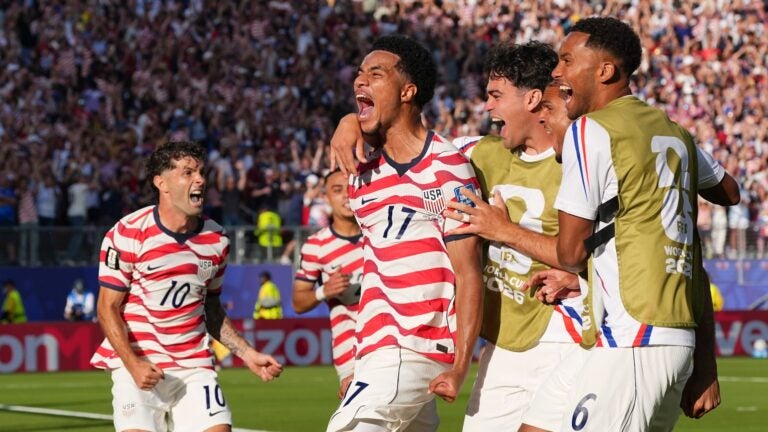
Malik Tillman celebrates his goal in the U.S. World Cup knockout round win over Bosnia-Herzegovina. AP Photo/Martin Meissner
The United States men’s soccer team advanced to the World Cup Round of 16 on Wednesday with a 2-0 win over Bosnia-Herzegovina in San Francisco. The Americans now face Belgium on July 6 in Seattle.
Goals from Folarin Balogun and Malik Tillman were more than enough for the U.S. to get its first knockout round win in 24 years, even after the jarring (and controversial) red card for Balogun in the second half.
Here are the takeaways:
Bosnia-Herzegovina switch to a defensive lineup, U.S. opt for continuity
After playing the group stage in a version of 4-4-2, Bosnia-Herzegovina head coach Sergej Barbarez changed to a 5-3-2. Notably, this meant that former Revolution winger Esmir Bajraktarevic was left on the bench.
The obvious reality from the opening whistle was that the European side was intent on sitting deep in a tightly packed defensive structure.
The Americans remained with the predicted lineup, which was the same one from their 4-1 group stage opening win over (recent Foxborough stars) Paraguay. Nominally a 4-2-3-1, it quickly shifted to a 3-4-2-1 when the U.S. had possession, with Antonee Robinson pushing into a wing-back role and Alex Freeman tucking in as a third center-back.
Balogun scores twice, the second one counts
After a predictably slower tempo start to the night — given Bosnia-Herzegovina’s setup — the early winner was clearly the underdog away team. With the game stuck initially in a stop-start setting (plenty of players were down after tackles for extended periods of time), it was tough for the home team to match the fast tempo it set in previous games.
In fact, U.S. goalkeeper Matt Freese was forced into early action on an in-swining corner kick:
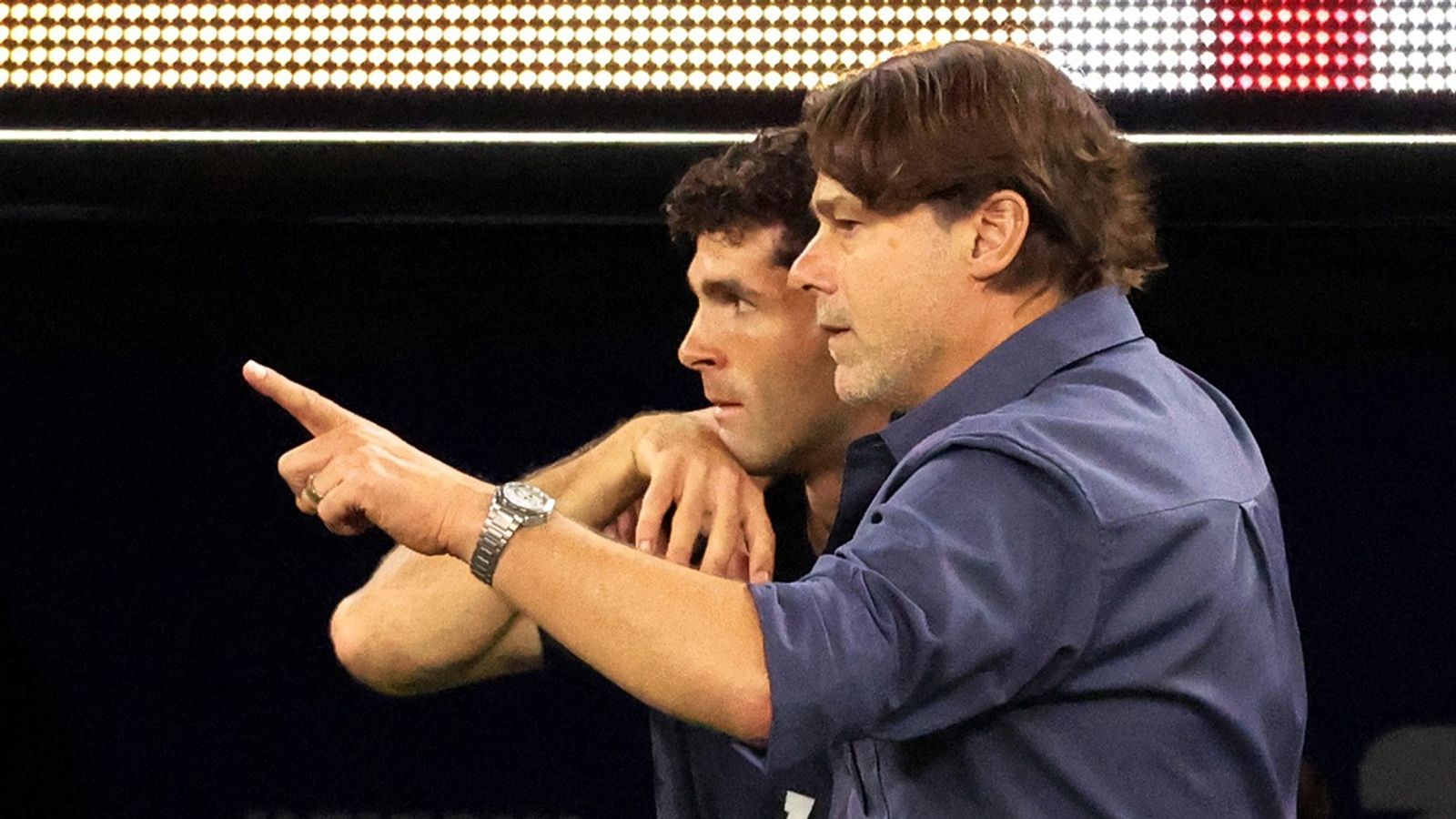
But, Mauricio Pochettino’s team slowly found answers to the problem posed by Bosnia-Herzegovina, applying pressure to their back line. This eventually led to an opportune turnover, which Balogun promptly tucked away. The problem, called after the fact, was that he started the play in an offside position:
Yet, the pattern was established: If the U.S. could either win back possession higher up the field, or sustain possession and then move the ball vertically in a few quick passes, they could find a path toward goal.
It was the latter format that led to Balgun’s breakthrough in the 45th minute. It was not the most stylish goal the U.S. has ever scored at a World Cup, but in a game against a packed defense, it was music to American ears:
U.S. unable to add insurance
Even before halftime, the U.S. produced a great chance to double its lead. With Bosnia-Herzegovina in a rare moment in which gaps appeared in their defense, Balogun was fed a perfect cross from Sergino Dest.
Unfortunately for the home fans, his effort bounced off the crossbar and over the goal:
When the second half began, Bosnia-Herzegovina made several changes, including the introduction of Bajraktarevic.
Their style switched to a much more aggressive approach, trying to press the Americans to win back possession. While it created only fractional opening, it had the partially intended effect of negating any additional U.S. shots in the first 20 minutes of the second half.
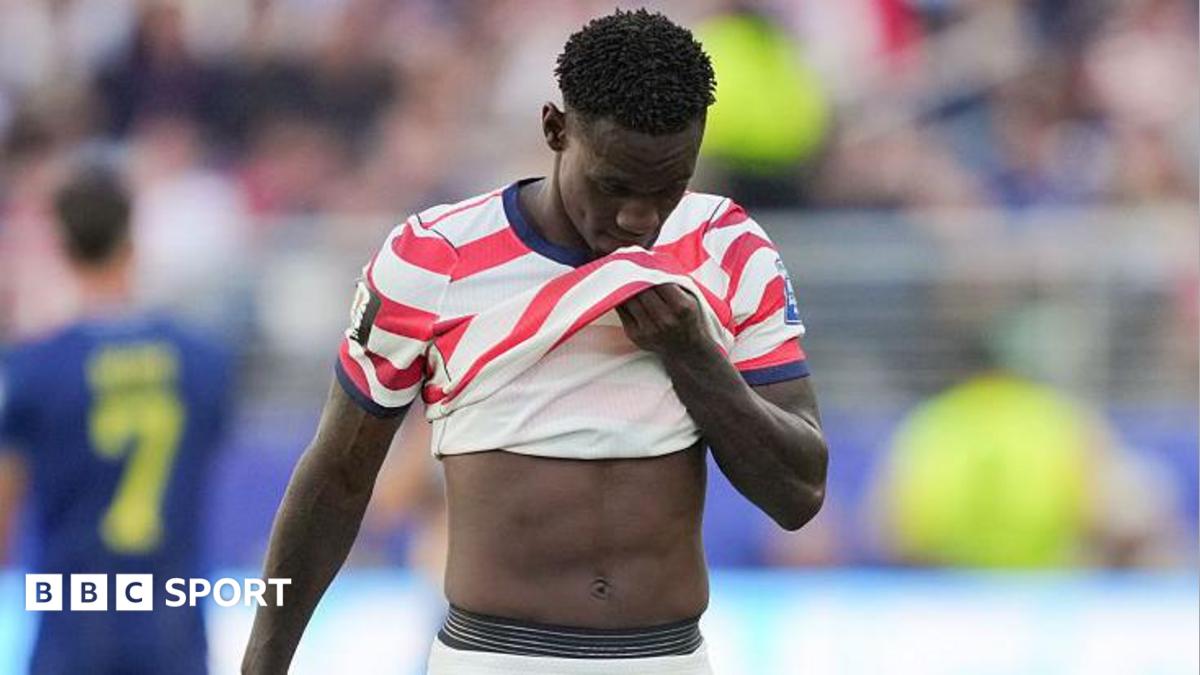
Balogun draws a controversial red card
In the latest officiating controversy to emerge at the 2026 World Cup — a growing subplot — it was Balogun who was on the wrong end. After going into a quick 50-50 challenge, a replay eventually showed that the U.S. forward had caught Bosnia-Herzegovina defender Tarik Muharemović with the studs of his cleat.
After a VAR review, he was subsequently handed a red card:
It’s a harsh call for Balogun, who clearly had no intent and was simply trying to grapple with the opponent to win the ball. Given that he had indisputably drawn contact in the box earlier in the game yet was not awarded a penalty kick, Balogun can justifiably feel like the officiating let him down on Wednesday. He will miss the next game as a result of being sent off.
Tillman continues to make plays
Down to 10 players, the U.S. was hard pressed (literally) to create much in the immediate aftermath of Balogun’s dismissal.
Still, the defense was able to hold without yielding too many chances (though there were a few nervous moments).
And, just when the U.S. needed it, Tillman once again answered the call. He has had a thoroughly underrated World Cup until Wednesday, but his 82nd minute free kick goal might be the moment that 24-year-old Bayer Leverkusen midfielder becomes more of a household name:
Even after his goal, Tillman continued to work tirelessly with the rest of the American midfield to help see out the win.
A bit of history
With the victory secured, the United States officially has a knockout stage win in a men’s edition of the World Cup for the first time since defeating Mexico 2-0 in the 2002 Round of 16.
It was also a win that halted a 10-game losing streak against European opponents.
Coming up next for the co-host U.S. will be another European side: Belgium. This, as fans of the U.S. team will undoubtedly note, has the potential for some enjoyable revenge. The U.S. was sent out of the tournament in 2014 in a dramatic game against Belgium. Twelve years later, an arguably more talented American team can potentially return the favor.
Hayden Bird
Hayden Bird is a sports staff writer for Boston.com, where he has worked since 2016. He covers all things sports in New England.
⚽ Get the latest World Cup news
Receive updates on the 2026 FIFA World Cup