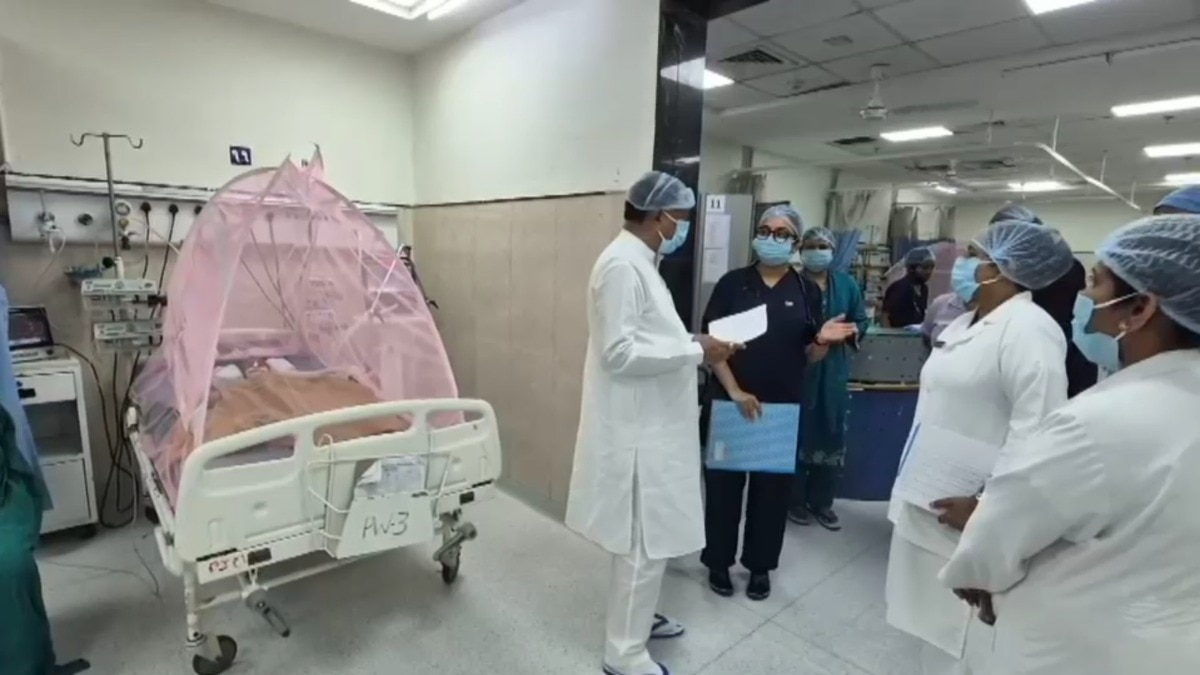
Three children have died and four others are on ventilator support after multiple cases of the Chandipura virus outbreak were reported in Gujarat over the past 14 days, putting the state on high alert and intensifying surveillance and containment measures.
The sudden rise in cases of the deadly Chandipura virus (CHPV), a sand fly-borne virus that causes acute encephalitis syndrome (AES), particularly among children, has raised concerns among health authorities and parents. According to official data, 32 suspected cases have been reported in the two weeks since July 1.
Of these, test reports have been received for 23 patients. Seven have tested positive for the virus, while 16 tested negative. Among the seven confirmed cases, three children have died and four are currently undergoing treatment on ventilator support. Test reports for nine suspected patients are still awaited.
Health Minister Praful Pansheriya said all seven confirmed patients were below the age of 10. He reviewed the situation at a high-level meeting in Gandhinagar on Monday and said the health department was continuously engaged in treatment, surveillance and containment efforts.
“The health department is continuously working towards controlling the virus, treating patients and carrying out surveillance operations,” the minister said, maintaining that the situation was under control.
Authorities said two patients have fully recovered and been discharged from hospital, offering some relief amid the rising number of suspected infections.
The latest suspected case involves a two-year-old girl from Meghraj taluka in Aravalli district. After developing symptoms associated with the virus, she was admitted to Himmatnagar Civil Hospital for advanced treatment.
Speaking to India Today TV, Pansheriya said detailed guidelines had been issued to all paediatricians across Gujarat and they had been instructed to maintain close coordination with the Gandhinagar headquarters. The state government has also involved the Indian Medical Association (IMA) and child specialists in efforts to tackle the outbreak.
Doctors operating small health centres and private clinics have been directed to immediately refer suspected patients to hospitals equipped with oxygen and ventilator facilities after providing primary treatment.
“Doctors running small health centres and private clinics have been instructed that if they come across suspected cases, they should not waste time and should immediately refer patients to hospitals with oxygen and ventilator facilities so that precious lives can be saved,” the minister said.
The health department has also stepped up preventive measures across the state. Pansheriya said health teams had completed spraying operations and public awareness campaigns in all 61 locations where Chandipura virus cases were reported in 2024.
According to the minister, no fresh cases have been reported from any of those 61 previously affected locations. In newly affected areas, authorities have immediately carried out fogging, spraying and sanitisation drives to eliminate sandflies, which are considered one of the vectors responsible for spreading the disease.
To curb transmission, adequate stocks of medicines and essential medical supplies have been made available even at the state’s smallest health centres, officials said.
With the increase in suspected cases, the Gujarat health department has placed its field machinery on high alert. Intensive surveillance, dusting and vector-control operations are being carried out in affected areas on a war footing.
The Indian Medical Association has also launched a special awareness campaign to protect children from the infection. Since the virus is primarily spread through vectors, including sandflies, the association has appealed to parents to maintain hygiene and remain vigilant for symptoms in children.
Chandipura virus causes fever and flu-like symptoms and can lead to acute encephalitis, or inflammation of the brain. The virus belongs to the Vesiculovirus genus of the Rhabdoviridae family and is transmitted through vectors such as mosquitoes, ticks and sandflies. It was first isolated in 1965 from a patient in Chandipura village in Maharashtra’s Nagpur district.
– Ends
Published On:
Jul 14, 2026 23:45 IST