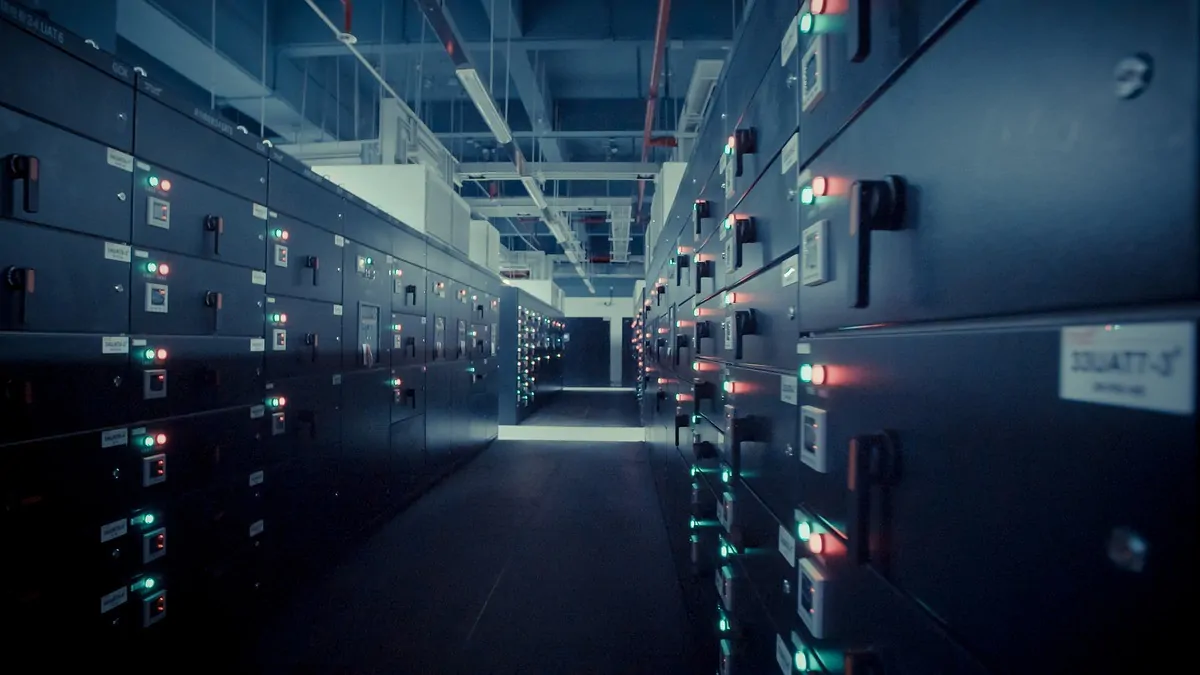
Australia’s $175 billion data centre boom is now big enough to help keep interest rates higher, with WestpacIQ warning the building spree will make the Reserve Bank’s inflation fight harder.
Its economists last week put a November rate rise back into their forecasts, tipping a 25 basis point increase to 4.6 per cent.
They expect the RBA to hold at its September 28-29 meeting before moving on November 2-3, when the board will have fresh quarterly inflation figures and updated forecasts.
Sign up to The Nightly’s newsletters.
Get the first look at the digital newspaper, curated daily stories and breaking headlines delivered to your inbox.
By continuing you agree to our Terms and Privacy Policy.
“The tech sector is adding new cost pressures not evident previously,” Westpac chief economist Luci Ellis wrote in outlining the changed rate call.
She said an “unprecedented pipeline of investment in data centres” would lift business investment and economic growth, but also “limit the pace of disinflation”.
Fresh WestpacIQ analysis on Tuesday put the data centre pipeline at about $175b, up from at least $155b when its economists examined the sector earlier this year.
Senior economist Pat Bustamante said Nvidia-backed developments and Firmus’ planned 2GW rollout were among the projects reinforcing the view that investment was growing faster than expected. Higher development costs have also increased the estimate.
“The majority of this spending, around $110bn, is likely to occur over the next three years,” he said.
A further $20b to $50b may be needed for electricity generation, storage and networks to power the centres without passing the cost onto existing users.
Mr Bustamante said there were “clear parallels” with Australia’s LNG investment boom of the 2010s.
Including the renewable energy infrastructure needed for data centres, WestpacIQ puts both building booms at about $230b.
Data centres typically take about three years to become operational, against roughly eight years for LNG projects and export terminals, packing more construction and infrastructure work into a shorter period.
“The AI buildout has a faster economic payoff than LNG,” Mr Bustamante said.
WestpacIQ estimates data centre projects are 50 to 60 per cent reliant on imports, mainly servers, computer chips and networking equipment, and that roughly half the headline investment will feed into the Australian economy.
The analysis found LNG construction was even more import-heavy, but the projects went on to generate decades of export income. The longer-term return from data centres depends on Australian businesses turning the extra computing capacity into higher productivity or selling computing services overseas.
ANZ chief executive Nuno Matos said there was no longer any serious question over whether AI would reshape business.
“AI is a reality. No more debate,” he told a summit in Sydney on Tuesday.
“Three or four years ago, there was still a debate about if this is real or not. It’s real.”
Mr Matos said warnings from Elon Musk, Anthropic boss Dario Amodei and OpenAI chief Sam Altman that development needed to slow suggested the people building the technology had become more worried about its dangers.
“They are thinking that the risk of this technology is well above what they expected,” he said.
Asked whether AI could wipe out jobs, Mr Matos was equally direct: “Is it possible that we are all going to lose our jobs? It is possible.”