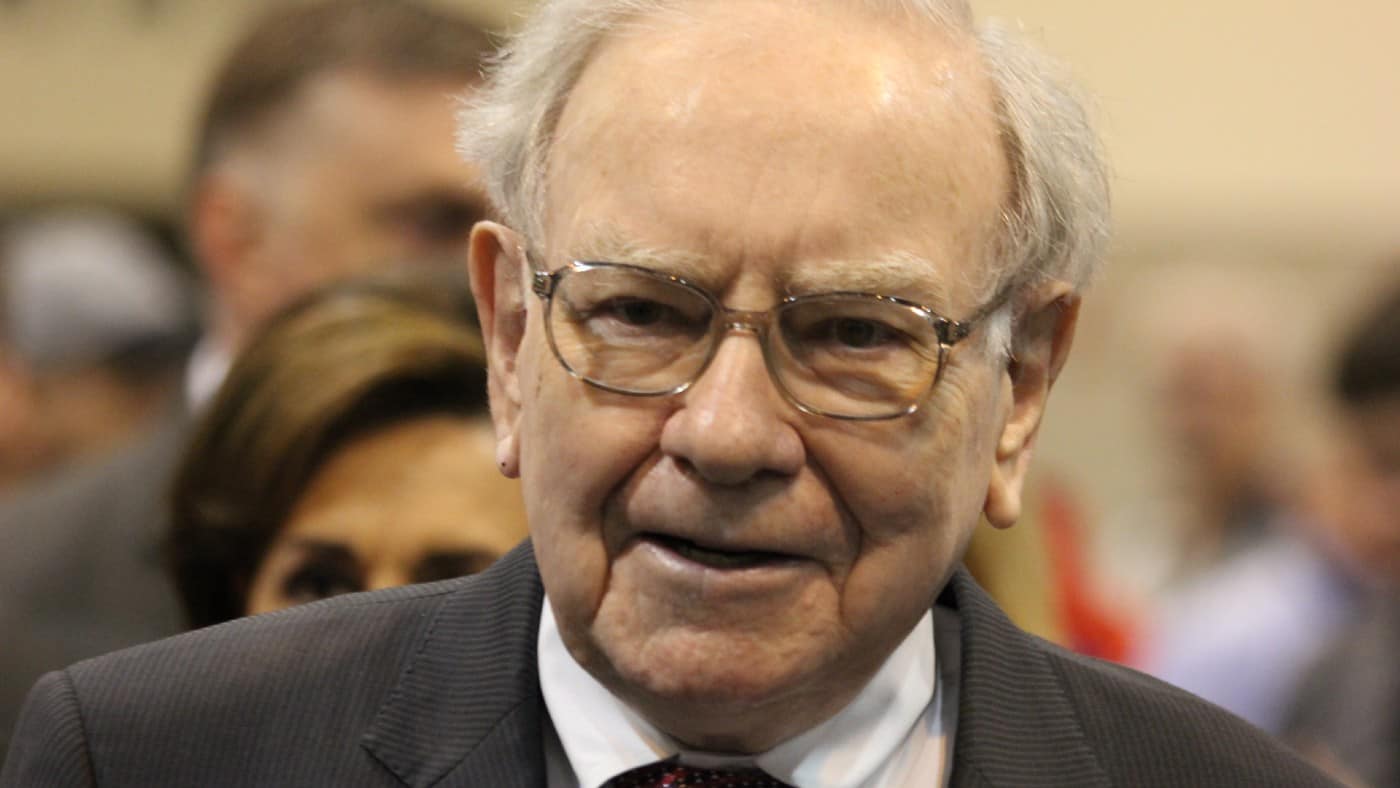
Image source: Getty Images
What’s the secret that made Warren Buffett so wealthy? If I were to ask him this question, there’s a good chance he’d reply with his “rule number one”.
By following this golden rule, Buffett’s been able to pick winner after winner, growing his investment firm Berkshire Hathaway into a trillion-dollar empire and amassing a $150bn personal fortune along the way.
So what is this golden rule?
Don’t lose money
In Buffett’s own words: “Rule number one: never lose money”. And just to emphases how important this golden rule is: “Rule number two: never forget rule number one”.
At first, this may sound pretty obvious. After all, no one starts investing in the stock market with the goal of losing money.
But there’s a lot of underlying wisdom attached to these rules. And by understanding the investment philosophy behind Buffett’s long-term-focused strategy, investors cannot only pursue higher returns, but also avoid costly mistakes at the same time.
Instead of chasing speculative gains or gambling on penny stocks, Buffett focused on one simple tactic: to invest in high-quality businesses at attractive prices.
By spending time researching businesses, identifying their competitive advantages, recognising their long-term potential, and patiently waiting to exploit market mispricing, he and his team at Berkshire Hathaway were able to vastly outperform the stock market.
Fun fact: after decades of exceptional stock picking, a £1,000 investment back in 1965 is now worth £61m!
Building wealth in 2026
While Buffett may no longer be at the helm of Berkshire in 2026, the company continues to pursue his winning, tried-and-tested strategy. And just recently, the firm invested $352m into The New York Times (NYSE:NYT).
Owning a newspaper business is far from an exciting prospect in 2026. Yet interestingly, it’s the boring businesses that often go on to outperform. And digging deeper, the New York Times has a lot of traits that line up with Buffett’s investing style.
The newspaper successfully transitioned from a traditional print to digital media business, growing its digital-only subscriber base to over 12.2 million, driving a 9.2% revenue boost in 2025 to $2.8bn, and a 17.1% surge in net income to a record $343.9m.
What’s more, its strong brand, trust, and global name recognition, backed by over 175 years of journalistic credibility, make it an exceptionally difficult media player to dislodge while simultaneously generating pricing power, even with low barriers to entry for new media groups.
Is it a guaranteed winner?
Of course not. No investment ever is. And looking at The New York Times’ business, there are some important risks for investors to watch carefully.
For example, subscriber growth will eventually hit a limit. And even in its latest results, the group reported lower than expected new subscribers, suggesting this growth slowdown may have already begun. There’s also the political aspect to watch.
When political temperatures rise, the New York Times has seen an uptick in its subscriber count. But often, politically-driven subscriptions don’t tend to last. And when this environment eventually cools, growing its subscriber base could prove even more challenging.
Regardless, even with this risk, there’s clearly some long-term promise here. So for investors seeking to follow in Buffett’s footsteps, this business could be worth a closer look.